
Bolbitius titubans
Taxonomy
Main synonym
Common names
Bolbicio amarillo yema, bolbizio hori.
Geographic references:
Interactive map with data from GBIF.


Morphological Features:
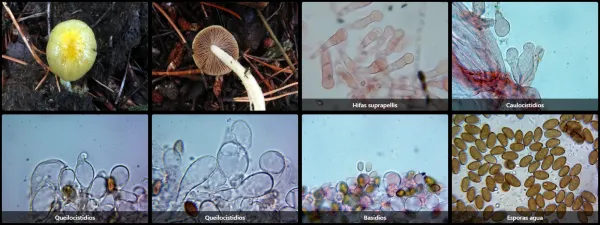
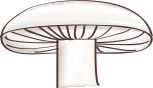
Pileus small in size, reaching at most 3 to 4 cm. Bright yellow; initially ovate, then campanulate, and finally expanded, but retaining a slight central umbo. The cuticle is distinctly viscid, and the margin is radially striate due to translucence.
Lamellae initially whitish, later ochraceous from the spore deposit, free from the stipe and quite crowded.
Stipe very long relative to the pileus, slender, barely 2 to 4 mm thick, whitish occasionally tinged with yellow. Usually slightly thickened at the base.
Flesh fragile and brittle, scant, whitish and rather tenacious, with nothing remarkable regarding odor or taste.
Habitat:
A species that appears among grass in damp, nitrogen-rich areas, sometimes on decaying wood debris. Grows primarily during autumn, occasionally at other times of the year. A frequent mushroom, though not particularly abundant.
Observations:
Relatively easily recognized by the bright lemon-yellow color of its pileus. It may bear some resemblance to Bolbitius variicolor, currently considered a variety under the name Bolbitius titubans var. olivaceus, and to Bolbitius reticulatus, recognizable by the distinct reticulation on its pileus, as well as by its violaceous coloration.