
Auriscalpium vulgare
Taxonomy
Main synonym
Common names
Hidno de las piñas, pinotxa-tripaki.
Geographic references:
Interactive map with data from GBIF.

Morphological Features:
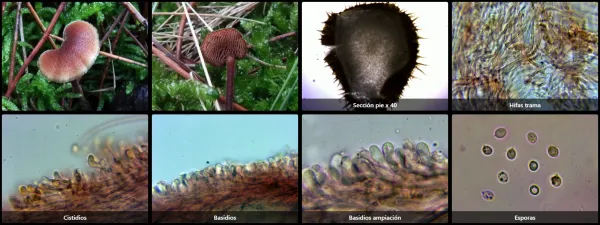
Pileus very small, barely a couple of centimeters in diameter at most, somewhat variable in shape, sometimes semicircular and other times reniform. The color ranges from yellowish-ochre when young to dark fuscous-brown when old. The surface is covered with hairs that are sometimes hispid, imparting a velutinous texture to the pileus. The margin is frequently undulate.
Hymenium composed of conical spines 2–3 mm long, very tough, and difficult to separate from the flesh. They are arranged somewhat uniformly and are not decurrent on the stipe. Initially gray, they eventually turn dark fuscous-brown as well.
Stipe long, up to 8 cm tall, invariably lateral, cylindrical, quite slender yet robust. It is brown and covered with fine dark brownish hairs.
Flesh tough and coriaceous in both the pileus and stipe, lighter in color than the exterior of the basidiocarp, lacking a distinctive odor, and with a slightly bitter taste.
Habitat:
It occurs throughout the year attached to the cones of various pine species, both on surface-exposed and buried cones. It is a very frequent and abundant species.
Observations:
The flesh is very hard, unpleasant in taste, and the basidiocarp is quite small; for these reasons, it is inedible. It is easily recognized, as there are no similar species; among those growing on pine cones, it is the only one bearing spines.