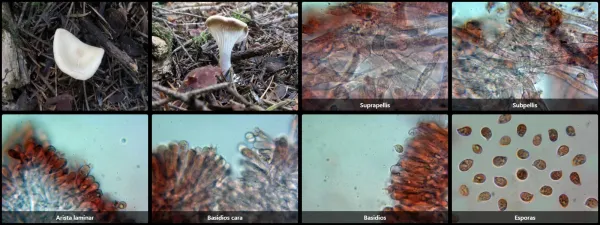

Ampulloclitocybe clavipes
Taxonomy
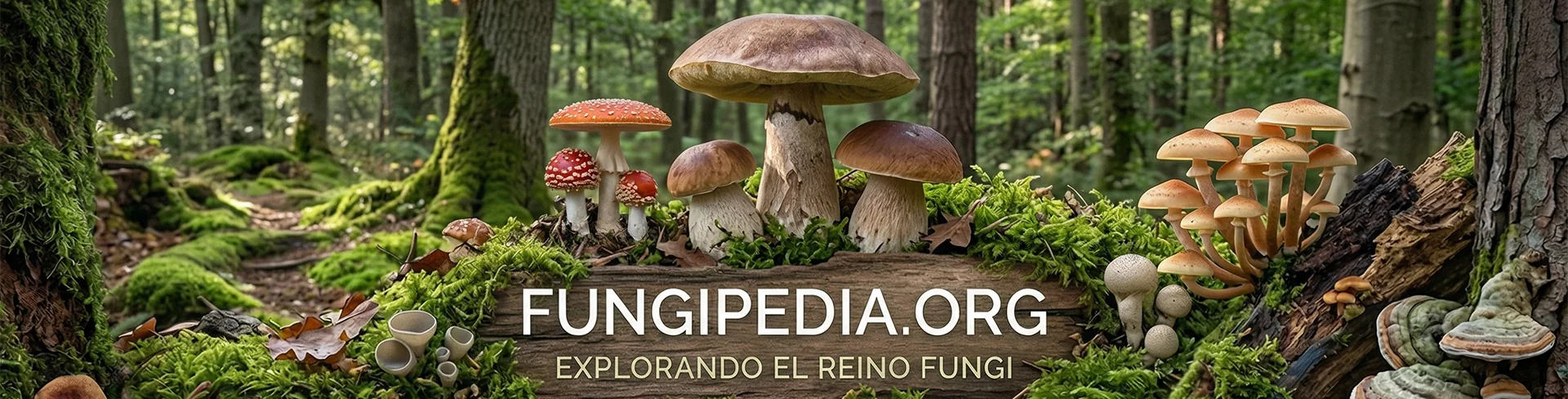
Main synonym
Common names
Clitocibe de pie en forma de clava.
Geographic references:
Interactive map with data from GBIF.

Morphological Features:
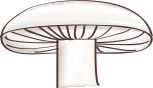
Pileus typically reaching about 5 cm in diameter, flat to somewhat convex, occasionally obtusely umbo-nate, variable in color within various shades of gray, fading towards the margin, which is slightly radially striate due to transparency. Cuticle smooth or silky.
Lamellae cream-colored, sometimes exhibiting yellowish tints, strongly decurrent on the stipe and quite crowded.
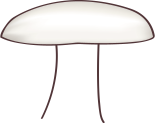
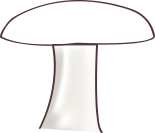
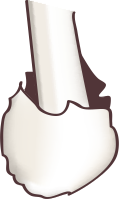
Stipe clavate, concolorous with the pileus, with a cottony, whitish base.
Flesh white, soft, spongy, and very fragile, to the extent that in the center of the pileus it soon disappears, leaving it hollow.
Habitat:
Fruiting in summer and autumn, in small groups or solitary, in both coniferous and broadleaf forests. Frequent in the northern part of the Iberian Peninsula.
Observations:
The spongy consistency of the flesh renders this Ampulloclitocybe species without culinary value. We consider it a readily identifiable taxon; however, an inexperienced amateur might confuse it with Clitocybe nebularis, which has a larger stature and a characteristic odor. Due to the stipe shape, it could also be confused with Infundibulicybe geotropa, which however can reach six times the size of Ampulloclitocybe clavipes.