
Amanita regalis
Taxonomy
Main synonym
Common names
Matamoscas.
Geographic references:
Interactive map with data from GBIF.
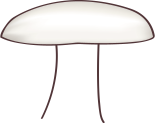
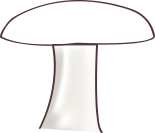


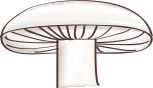
Morphological Features:
Pileus large, reaching up to 15 cm in diameter, initially hemispherical becoming globose, eventually flattening out completely. Dark red or reddish-brown in color, with a surface covered by veil-derived warts that are whitish or, more typically, yellowish. Margin slightly grooved and cuticle separable.
Lamellae white, fairly broad, and free from the stipe.
Stipe white and solid, becoming hollow in age, thick or elongated and cylindrical. Thickened at the base into a bulb that extends upward as concentric ridges of cottony consistency, sometimes tinged yellow. Bears a persistent, pendulous white ring, mottled with floury flakes.
Flesh thick and white, quite firm, especially in the pileus. Taste is sweet and mild, odor radish-like.
Habitat:
This species was located under mountain pines at an altitude of 1400 meters above sea level; numerous specimens were present, all with reddish-brown or dark red pilei, leaving no doubt from the outset. They were found in November.
Observations:
It is equally toxic as Amanita muscaria. Its matte colors, however, contrast with the scarlet red of the latter. Due to its sometimes reddish-brown color and yellowish scales, it may be confused with Amanita franchetii, which is less bulbous and has a stipe with yellowish tinges that this species lacks.