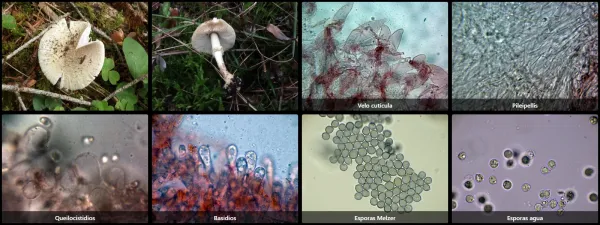

Amanita citrina var. alba
Taxonomy
Main synonym
Common names
Amanita citrina blanca.
Geographic references:
Interactive map with data from GBIF.

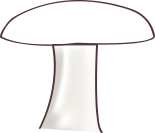


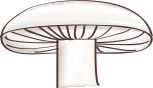
Morphological Features:
Pileus of size similar to the type species, between 5 and 10 cm in diameter, globose or hemispherical at first, later becoming convex and finally flattened. It is bright white in wet weather or satiny when dry, differing markedly from the citrine-yellow color of the type species. Cuticle separable from the pileal flesh and decorated with warts of mealy consistency that may disappear due to rain. Margin generally quite regular and non-striate.
Lamellae free from the stipe, white in color, crowded and somewhat irregular, ventricose.
Stipe slender, longer than the pileus diameter, solid when young and later hollow. It is white in color and bears a well-defined, persistent, and pendulous ring in the upper portion, matching the color of the rest of the basidiocarp, while the basal region features an equally white circumscribed volva that stains ochraceous upon handling.
Flesh thick and solid, white in color, with a distinct potato odor and a notably unpleasant taste.
Habitat:
As with the type species, this fungus is adapted to both deciduous and coniferous forests. We have found it in spring and during autumn; it is a common species, though not as abundant as the typical Amanita citrina.
Observations:
It is not considered a toxic species; however, its foul odor and taste render it inedible. Furthermore, its resemblance to the deadly Amanita verna and Amanita virosa, as well as to the white forms of Amanita phalloides, must be taken into account; it is readily distinguished from them by its circumscribed, non-saccate volva and its potato odor. It differs from the typical Amanita citrina by the white color of its cuticle.