
Agaricus xanthodermus
Taxonomy
Main synonym
Common names
Champiñón amarilleante.
Geographic references:
Interactive map with data from GBIF.


Morphological Features:
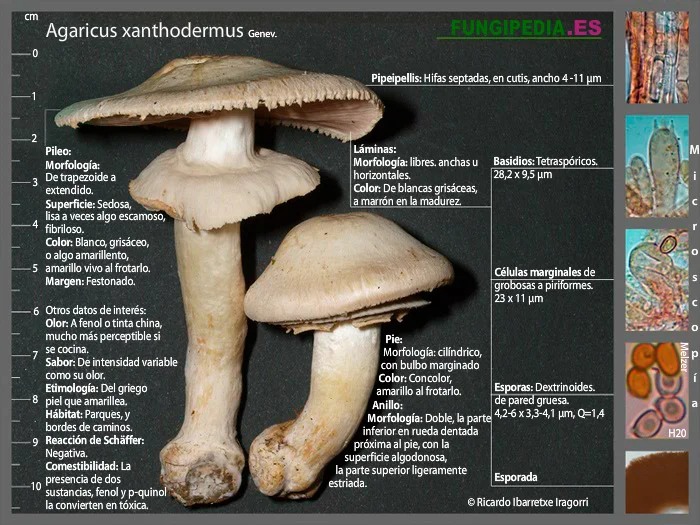
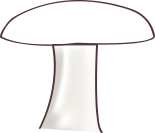
Pileus up to over 10 cm in diameter, predominantly white, although varieties with grayer tones exist. The apex is typically flattened, giving the pileus a trapezoidal or "German helmet" shape. The margin is slightly lobed and sometimes cracked. Stains vividly yellow upon handling.
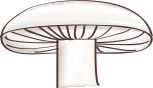
Lamellae crowded, gray in color, which persists for a long time before eventually turning pinkish-brown to dark brown-black, as is typical for all Agaricus species. Free from the stipe.
Stipe central and cylindrical, rather elongated with a bulbous base, white in color, bearing a persistent ring of the same color. When cut at the base, it stains rapidly a vivid yellow.
Flesh white and thick, staining yellow, with an unpleasant odor that may be faint in very young and fresh specimens. Taste is also unpleasant.
Habitat:
Fruits from late summer to late autumn, typically in fairy rings. Commonly found in meadows, gardens, and ruderal areas; it has also been observed fruiting profusely in rubble sites.
Observations:
A mildly toxic species, although it is known to have been consumed for decades in many regions due to confusion with Agaricus campestris. It causes mild gastric disturbances. It can be confused with any yellow-staining agaric, but those typically smell of anise.
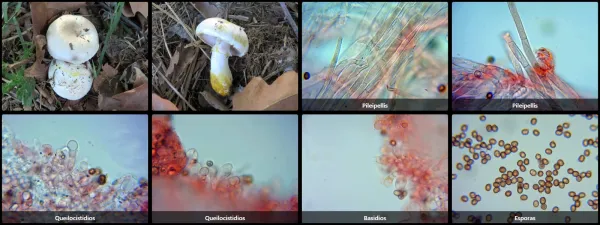
Microscopy of Agaricus xanthodermus