
Adelphella babingtonii
Taxonomy
Main synonym
Common names
Not available
Geographic references:
Interactive map with data from GBIF.
Morphological Features:
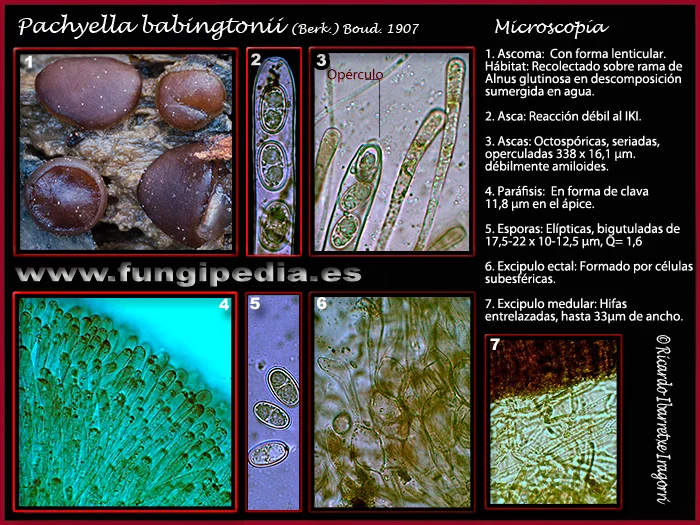
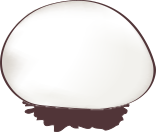
Fruiting body sessile with a more or less discoid, pulvinate or pillow-like shape. The average size of specimens is around 0.5 cm, although there are cases where some individuals exceed one centimeter in diameter. Color is variable in this species; typically reddish-brown, it may fade to brown or light ochre tones. Its surface is completely smooth and glossy, especially when adequately hydrated, and lacks any apparent pilosity.
Hymenium located on the external surface of the ascoma, is therefore smooth, and its color varies depending on the degree of maturity of the specimen, ranging from light ochre to dark reddish-brown. It produces operculate asci with a variable amyloid reaction, and more or less elliptical, granulate spores.
Stipe absent; this is a sessile species that adheres to the substrate over practically its entire surface.
Flesh of gelatinous texture and dull brown color, lacking any distinctive taste or odor.
Habitat:
For the fruiting of this species, two conditions must be met: a substrate of dead wood from various trees, and water, as it is a species with a marked aquatic tendency. It is commonly found on submerged logs, in muddy areas or bogs, and on spruce cones, where it can grow almost year-round. Our collection was made in February on dead alder wood. It is an uncommon species.
Observations:
This small ascomycete is characterized by its peculiar habitat, in which the presence of water plays an important role, its discoid fruiting bodies adhered to the substrate over a large portion of their surface, and its gelatinous flesh. Pulvinula cinnabarina is another ascomycete with a similar appearance, but it has a habitat associated with various mosses and does not grow on wood. Other similar species, such as those in the genus Scutellinia, possess patent hairs.
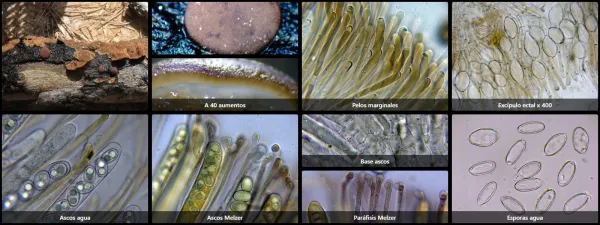
Microscopy of Adelphella babingtonii