

Xerocomus subtomentosus
(L.) Quél.
Study description
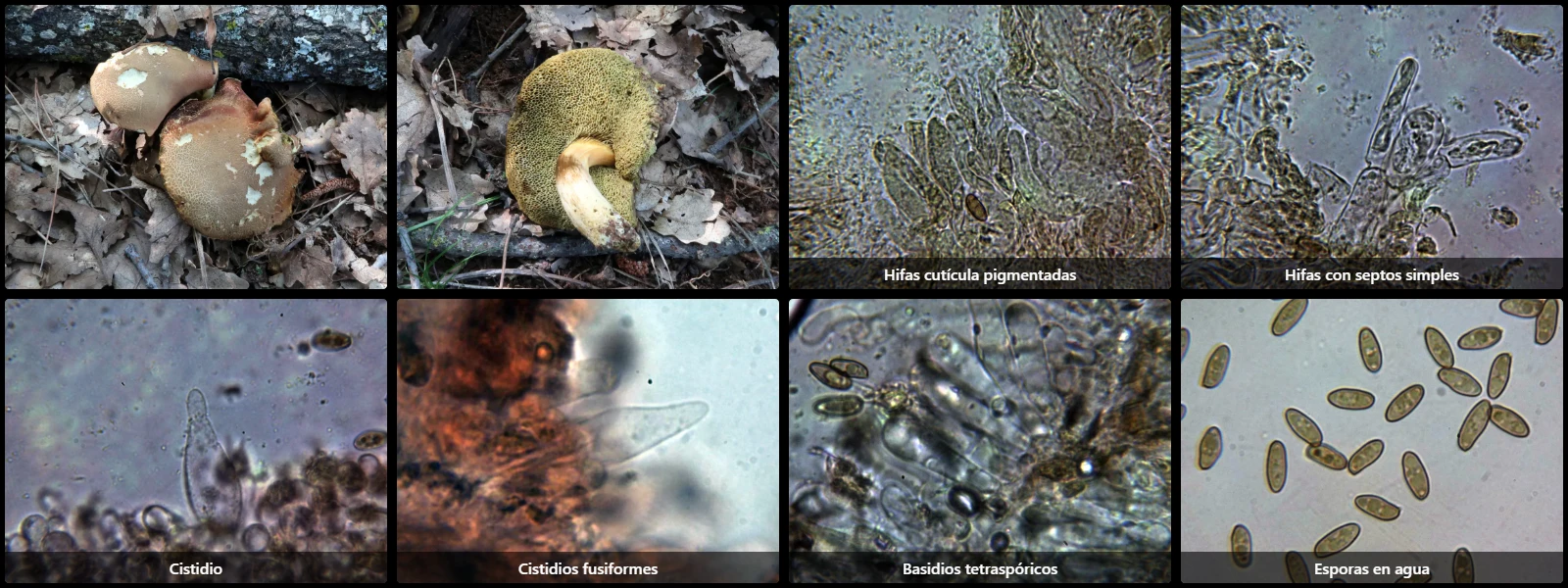
Forest species in both coniferous and broadleaf woods, with a hemispherical to flattened cap, 4 to 10 cm in diameter, with an olive-brown velvety surface frequently cracking with development, wide angular yellow pores, a yellowish cylindrical stipe with reddish-brown punctations, a fruity odour, and a mild taste.
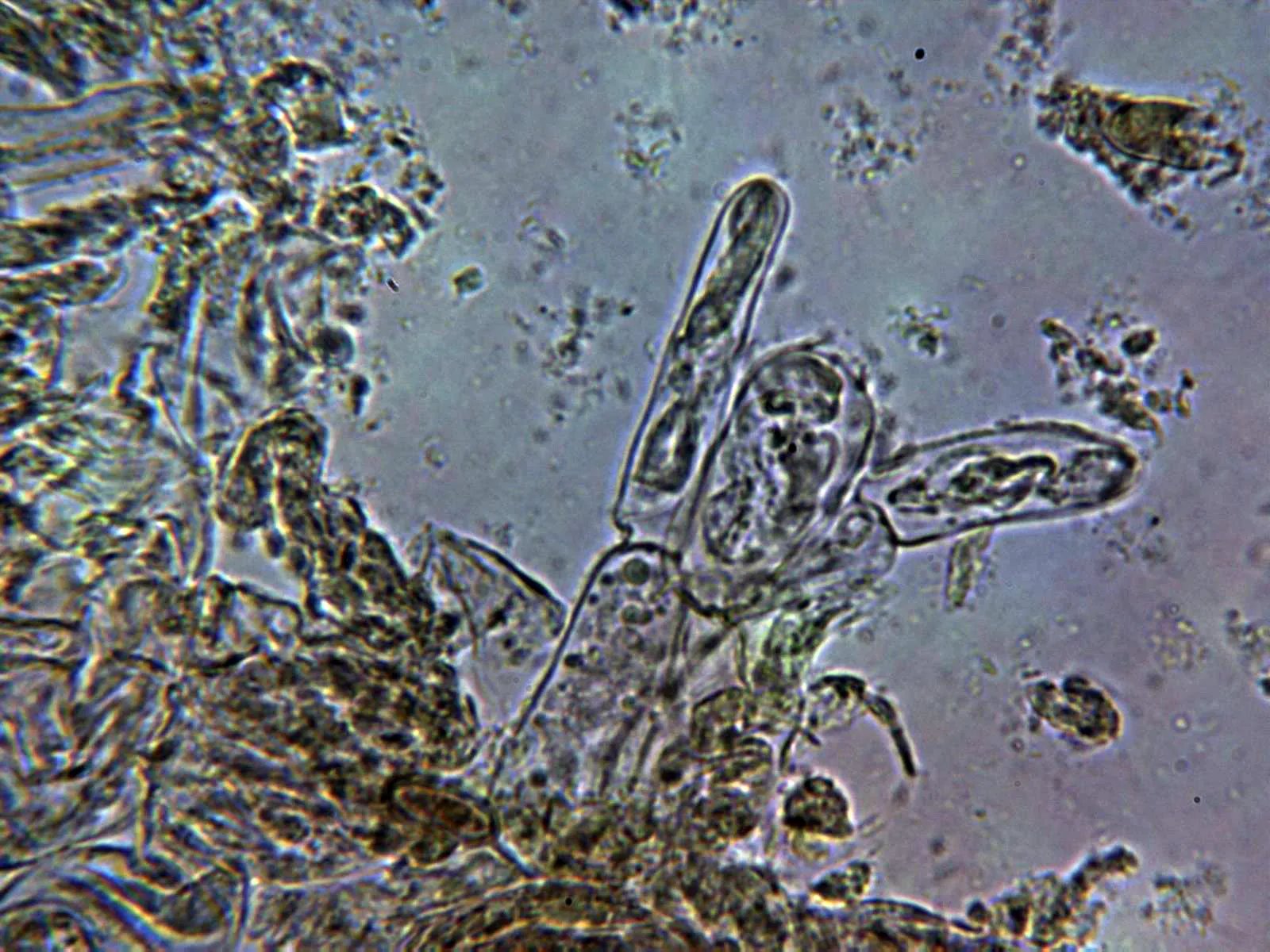
Cuticle formed by erect hyphae perpendicular to the surface, arranged parallel to each other, smooth, 7 to 15 µm wide, with rounded endings, with brown pigment inside, septate with simple septa (without clamp connections).
Cheilocystidia and pleurocystidia fusiform, 35 to 70 µm long by 8 to 12 µm wide.
Basidia cylindric-clavate, 30 to 35 µm long by 8 to 10 µm wide, with a simple base and tetrasporic.
Spores ellipsoidal to fusiform, smooth, thick-walled, brown with olivaceous tints under the microscope, 10 to 14 µm long by 4 to 5.5 µm wide, with an indistinct eccentric apiculus at one end, and without reaction in Melzer's reagent (inamyloid).
Geographic references
Map generated from global occurrence data from GBIF. GBIF.
Study measurements
Values in Microns (µm)Macroscopic gallery
Microscopic gallery