

Verpa bohemica
(Krombh.) J.Schröt.
Study description
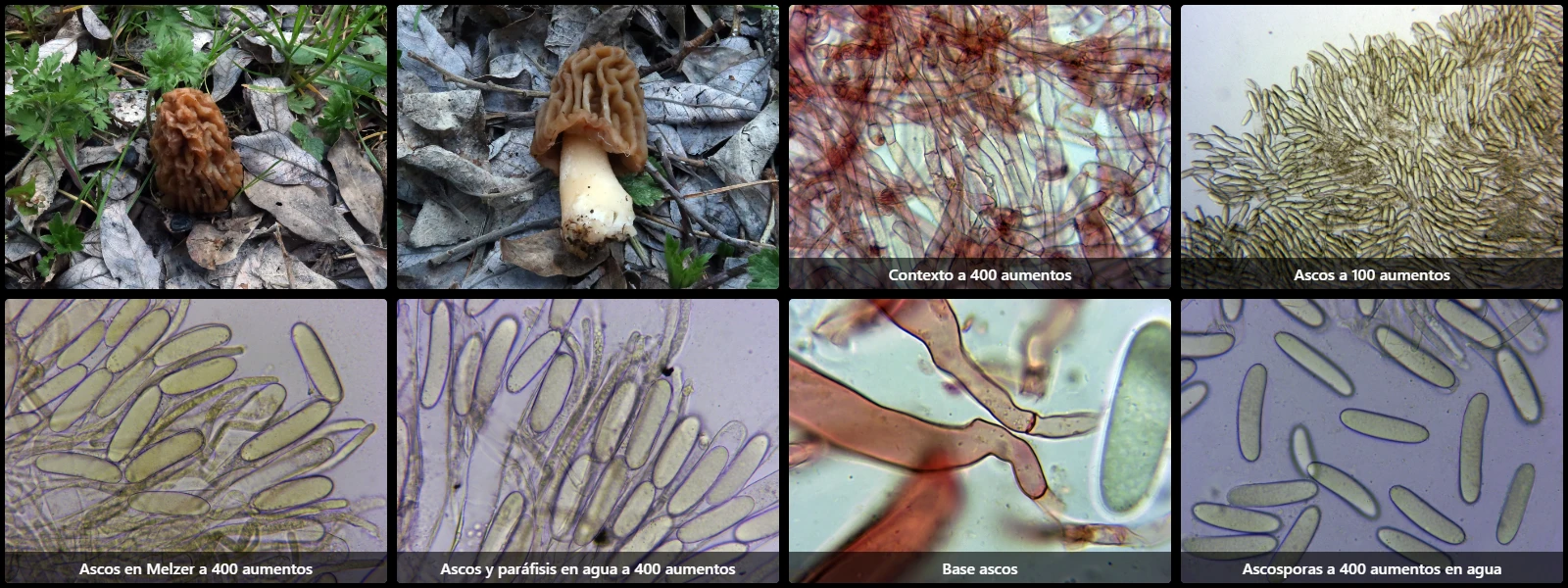
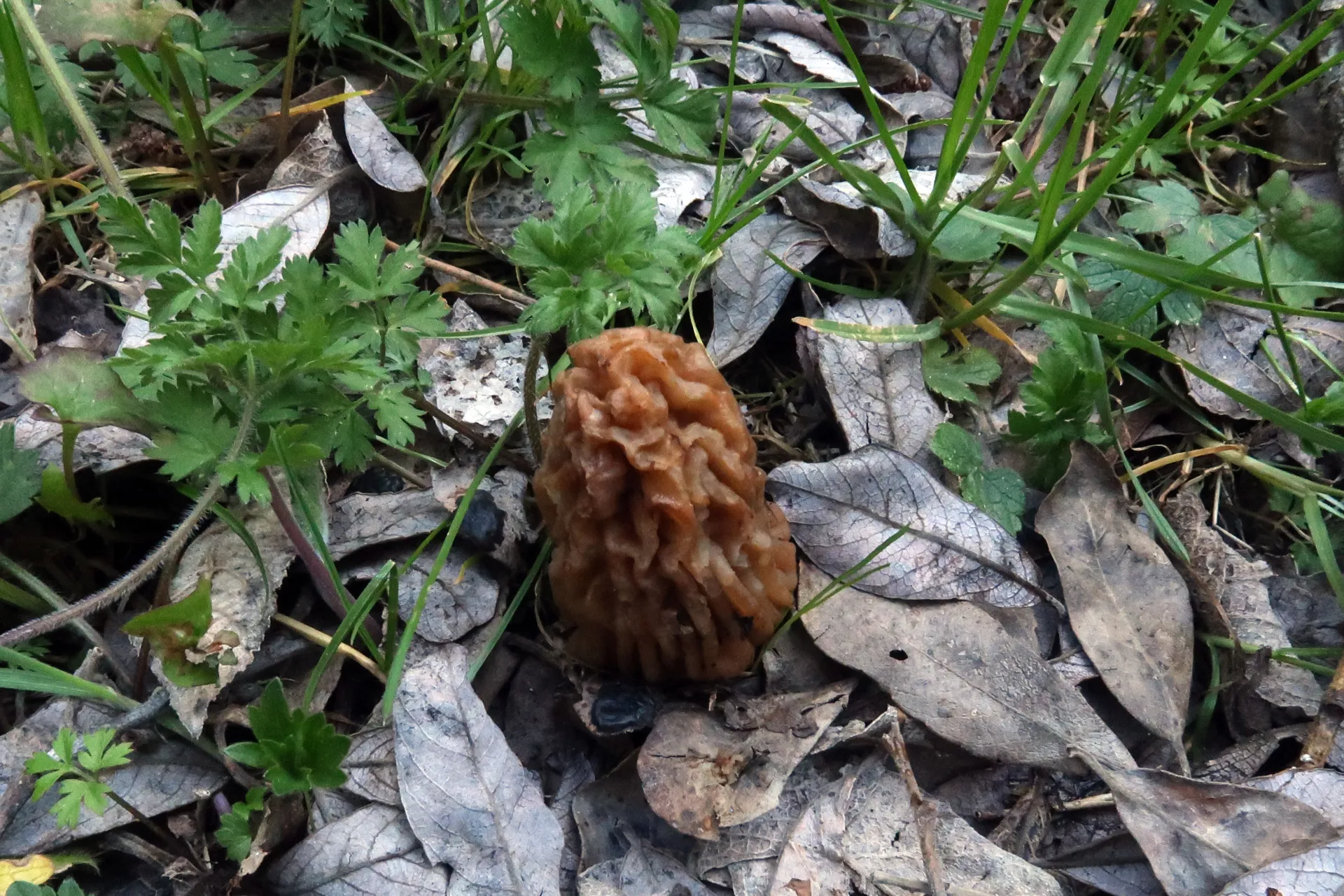
Spring species typical of broadleaf woods in very moist areas, such as riverbeds or riparian forests, with a total height of 5 to 15 cm, with a campanulate to cylindrical cap 2 to 5 cm high, with wavy and anastomosing brown longitudinal ribs, a hollow ochraceous stipe, very fragile and brittle flesh, and a mild taste.
Context hyphae filamentous, cylindrical, intertwined, 6 to 12 µm wide, septate, slightly separated from each other by gelification, with an encrusting brown pigment inside.
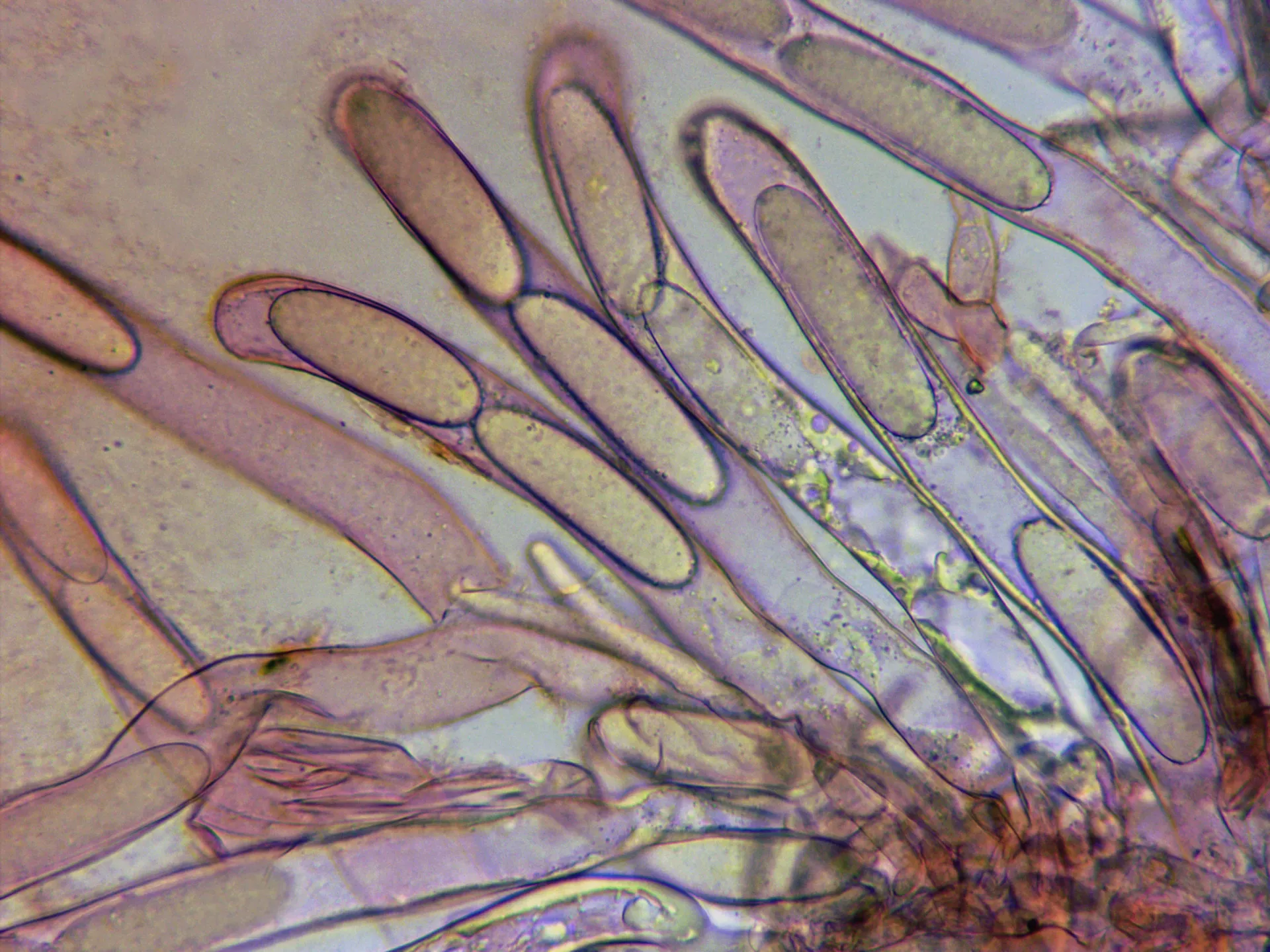
Asci cylindric-clavate, operculate, two-spored (bisporic), 250 to 340 µm long by 18 to 25 µm wide, with their two enormous ascospores in a single row one behind the other within the ascus, without croziers at their base, and inamyloid in Melzer's reagent.
Paraphyses filiform, septate, 5 to 8 µm wide, with abundant refractive lipid guttules inside, and not projecting above the level of the asci.
Ascospores cylindric-ellipsoidal, some slightly allantoic, smooth, hyaline, slightly thick-walled, 50 to 85 µm long by 15 to 20 µm wide, with a smooth and homogeneous interior, without oil drops.
Herbarium material available: JTP2116/24.
Geographic references
Map generated from global occurrence data from GBIF. GBIF.
Study measurements
Values in Microns (µm)Macroscopic gallery
Microscopic gallery