

Typhrasa gossypina
(Bull.) Örstadius & E.Larss.
Study description
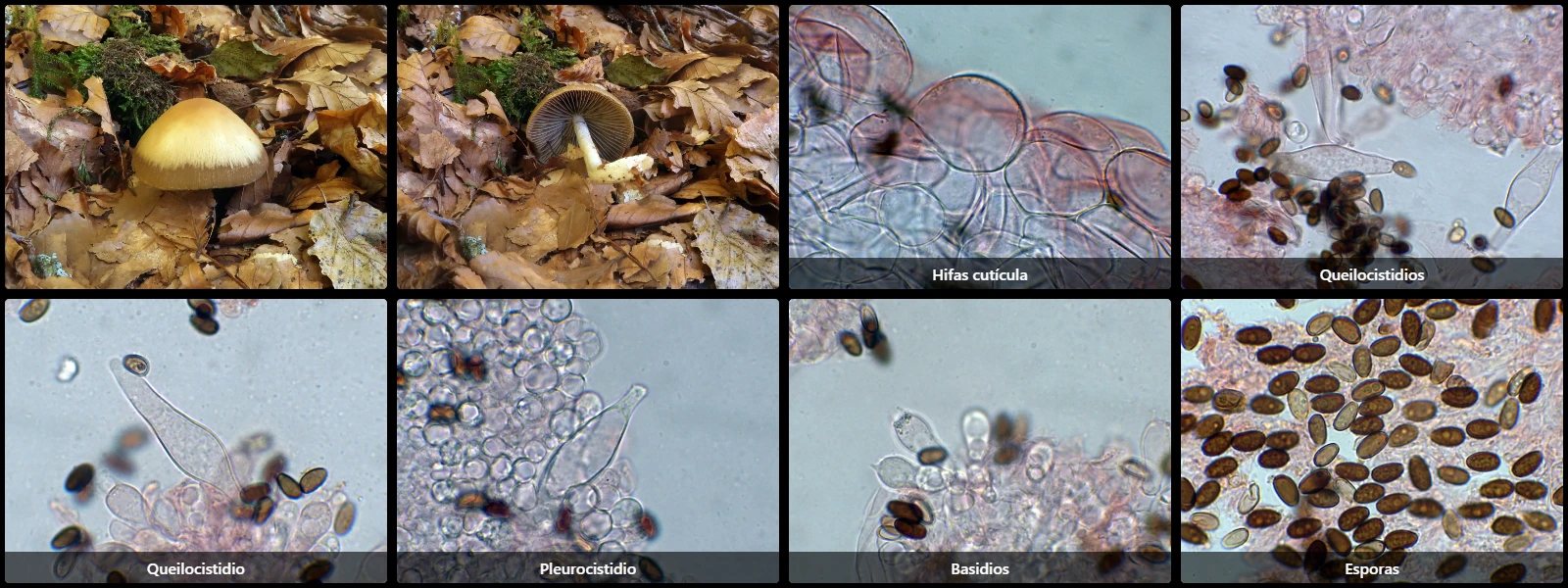
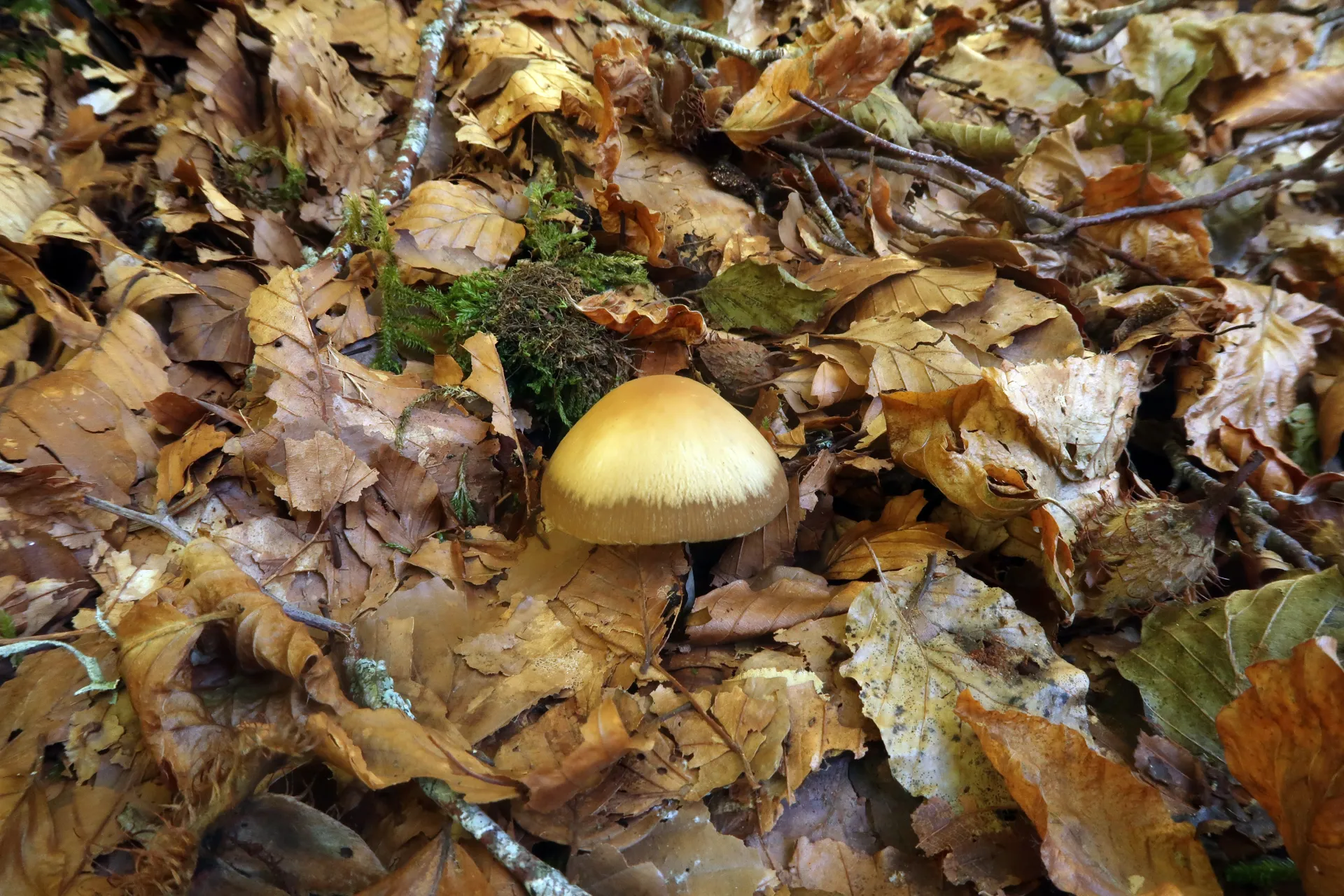
Species typical of broadleaf woods, on buried woody debris, formerly known as Psathyrella gossypina, with a hemispherical to plano-convex cap, 2 to 8 cm in diameter, with a rugose yellowish-brown to brown surface, adnate brown gills with a whitish edge, a fragile whitish cylindrical stipe, and without distinct odour or taste.
Cellular cuticle formed by globose, ellipsoidal to spheropedunculate hyphae, up to 45 µm long by 30 µm wide.
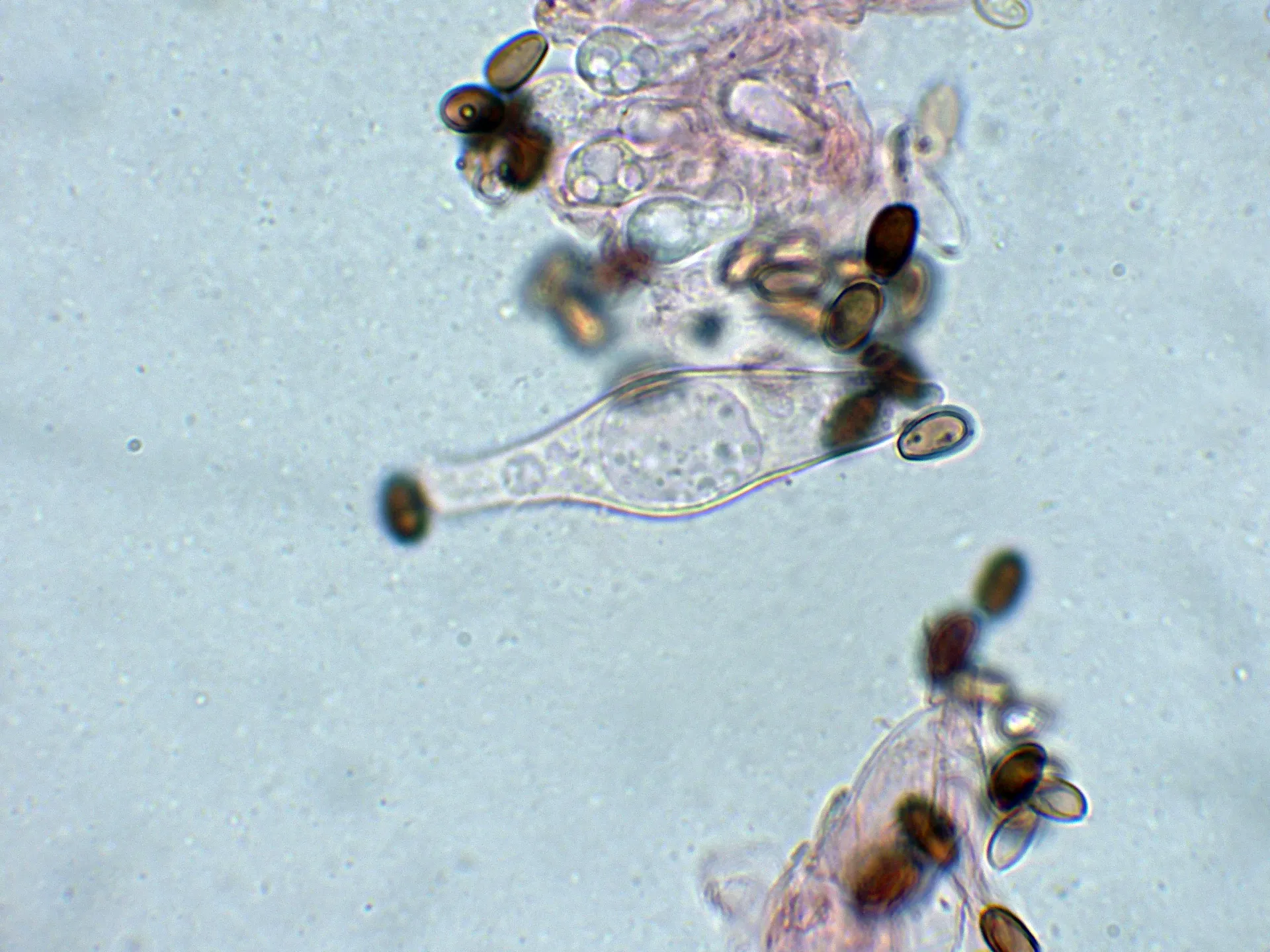
Cheilocystidia fusiform to lageniform, 30 to 60 µm long by 10 to 18 µm wide, with one or more oil drops inside.
Pleurocystidia fusiform, mucronate, 40 to 80 µm long by 10 to 20 µm wide, and like the cheilocystidia containing thick oil drops inside.
Basidia clavate, 18 to 28 µm long by 9 to 11 µm wide, with a simple base and tetrasporic.
Spores ellipsoidal, smooth- and thick-walled, brown under the microscope, 7.5 to 9.5 µm long by 4.5 to 6 µm wide, with wall thickness up to 0.4 µm, with a small, slightly truncate germ pore, and darkening slightly with ammonia or KOH.
Geographic references
Map generated from global occurrence data from GBIF. GBIF.
Study measurements
Values in Microns (µm)Macroscopic gallery
Microscopic gallery