Tuber mesentericum
Vittad.
Study description
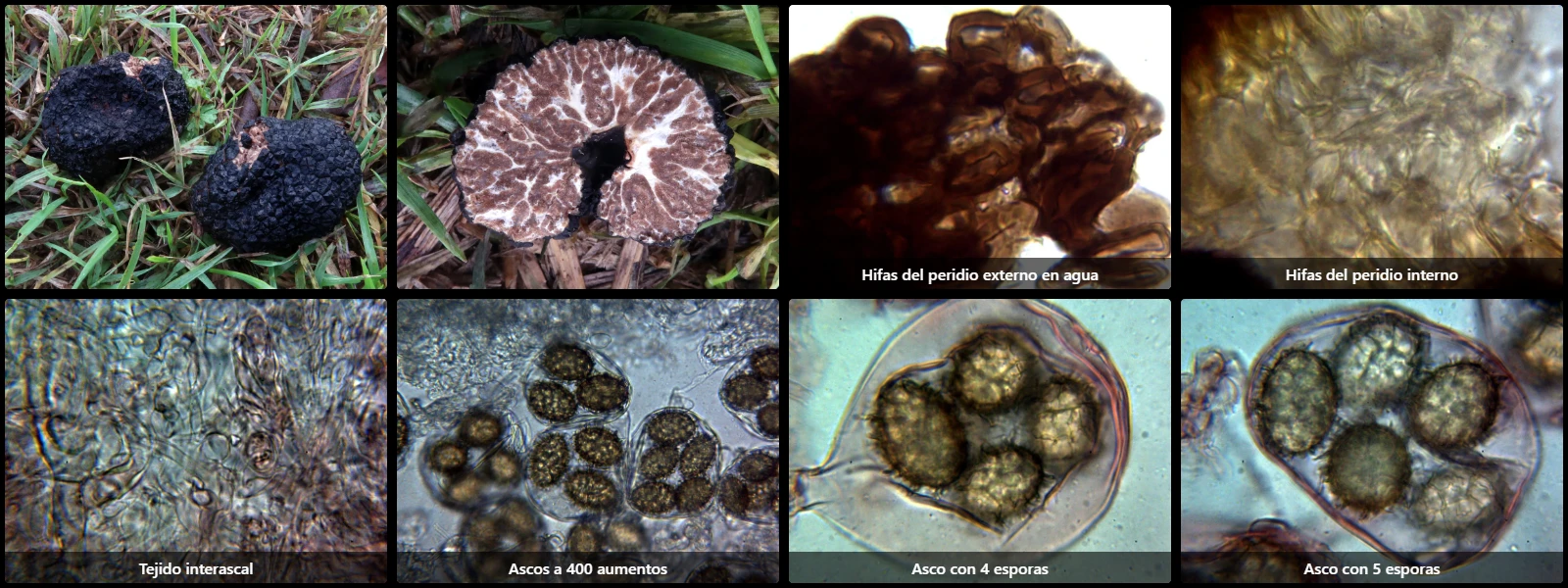
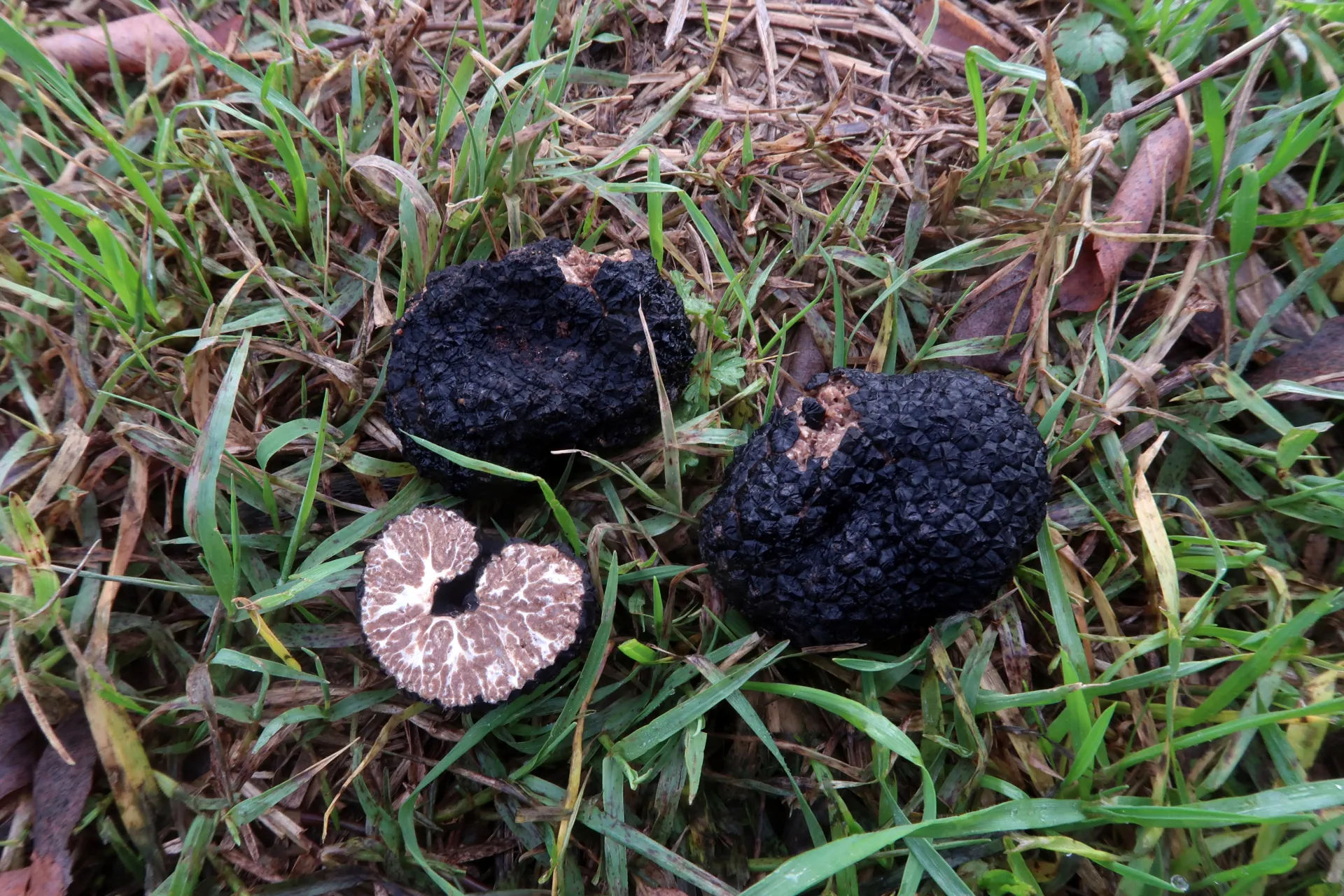
Under a wide variety of trees, such as beech, oak, holm oak, or pine, with a preference for calcareous soils, with globose to irregular ascomata bearing a wide basal cavity, 2 to 5 cm in diameter, surface covered with black pyramidal warts, a dark brown gleba with white veins radiating from the basal cavity, an odor of iodine or tar, and a slightly bitter taste.
Outer peridium pseudoparenchymatous in appearance, with tightly packed hyphae adopting polygonal shapes with very thick walls, 10 to 30 µm in diameter, and containing abundant brown intracellular pigment.
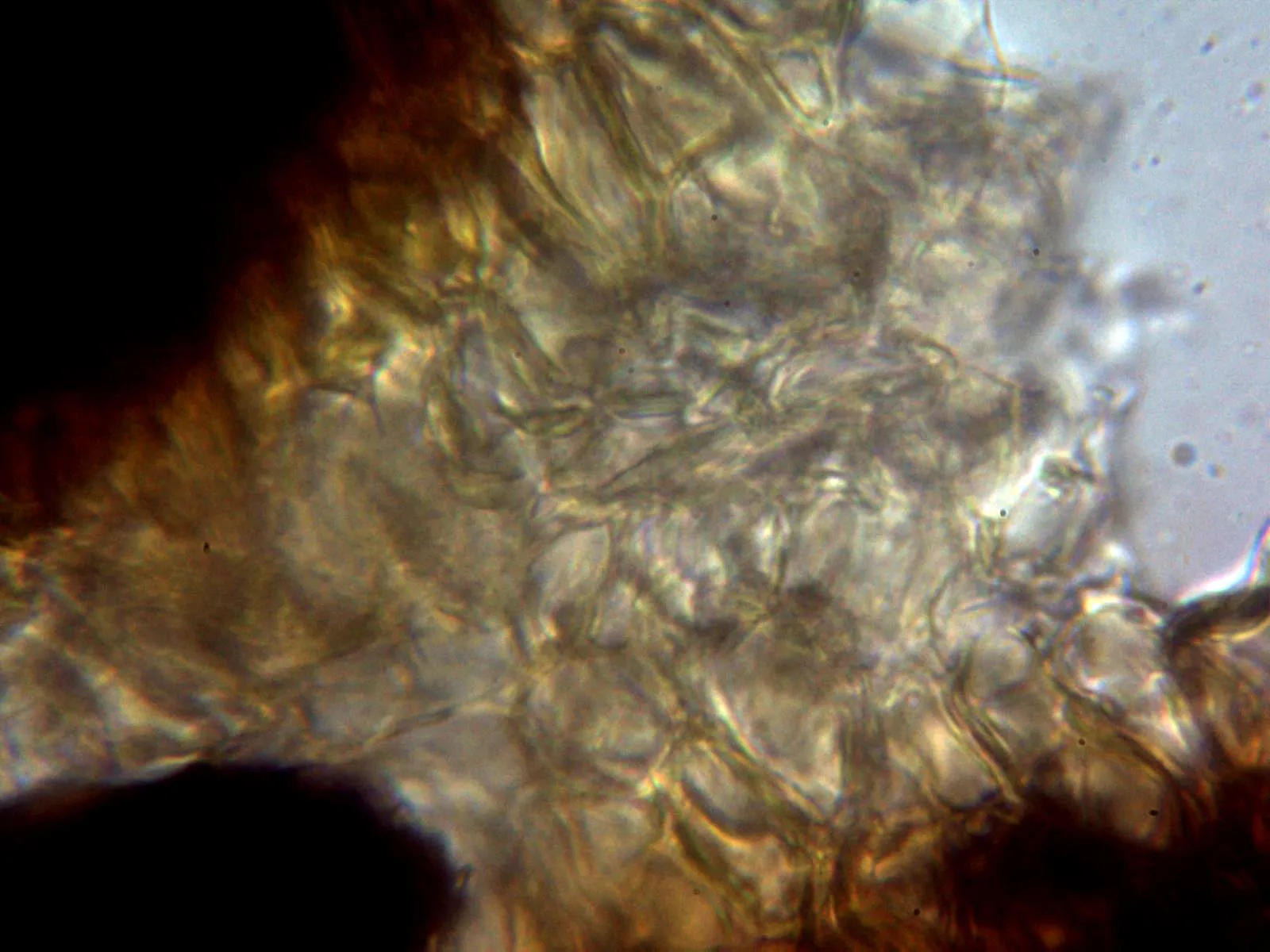
Inner peridium with morphology very similar to that of the outer peridium, but with more hyaline hyphae, having only slight yellowish intracellular pigment and thinner walls.
Asci globose to subglobose, short-stalked (pedicellate), 60 to 90 µm long, 55 to 75 µm wide, and usually containing 3 to 5 ascospores inside.
Ascospores ellipsoid, pale yellow under the microscope, with ridges 3 to 5 µm high, 25 to 40 µm long excluding ornamentation, 20 to 30 µm wide, with ridges joining to form very irregular alveoli, but without forming a complete reticulum.
Geographic references
Map generated from global occurrence data from GBIF. GBIF.
Study measurements
Values in Microns (µm)Macroscopic gallery
Microscopic gallery