

Trametes hirsuta
(Wulfen) Lloyd
Study description
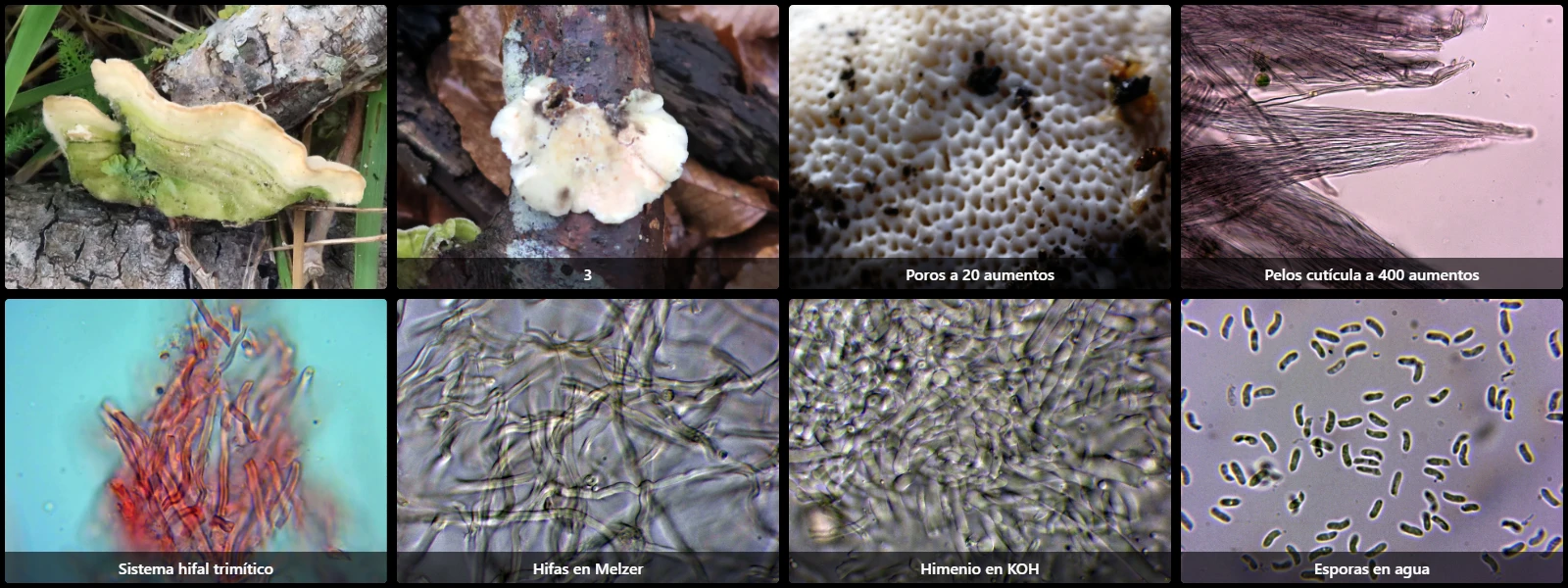
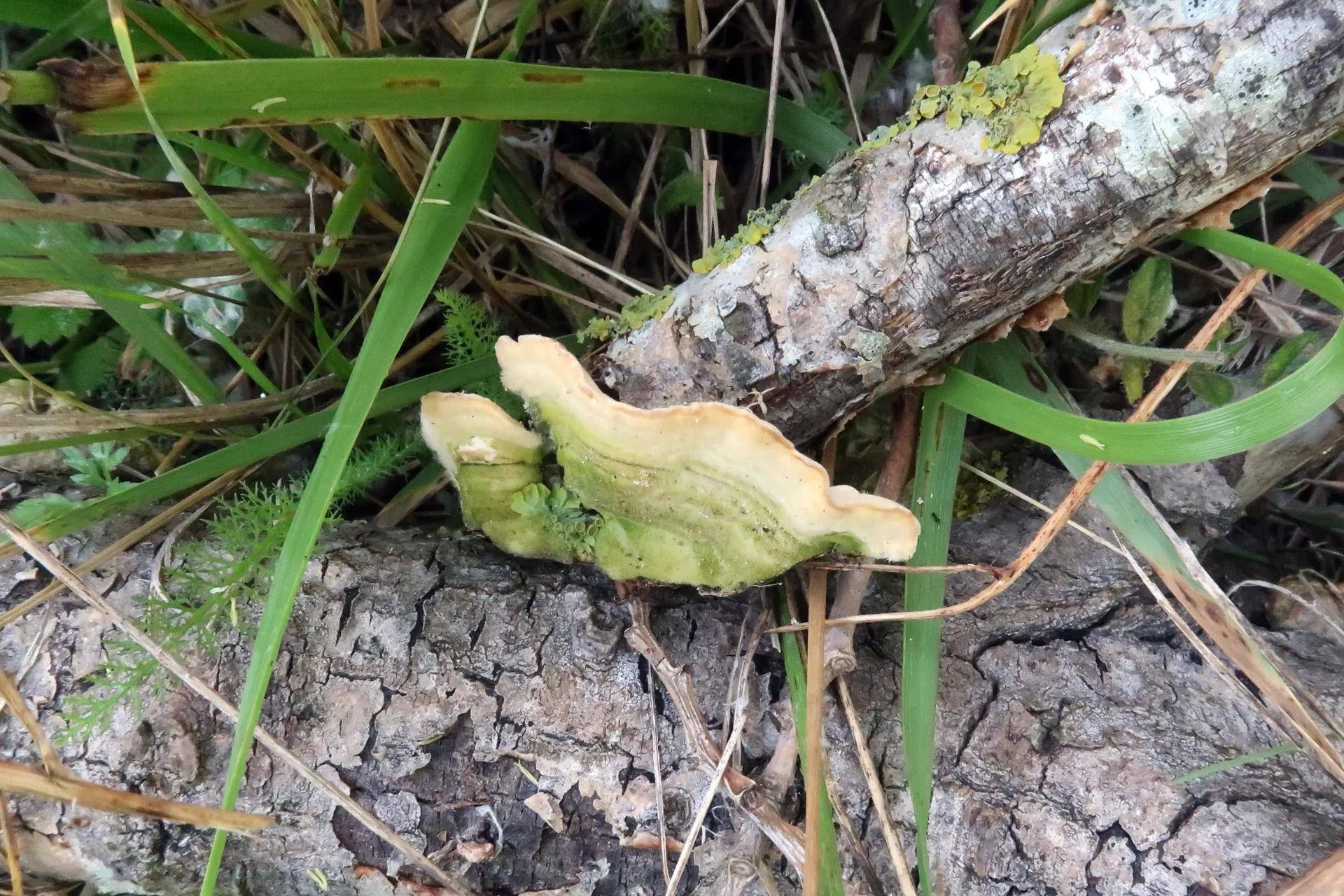
A widely cosmopolitan species that can occur on dead wood of a large number of hosts, with effused-reflexed basidiocarps, shell- or fan-shaped, 4 to 10 cm in diameter, with a hirsute, zoned surface, whitish with brownish or greyish tones, 3 to 4 round pores per mm, and lacking a distinct odor or taste.
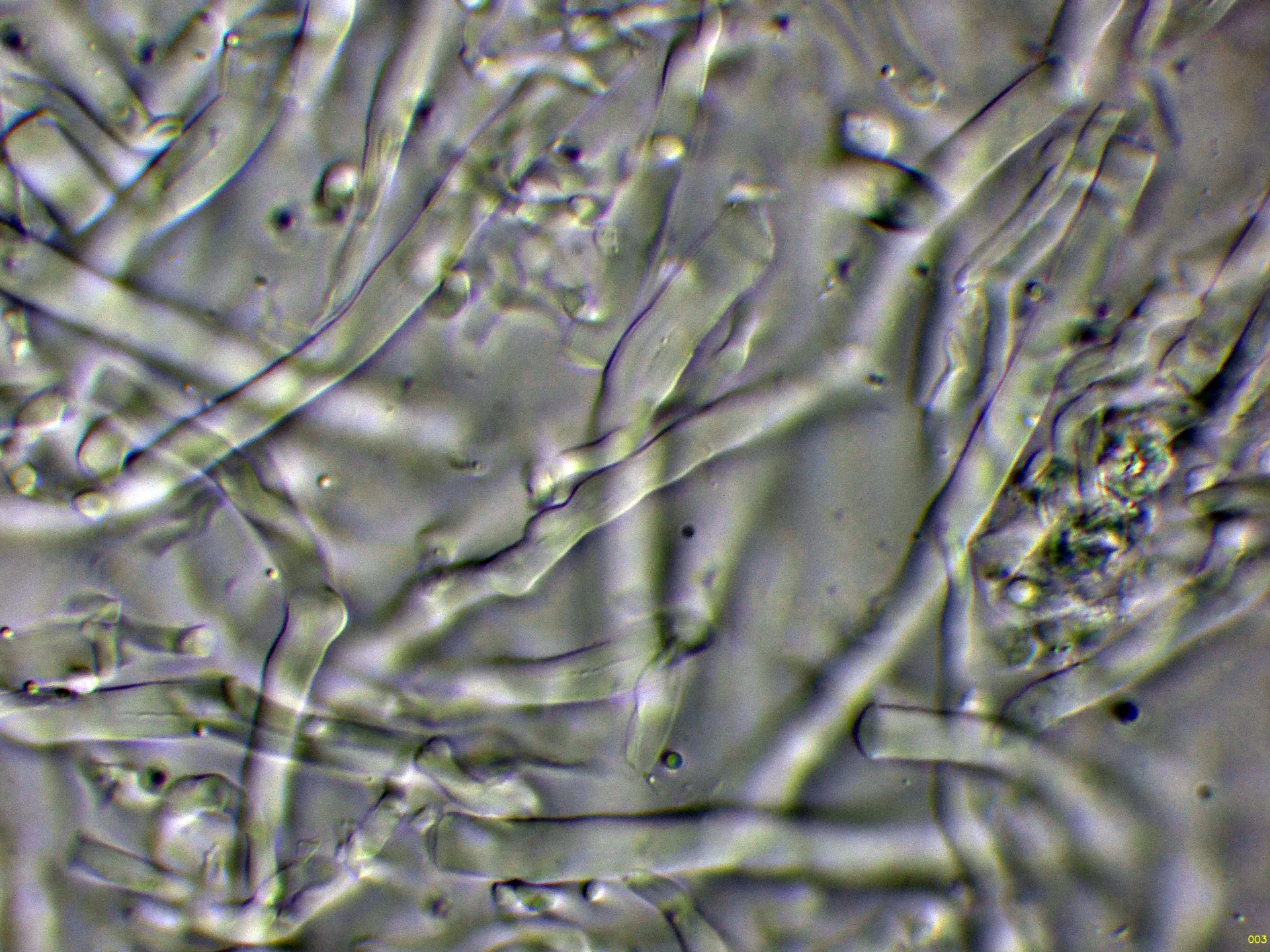
Trimitic hyphal system, with thick-walled skeletal hyphae, hyaline, unbranched, sinuous, 4 to 7 µm wide; thin-walled generative hyphae, hyaline, 2.5 to 5 µm wide, septate and with clamp connections; and thick-walled binding hyphae, hyaline, 2 to 4 µm wide, branched, aseptate.
Hyphae of the pileus surface arranged in emergent hyaline fascicles responsible for its hirsute appearance.
Without cystidia.
Basidia clavate, deeply sunken in the context and difficult to observe, 15 to 22 µm long, 5 to 7 µm wide, with basal clamp connections, 4-spored.
Spores cylindrical to slightly allantoid, smooth, hyaline, thin-walled, 6.5 to 8.5 µm long, 2 to 2.5 µm wide, with slightly granular contents inside, inamyloid in Melzer's reagent.
Herbarium material available: JTP2636/25.
Geographic references
Map generated from global occurrence data from GBIF. GBIF.
Study measurements
Values in Microns (µm)Macroscopic gallery
Microscopic gallery
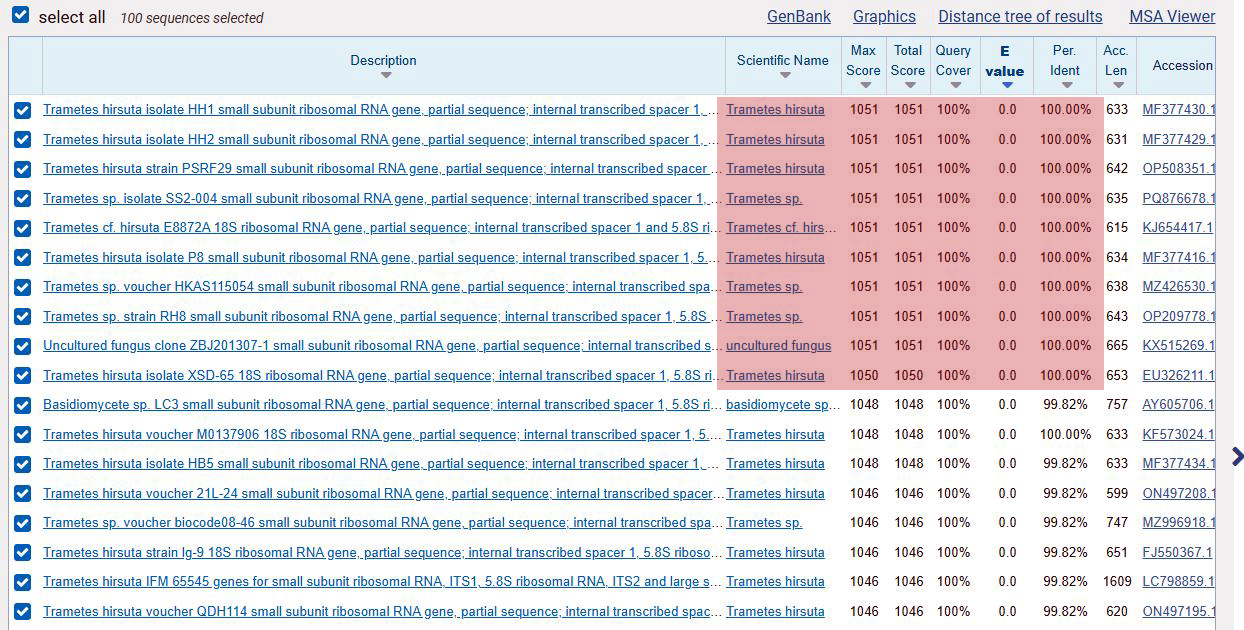
Genetic / Phylogenetic Study
Phylogenetic Tree