Tarzetta catinus
(Holmsk.) Korf & J.K.Rogers
Study description
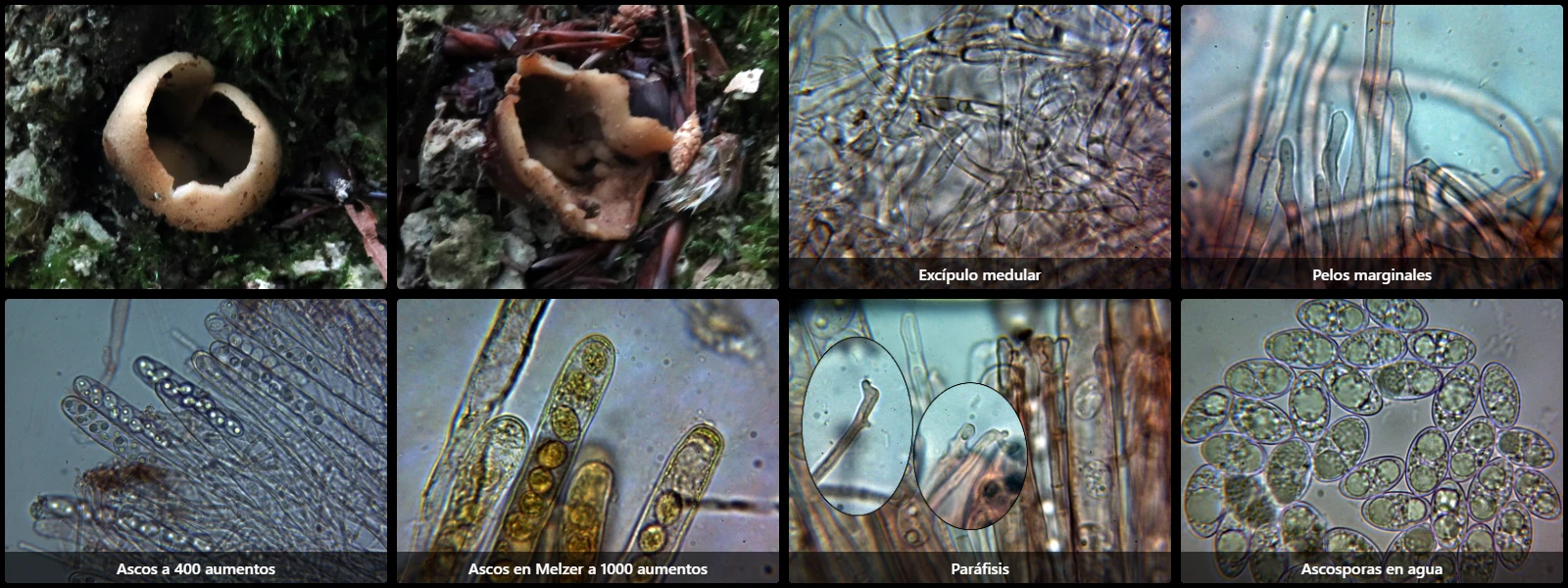
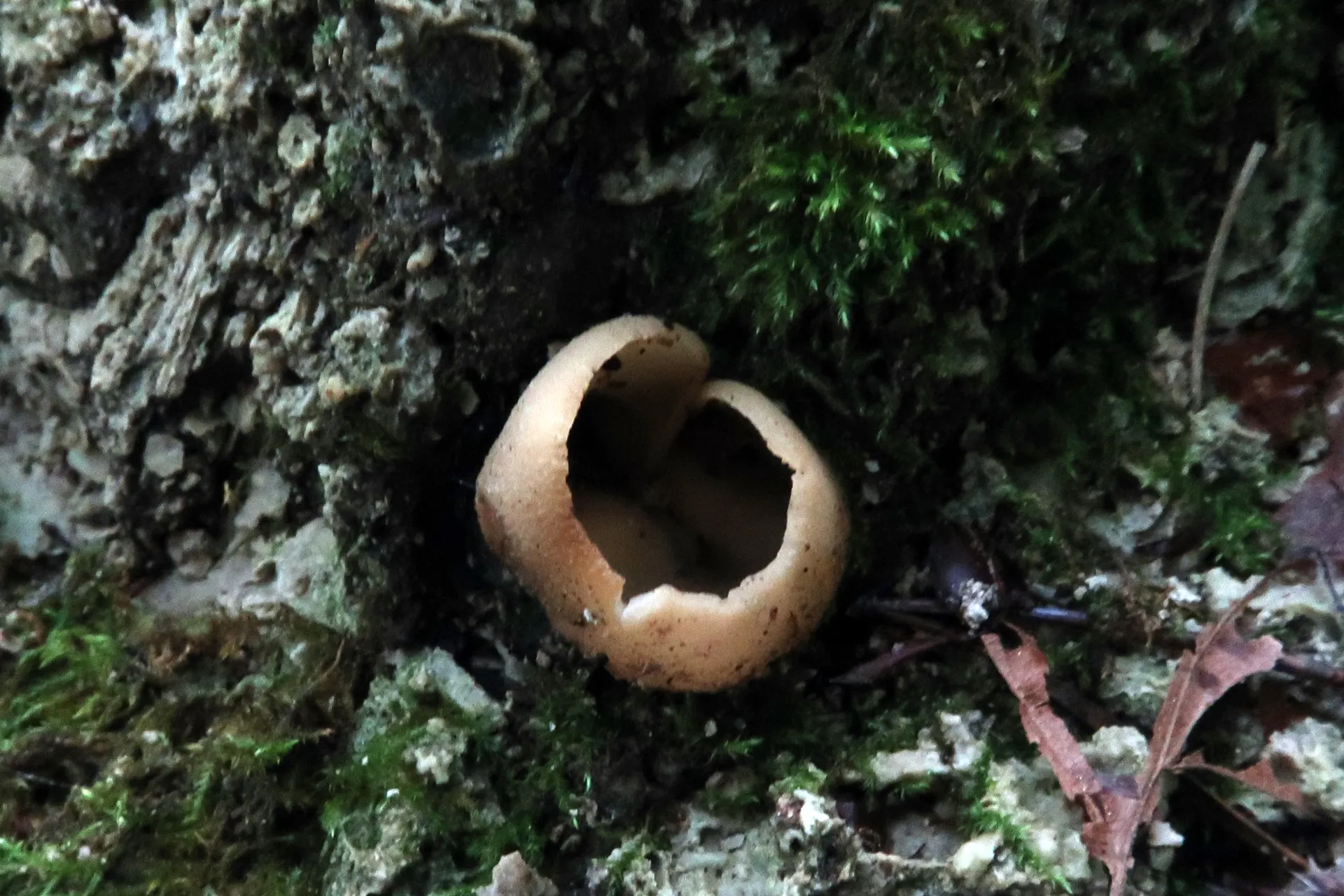
A woodland species, occurring under both broadleaves and conifers, with cup-shaped apothecia 1.5 to 4 cm in diameter, with a cream to brownish hymenium, the outer surface concolorous or only slightly paler, attached to the ground by a short rudimentary stipe, and of fragile, brittle consistency.
Medullary excipulum composed of hyaline filamentous hyphae, heavily interwoven (textura intricata).
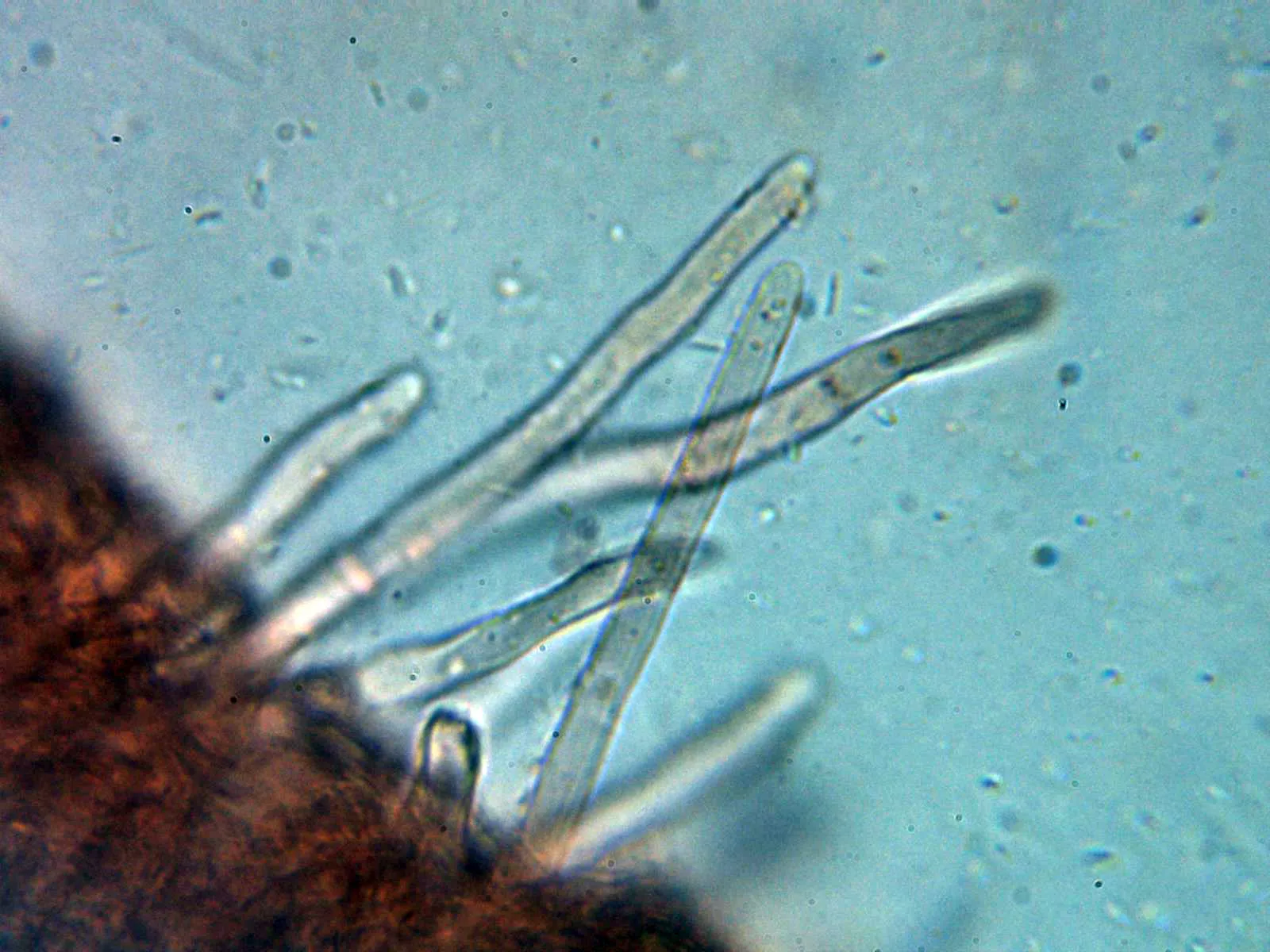
Ectal excipulum of textura globosa-angularis; the outer surface features irregular hyphae with short terminal cells up to 20 µm wide, responsible for its granular appearance.
Asci in the inner receptacle, cylindrical, 8-spored, 260 to 350 µm long, 12 to 16 µm wide, with uniseriate spores overlapping obliquely, and inamyloid in Melzer's or Lugol's (IKI) reagent (both the wall and apical apparatus).
Paraphyses filiform, septate, branched from the base, 3 to 4 µm wide, with slight apical enlargements 5 to 6 µm wide, and with characteristic lobed apices bearing apical protrusions.
Ascospores ellipsoidal to slightly fusiform, smooth, hyaline, slightly thick-walled, 18 to 23 µm long, 10 to 14 µm wide, mostly containing two large oil droplets inside, situated at each pole.
Geographic references
Map generated from global occurrence data from GBIF. GBIF.
Study measurements
Values in Microns (µm)Macroscopic gallery
Microscopic gallery