Suillus granulatus
(L.) Roussel
Study description
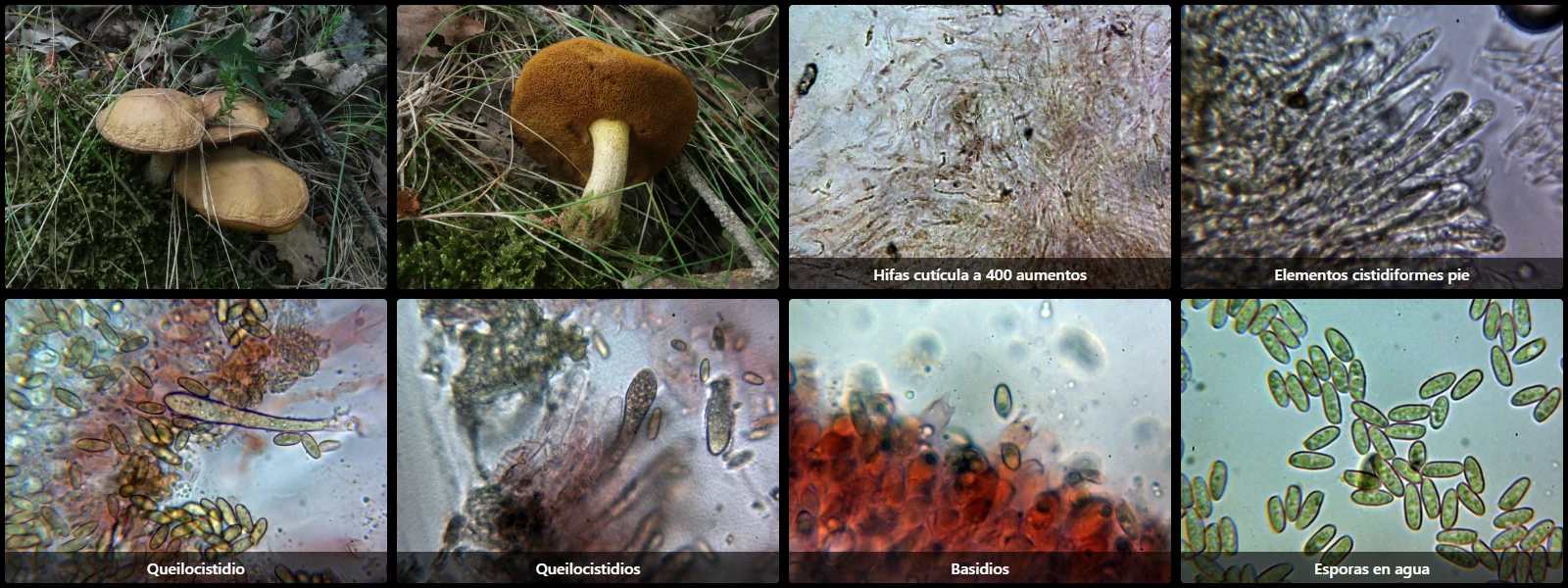
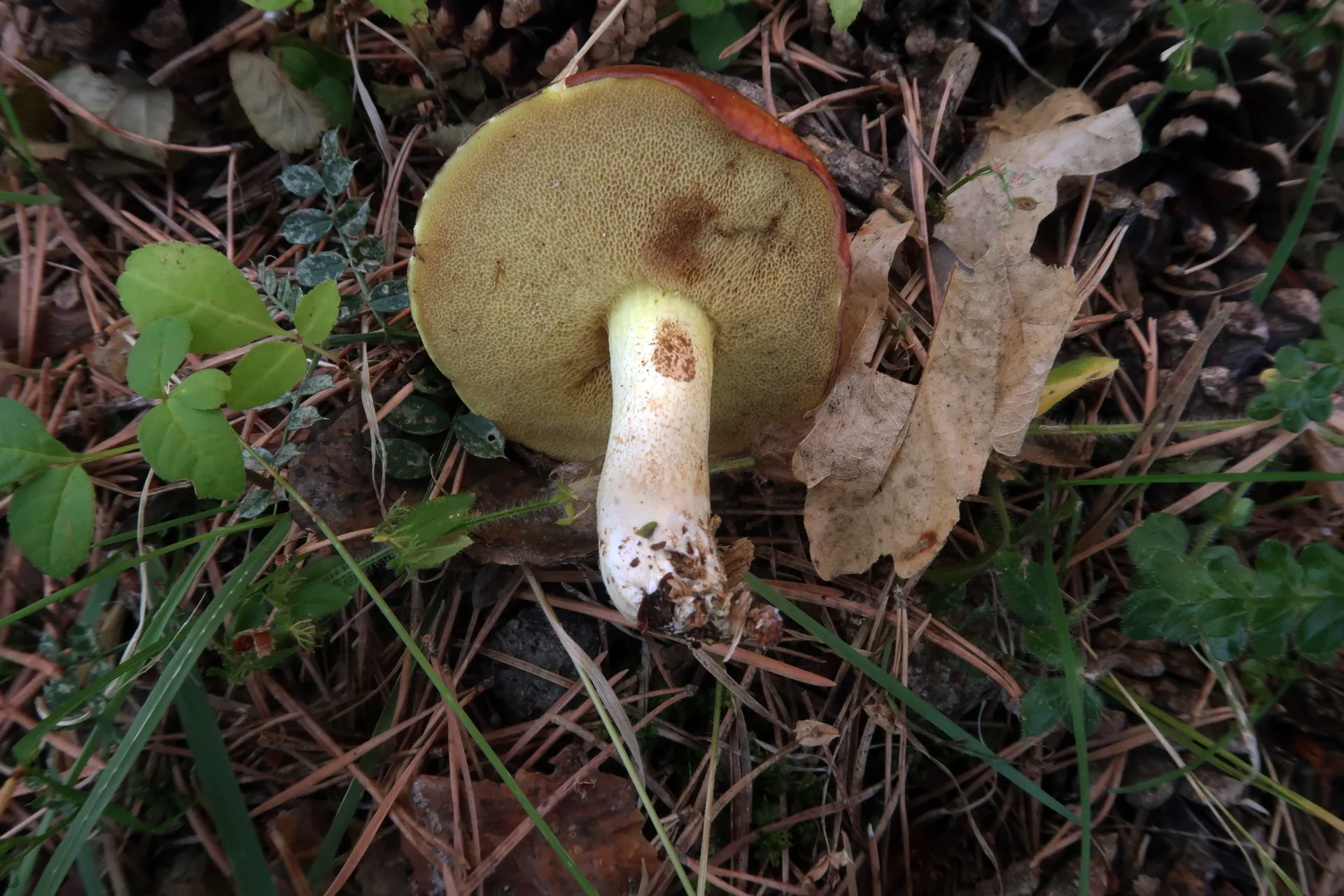
In coniferous forests, preferably pines on calcareous soils, with a convex to flattened cap, 4 to 10 cm in diameter, viscid surface, yellowish-brown to reddish-brown, cream to yellow pores, a cylindrical pale yellow stipe with brownish wart-like granulations, with a pleasant faint odour and sweet taste.
Pileipellis composed of cylindrical hyphae, arranged parallel to slightly interwoven, 3 to 7 µm wide, widely spaced by gelatinisation, with abundant brown intracellular pigment, septate and with simple septa.
Elements clustered in fascicles at the stipe apex functioning as caulocystidia, cylindrical to fusiform, with yellowish-brown pigment inside.
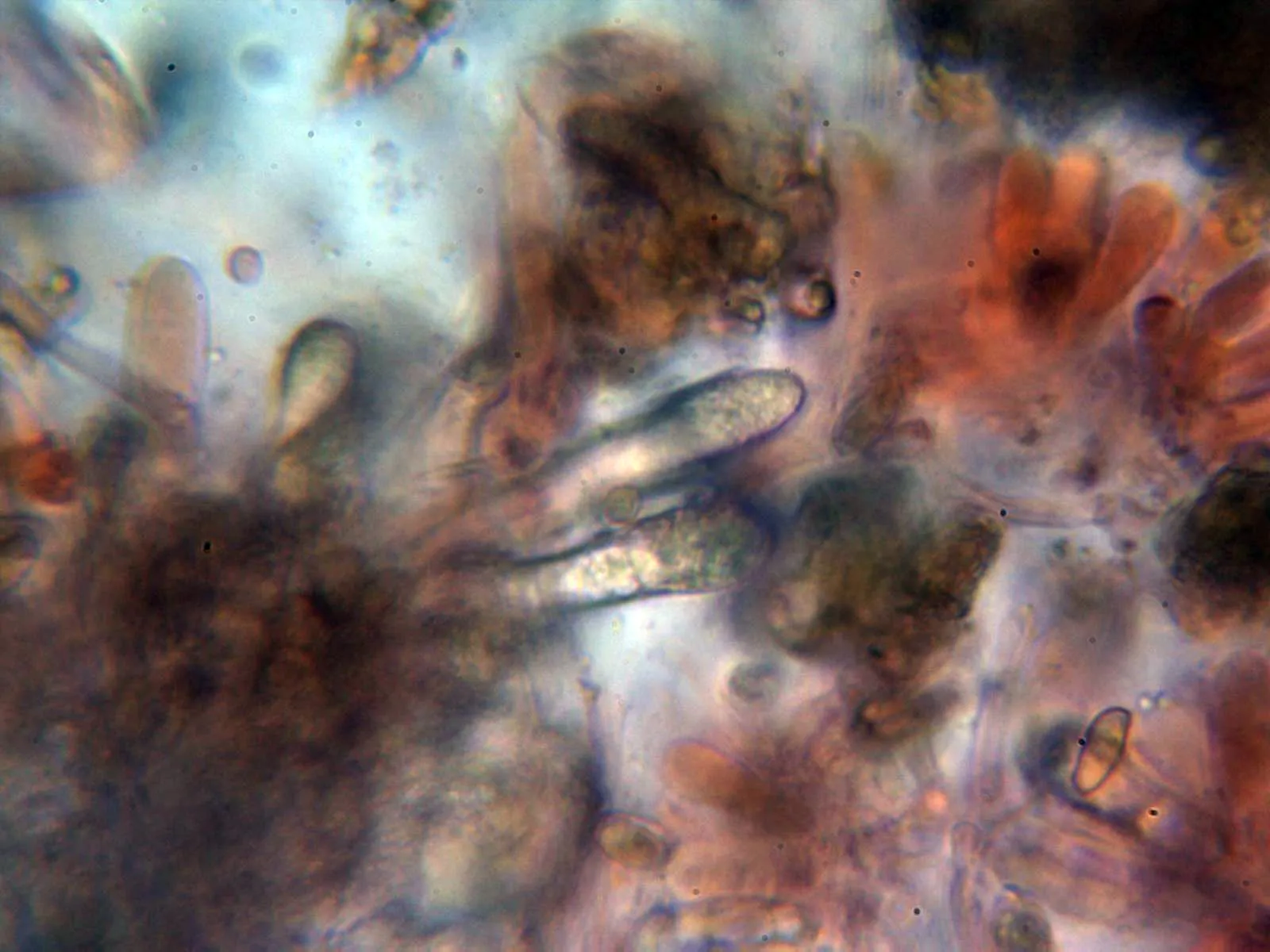
Cheilocystidia clavate, 45 to 65 µm long, 9 to 12 µm wide, with abundant brown granular contents inside.
Pleurocystidia absent.
Basidia cylindrical-clavate, 20 to 30 µm long, 5 to 7 µm wide, with a simple base, 4-spored.
Spores cylindrical-ellipsoidal, smooth, thick-walled, pale yellowish-brown under the microscope, 7.5 to 9.5 µm long, 3 to 4 µm wide, with an indistinct eccentric apiculus at one end, containing small oil droplets (guttules) inside.
Geographic references
Map generated from global occurrence data from GBIF. GBIF.
Study measurements
Values in Microns (µm)Macroscopic gallery
Microscopic gallery