

Strobilurus tenacellus
(Pers.) Singer
Study description
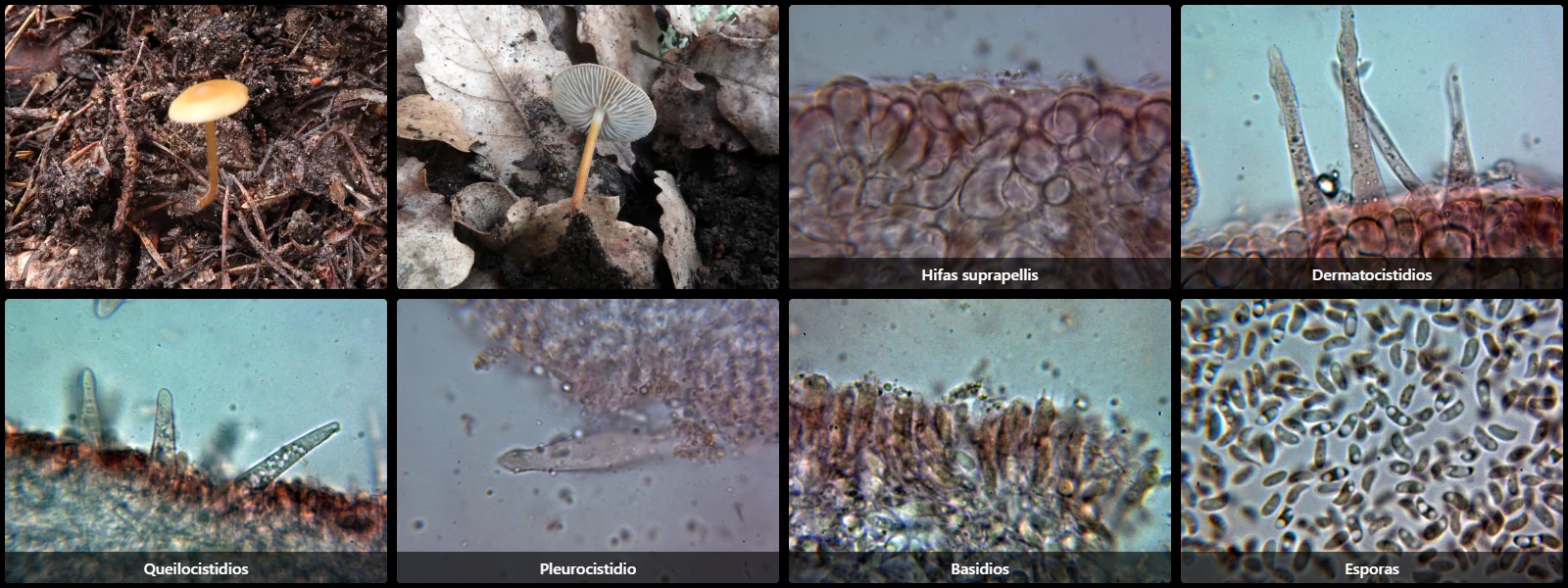
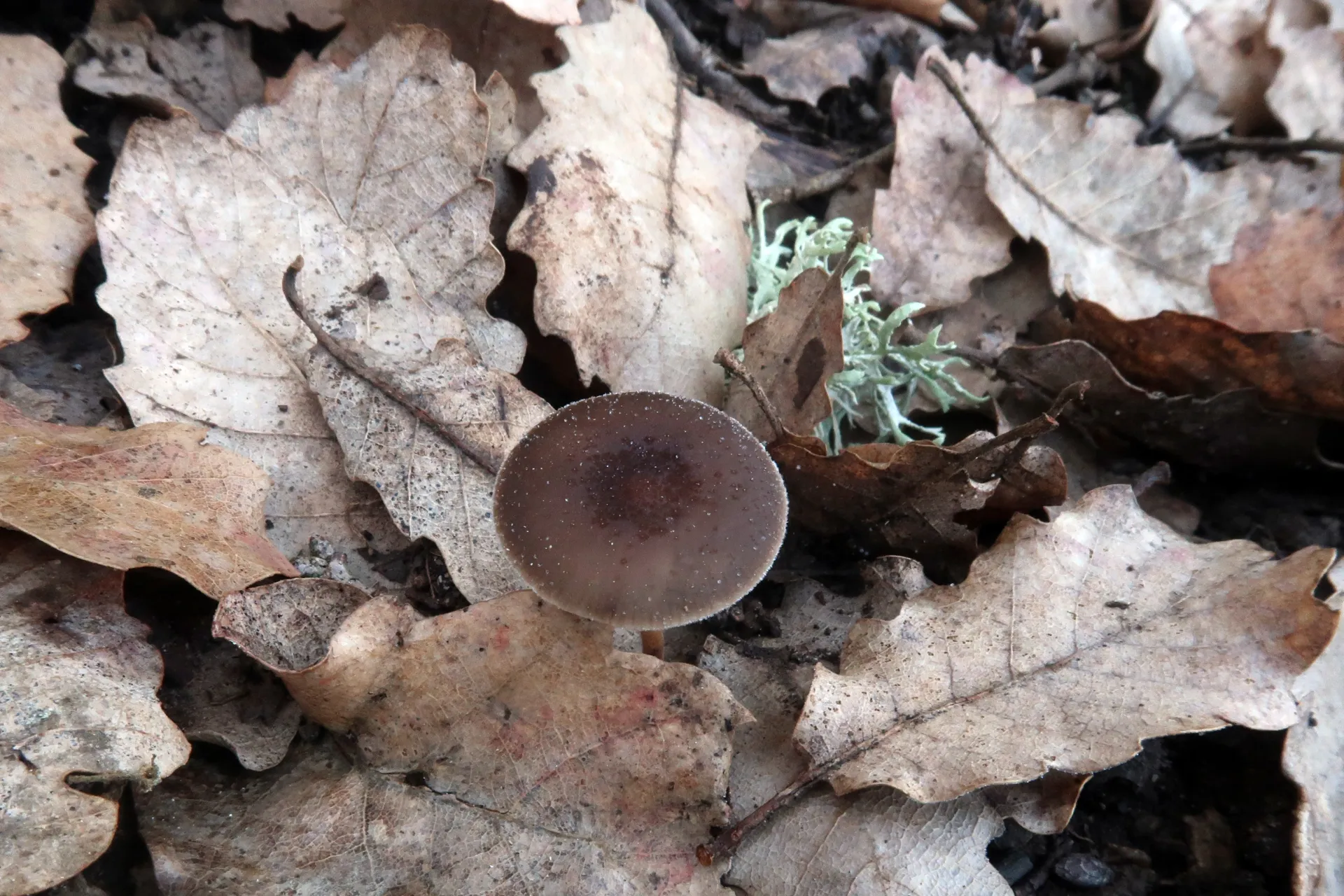
On buried cones of Pinus, preferably cones of Pinus sylvestris, with a convex to flattened cap, 1 to 2.5 cm in diameter, ochraceous-brown to brown, white to greyish gills, adnate to almost free, a cylindrical stipe, yellowish-ochraceous, with a faint fungal odour and slightly bitter taste.
Cellular pileipellis formed by a layer of subglobose to pyriform hyphae, thick-walled, 15 to 20 µm long and 8 to 14 µm wide, and underneath these, broad cylindrical branched hyphae, heavily interwoven, septate and with simple septa (clamps absent).
Dermatocystidia abundant, fusiform to lageniform, large, 30 to 80 µm long, 6 to 8 µm wide, generally lacking apical encrustations.
Caulocystidia subulate, with a broad base, 30 to 75 µm long, 6 to 14 µm wide, occasionally with apical encrustations.
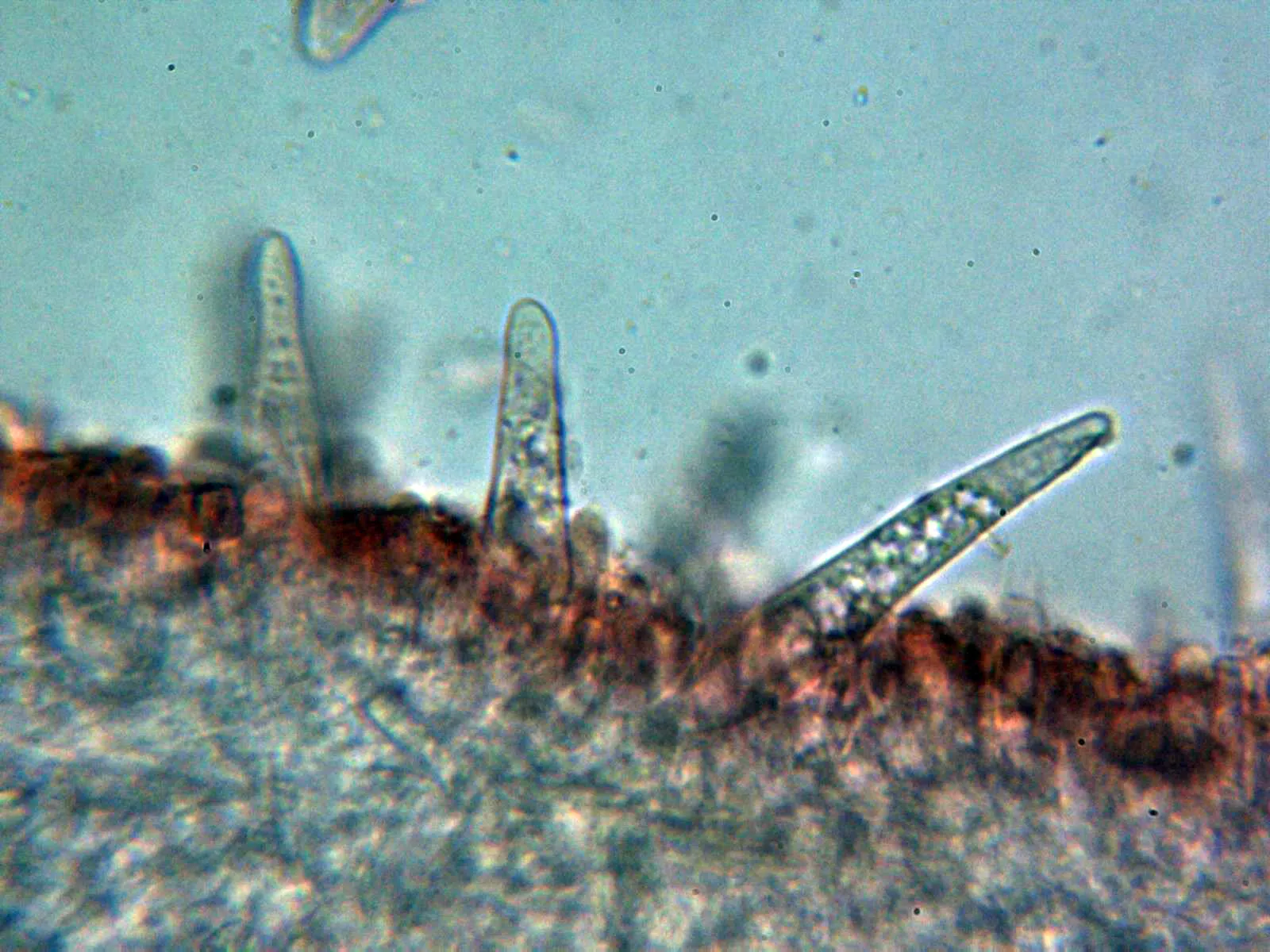
Cheilocystidia and pleurocystidia fusiform, smooth- to slightly thick-walled, 40 to 70 µm long, 9 to 14 µm wide, occasionally with slight apical encrustations, and generally with granular content inside.
Lamellar trama regular or parallel.
Basidia cylindrical-clavate, 15 to 25 µm long, 4 to 5 µm wide, with a simple base, 4-spored.
Spores cylindrical-ellipsoidal to slightly allantoid, smooth, hyaline, thin-walled, 5 to 6.5 µm long, 2 to 3 µm wide, with an eccentric apiculus at one end, containing small oil droplets of various sizes inside, and inamyloid in Melzer's reagent.
Geographic references
Map generated from global occurrence data from GBIF. GBIF.
Study measurements
Values in Microns (µm)Macroscopic gallery
Microscopic gallery