Simocybe centunculus
(Fr.) P.Karst.
Study description
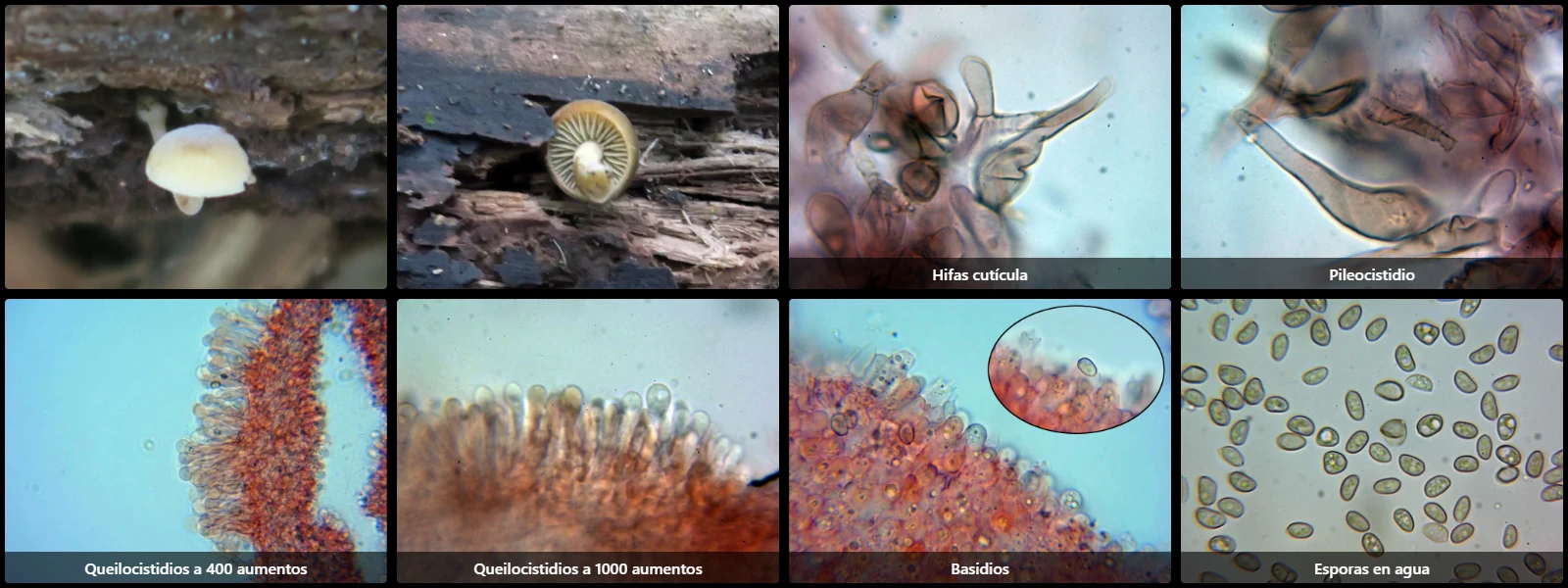
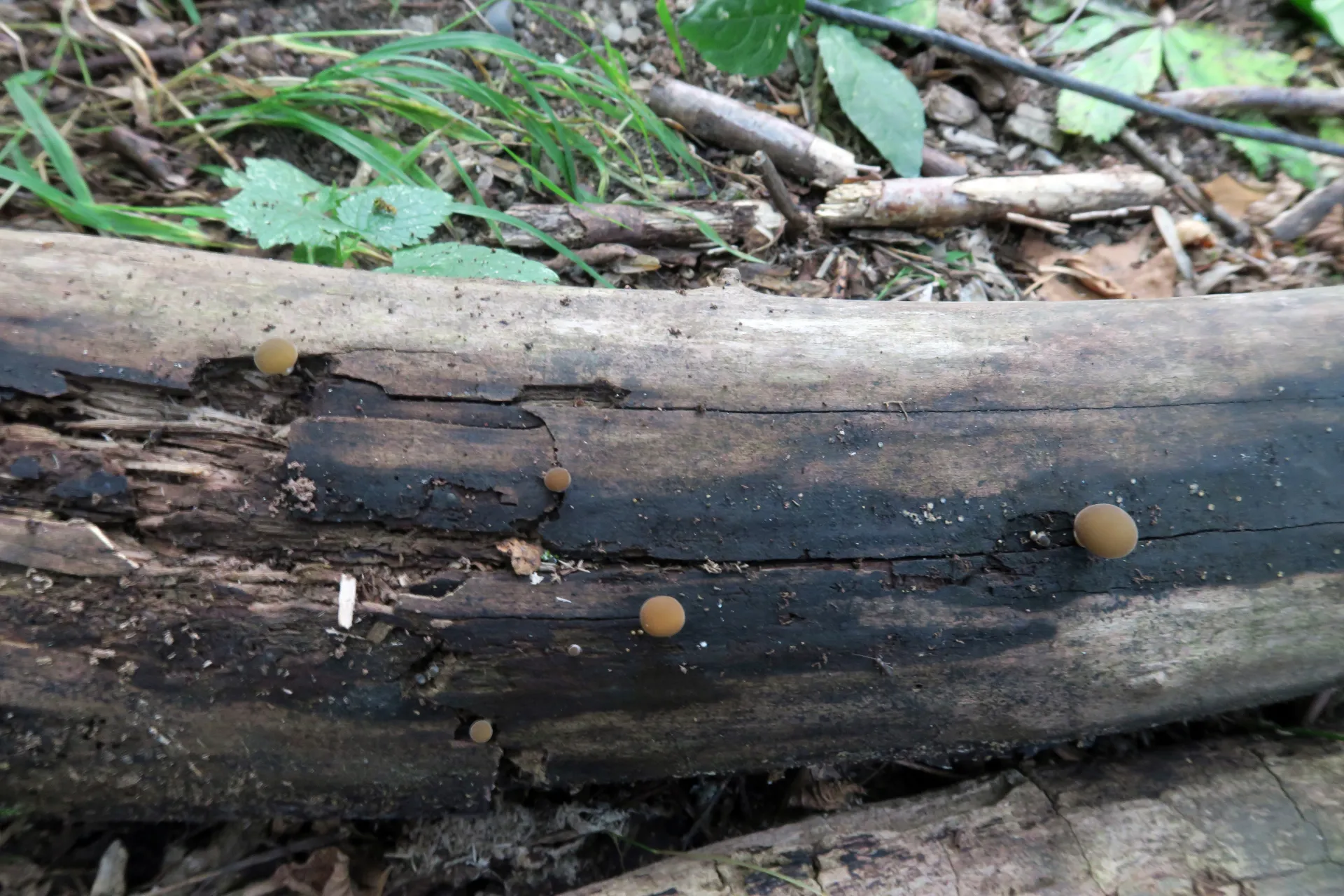
On decorticated decaying broadleaf wood on the ground, with a convex to slightly applanate pileus 0.5 to 2.5 cm across, olivaceous brown to reddish brown, velvety surface; adnate lamellae, cream to brownish; a cylindrical, flexible stipe covered in whitish pruina; fruity odor and mild taste.
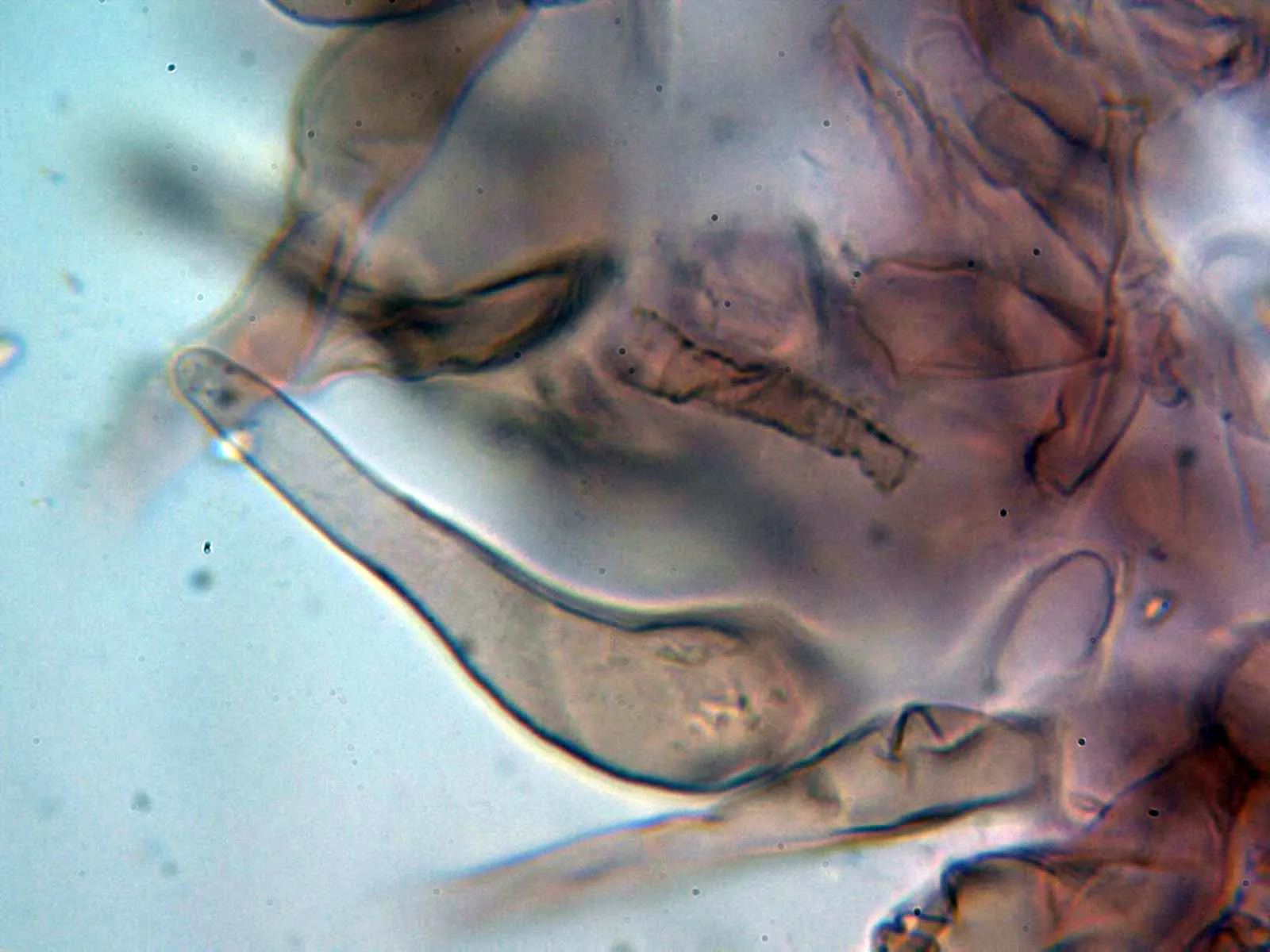
Cuticle formed by cylindrical, hyaline filamentous hyphae with inflations, 5 to 10 µm wide, with numerous emergent hymeniform terminal hyphae acting as pileocystidia, subcylindrical, fusiform to clavate, with faint pale yellow intracellular pigment, septate with simple septa.
Cheilocystidia very numerous, rendering the lamellar edge practically sterile, cylindrical, clavate to slightly lageniform, 30 to 60 µm long and 6 to 10 µm wide.
Pleurocystidia absent.
Basidia cylindrical to clavate, 18 to 25 µm long, 6 to 8 µm wide, with basal clamp connections and four-spored.
Spores ovoid to ellipsoidal, with one flatter side, smooth, thick-walled, pale yellow under the microscope, 6.5 to 8 µm long, 4 to 5 µm wide, with an inconspicuous hyaline apiculus at one end, containing oily granular content inside, and inamyloid in Melzer's reagent (negative reaction).
Geographic references
Map generated from global occurrence data from GBIF. GBIF.
Study measurements
Values in Microns (µm)Macroscopic gallery
Microscopic gallery