Russula sanguinea
Fr.
Study description
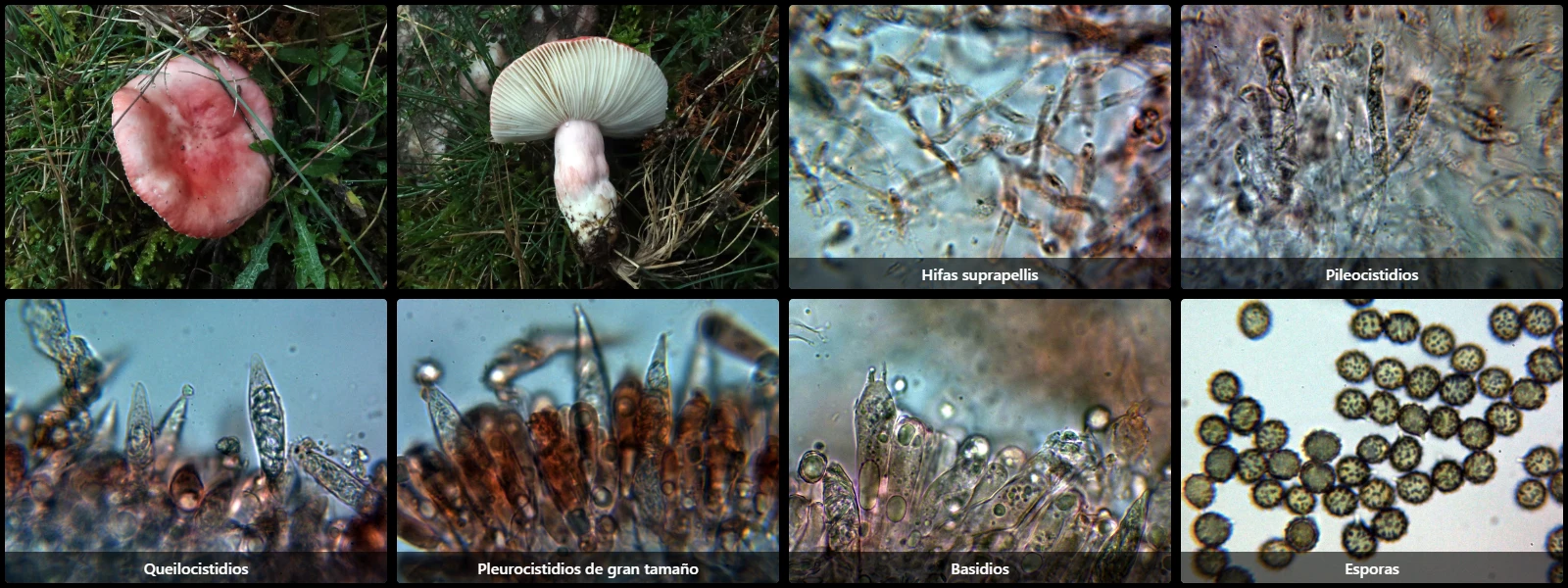
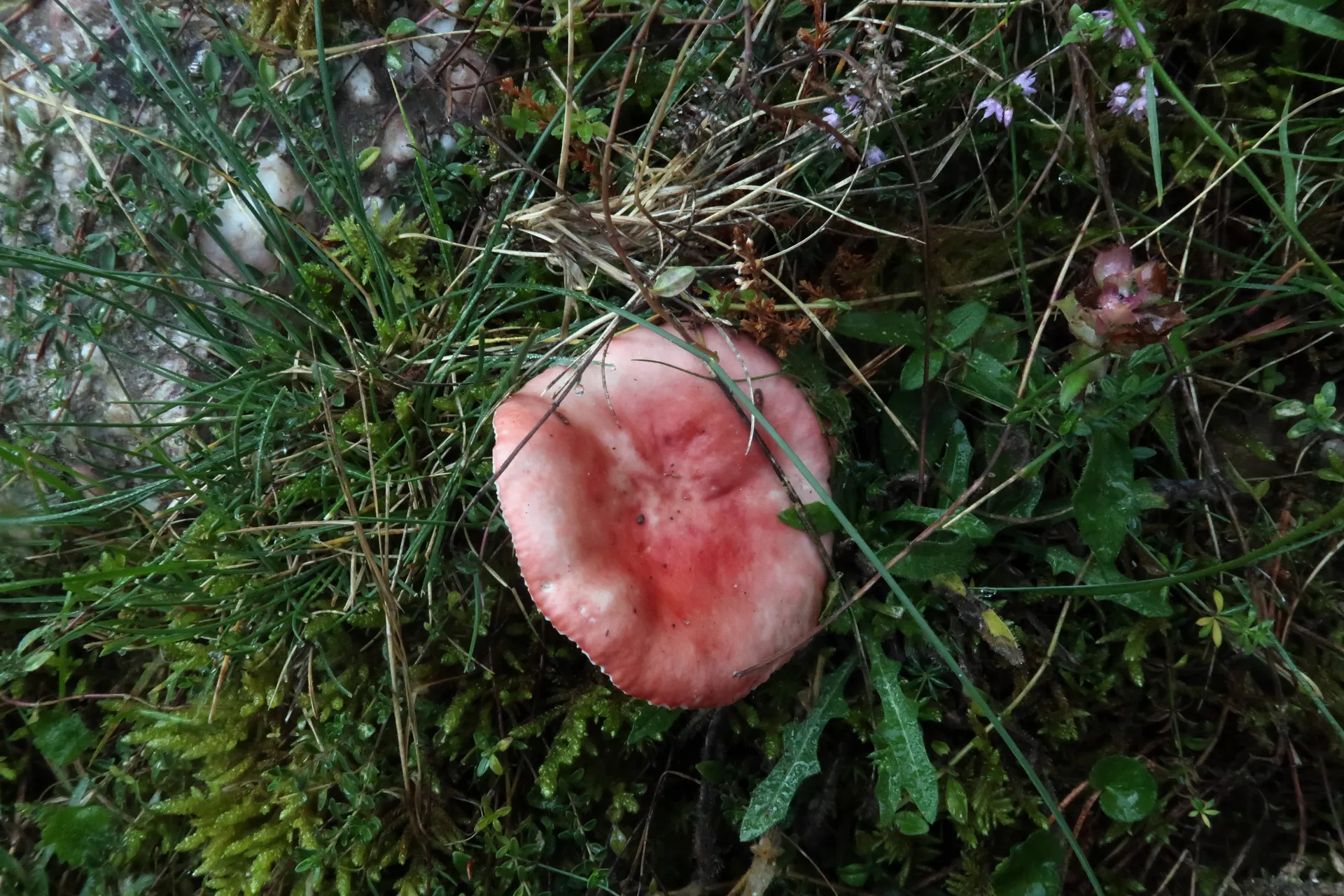
Species typical of pine woods, with a convex to applanate pileus 4 to 10 cm across, reddish pink; pale ochre spore print; robust, hollow stipe with pinkish tones; indistinct odor and taste both acrid and bitter.
Cuticle constituted by cylindrical hyphae, slightly interwoven, branched, 3 to 5 µm wide, the upper ones separated by gelification, septate with simple septa, with numerous cylindrical to slightly clavate pileocystidia 4 to 7 µm wide containing abundant encrusting pigment that darkens with sulphovanillin.
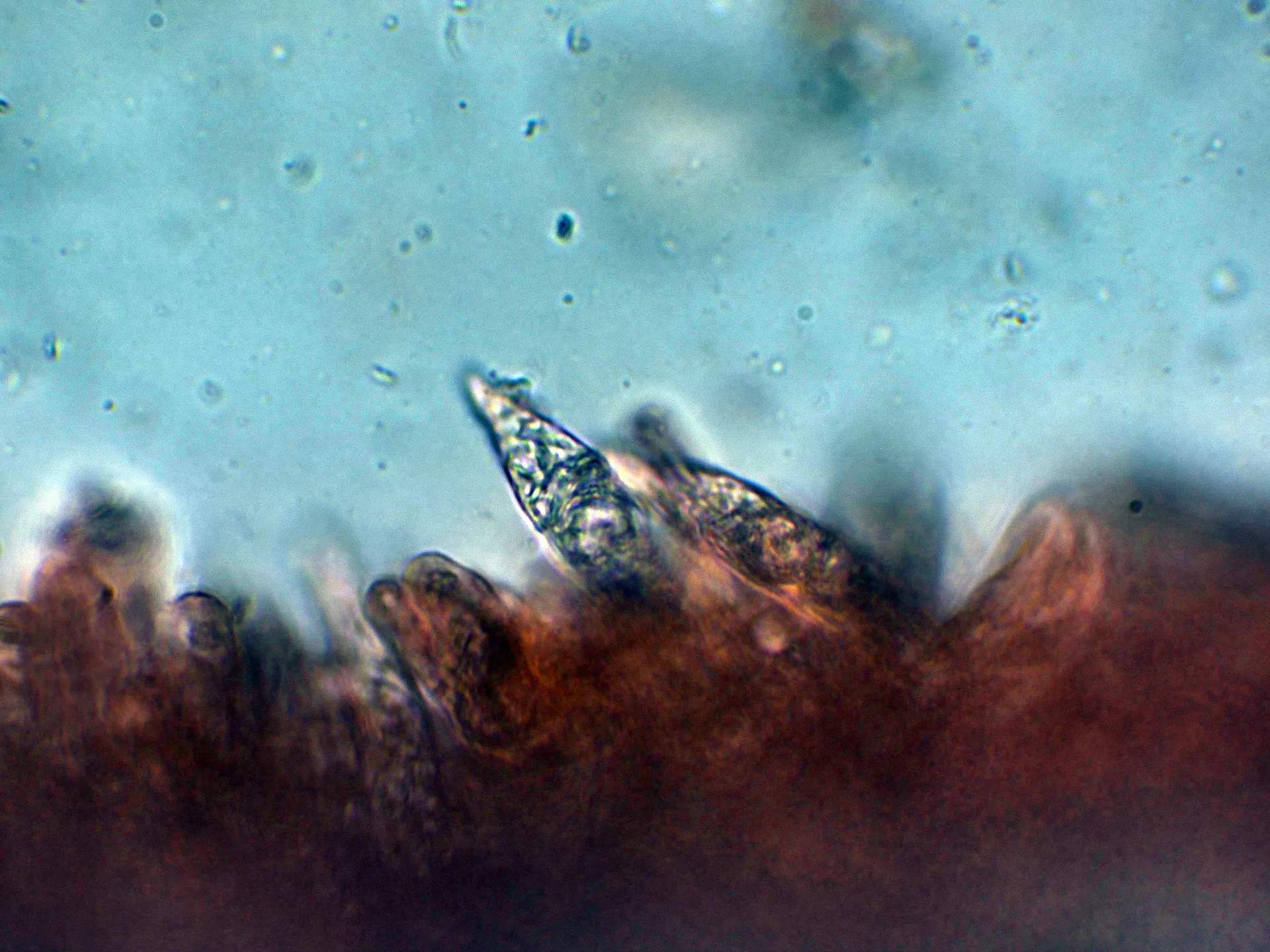
Cheilocystidia fusiform, often with a short apical appendage, 50 to 70 µm long and 8 to 12 µm wide.
Pleurocystidia similar but larger, 70 to 120 µm long and 11 to 16 µm wide; both cheilocystidia and pleurocystidia contain abundant blackish-grey encrusting intracellular pigment.
Basidia cylindrical to clavate, 35 to 50 µm long, 9 to 11 µm wide, simple-based and four-spored.
Spores subglobose to ovoid, with warts up to 1 µm high, 7.5 to 10 µm long, 5.5 to 8 µm wide, ornamented with coarse isolated warts not connecting into ridges.
Geographic references
Map generated from global occurrence data from GBIF. GBIF.
Study measurements
Values in Microns (µm)Macroscopic gallery
Microscopic gallery