Russula rosea
Pers.
Study description
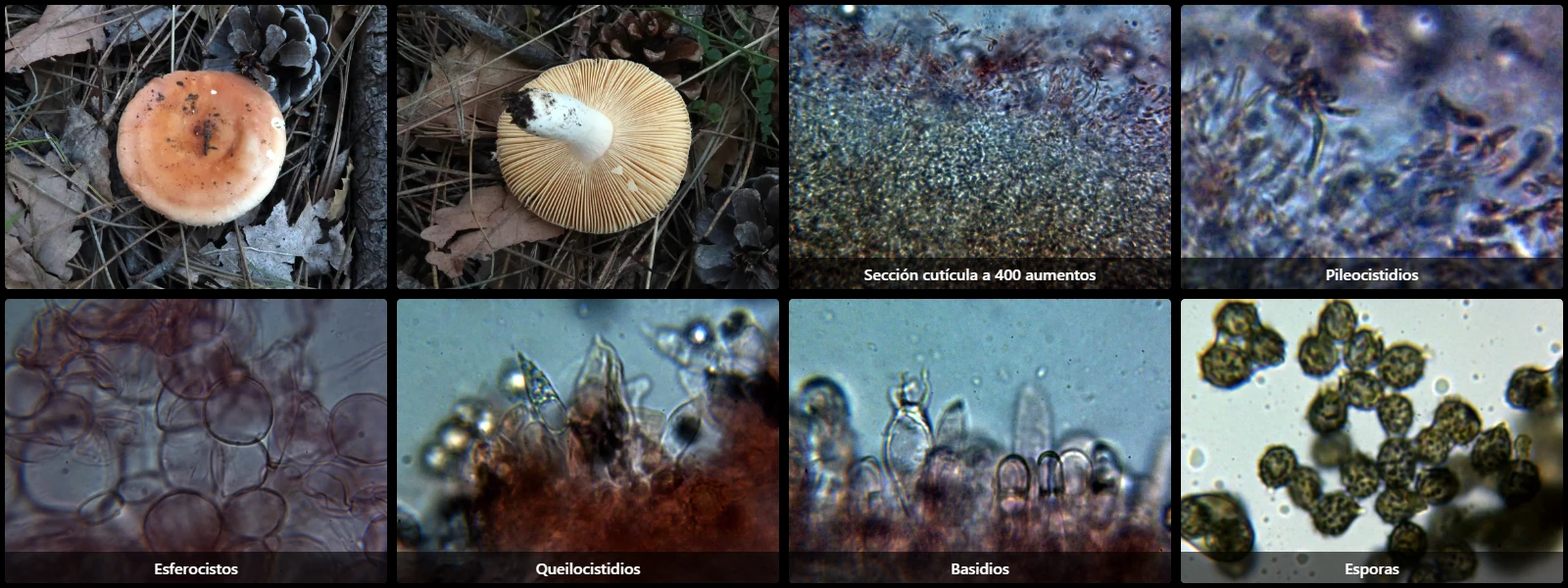
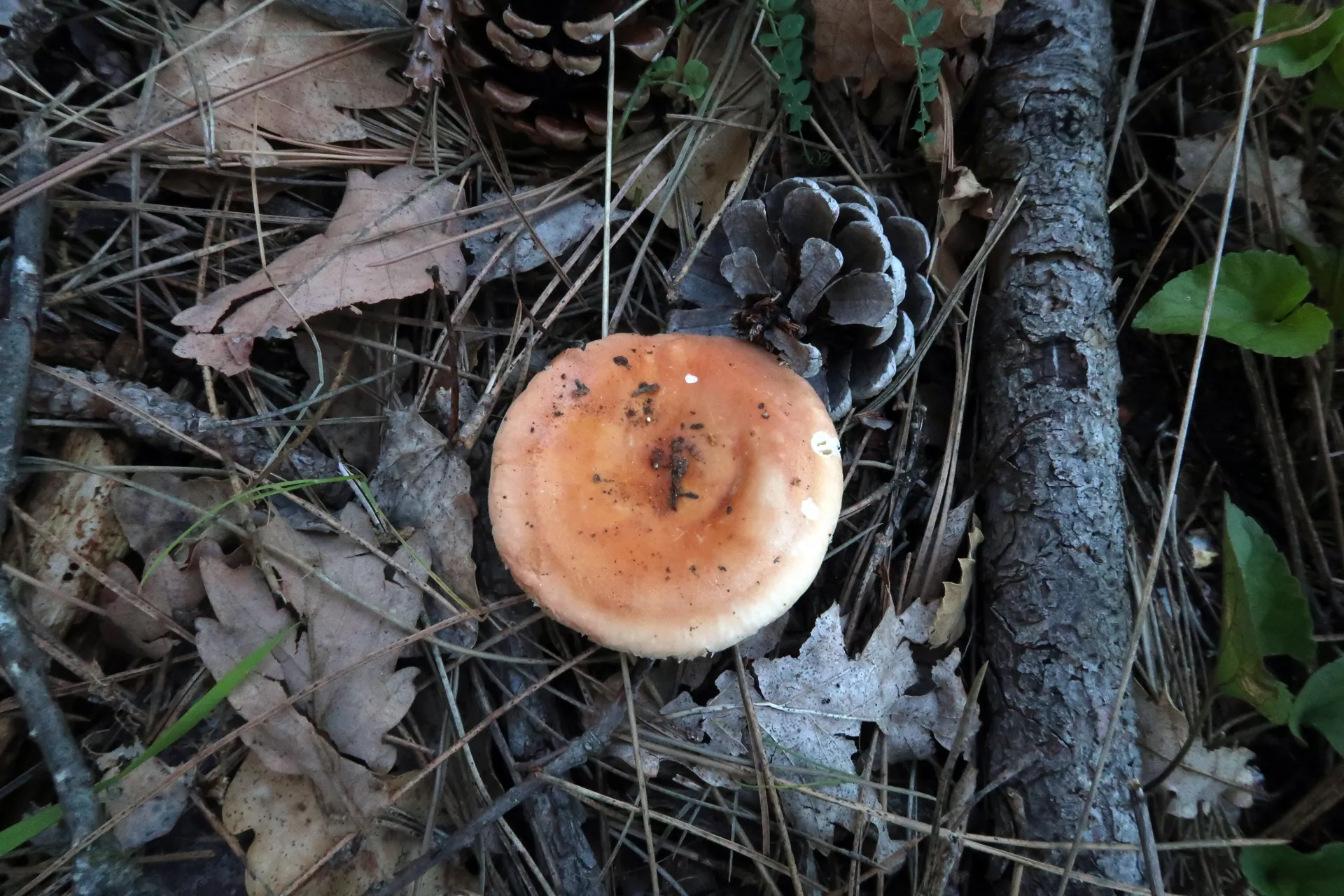
Species typical of broadleaf or mixed forests, formerly known as Russula lepida, with a hemispherical to infundibuliform pileus 4 to 11 cm in diameter, reddish, fading to pinkish or yellowish ochre; pale cream spore print; white stipe; fruity odor and mild to slightly bitter taste.
Cuticle filamentous, formed by cylindrical hyphae 3 to 4 µm wide, branched, interwoven, intermixed with primordial hyphae with encrusting intracellular pigment 3 to 5 µm wide, and terminal hyphae acting as pileocystidia, cylindrical to fusiform, 4 to 8 µm wide.
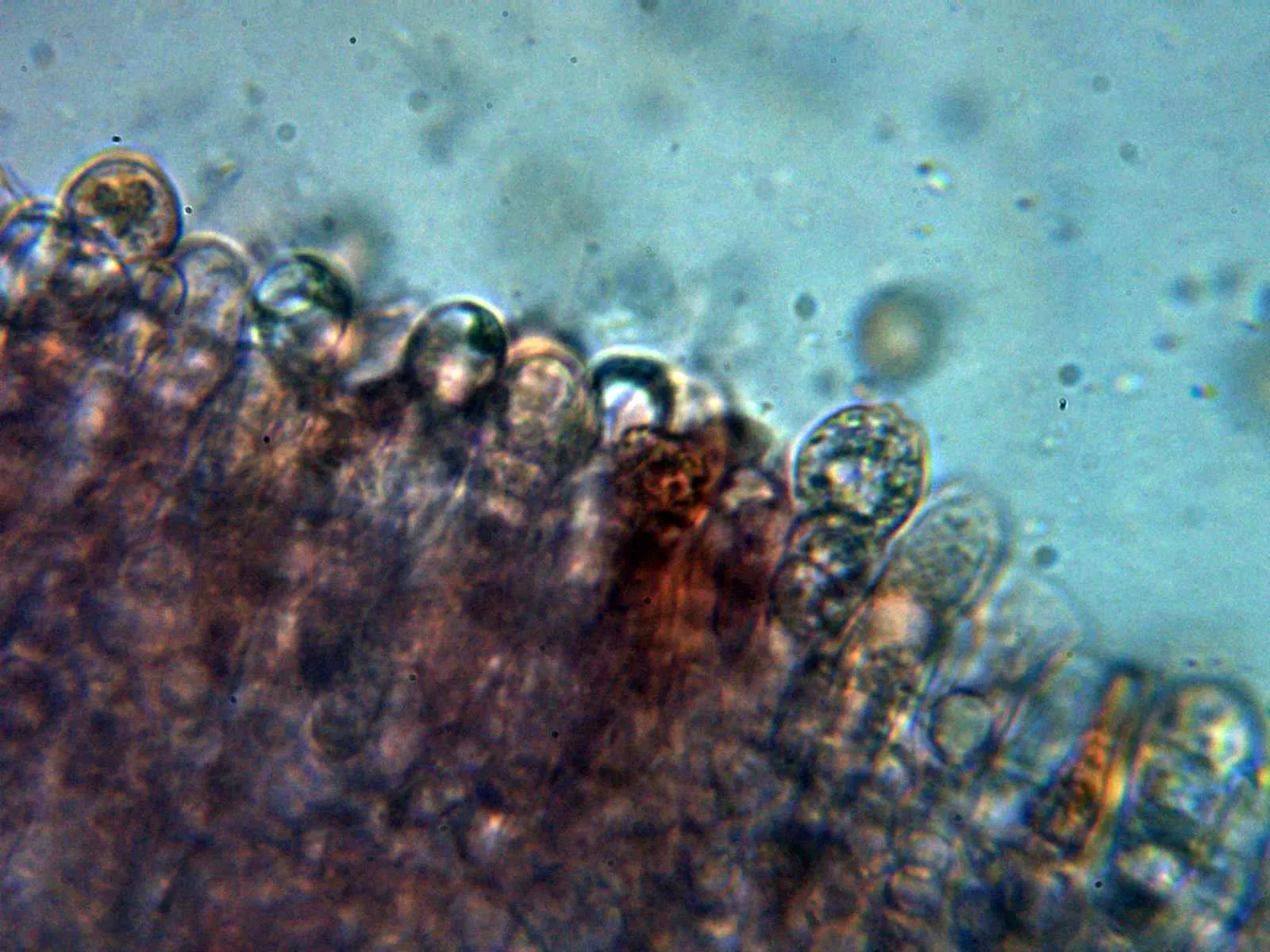
Cheilocystidia and pleurocystidia fusiform, 40 to 80 µm long and 8 to 11 µm wide, with granular content inside.
Basidia clavate, 40 to 50 µm long, 11 to 13 µm wide, simple-based and four-spored.
Spores subglobose, with short warts only up to 0.5 µm high, 6.5 to 8.5 µm long, 5.5 to 8 µm wide, ornamented with warts coalescing into ridges, without forming a complete reticulum.
Geographic references
Map generated from global occurrence data from GBIF. GBIF.
Study measurements
Values in Microns (µm)Macroscopic gallery
Microscopic gallery