Russula ochroleuca
Fr.
Study description
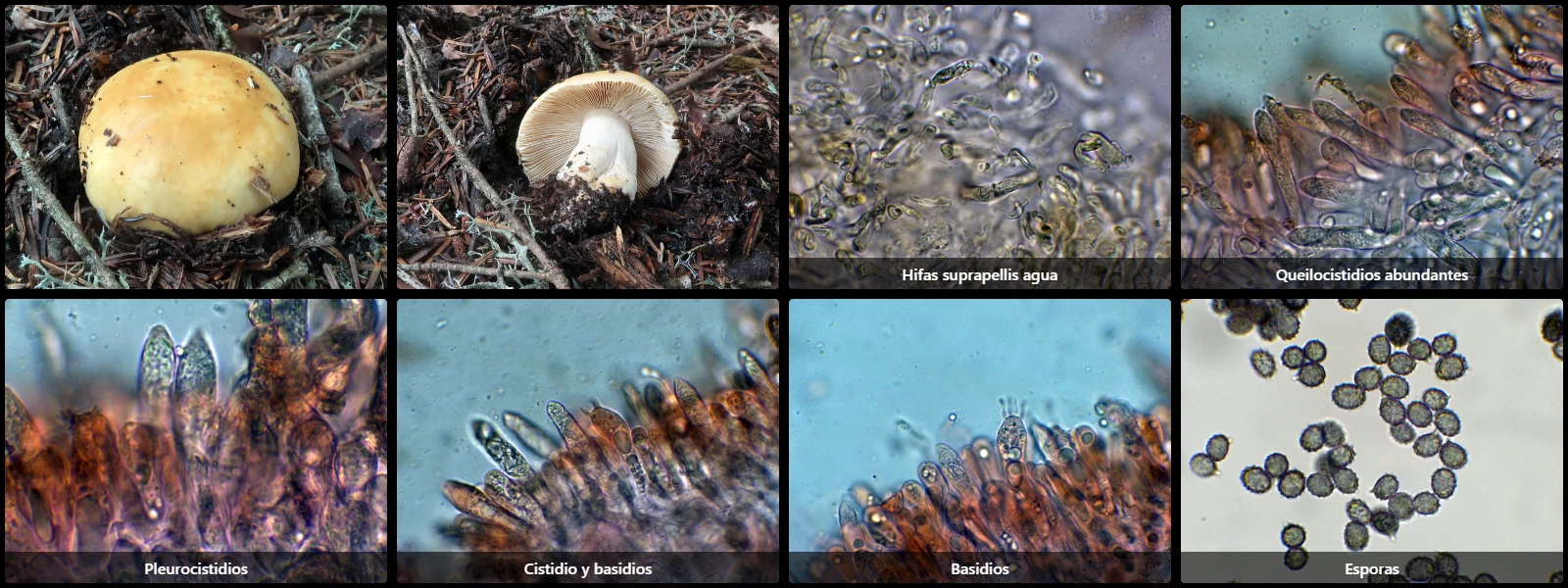
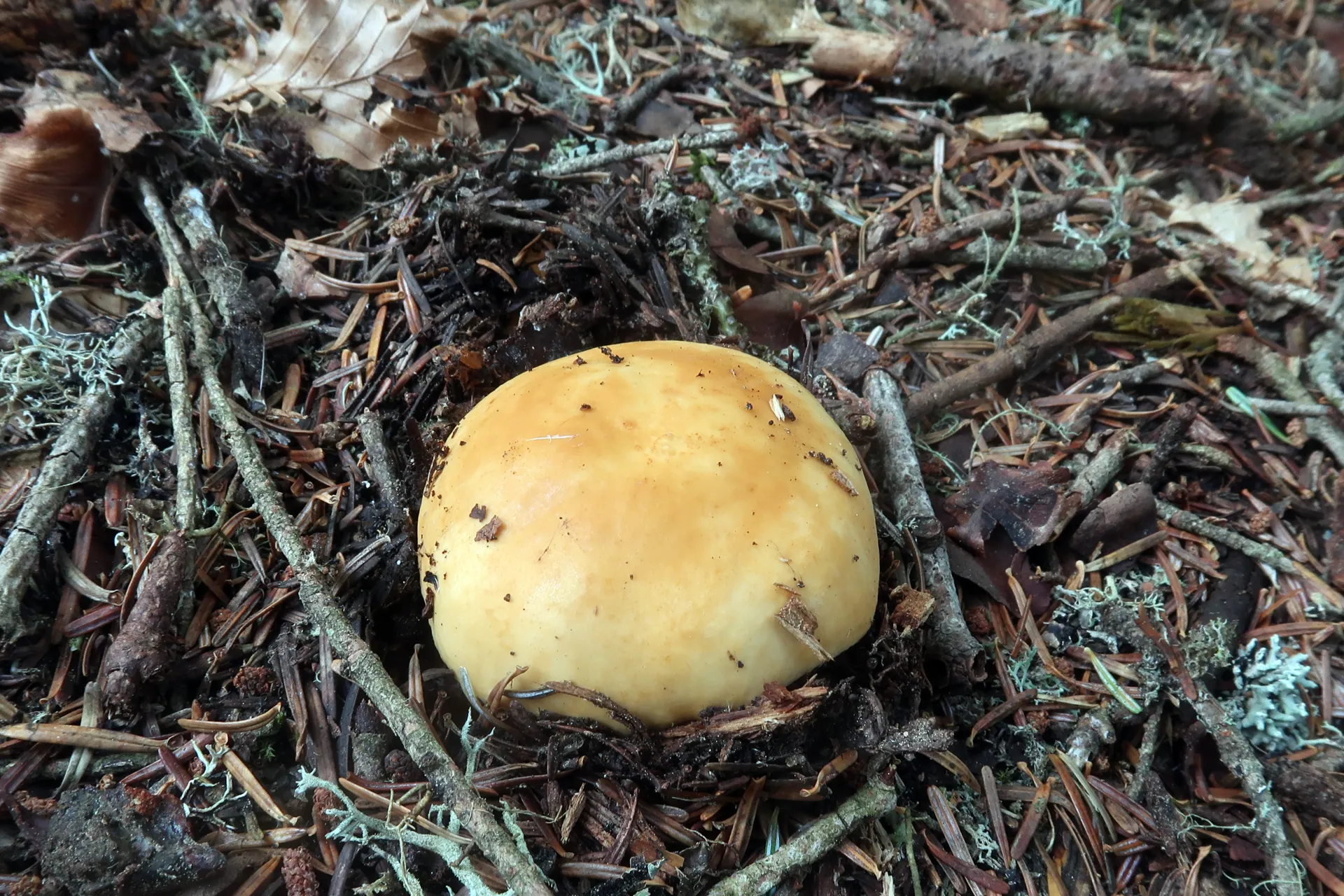
Species fruiting on acidic soils, with a convex to applanate pileus 4 to 10 cm in diameter, ochraceous yellow; whitish to pale cream spore print; whitish stipe darkening upon handling; faint indistinct odor and slightly acrid taste.
Cuticle formed by filamentous hyphae 4 to 6 µm wide, separated by gelification, interwoven, without true pileocystidia, with yellowish-brown intracellular pigment, septate with simple septa.
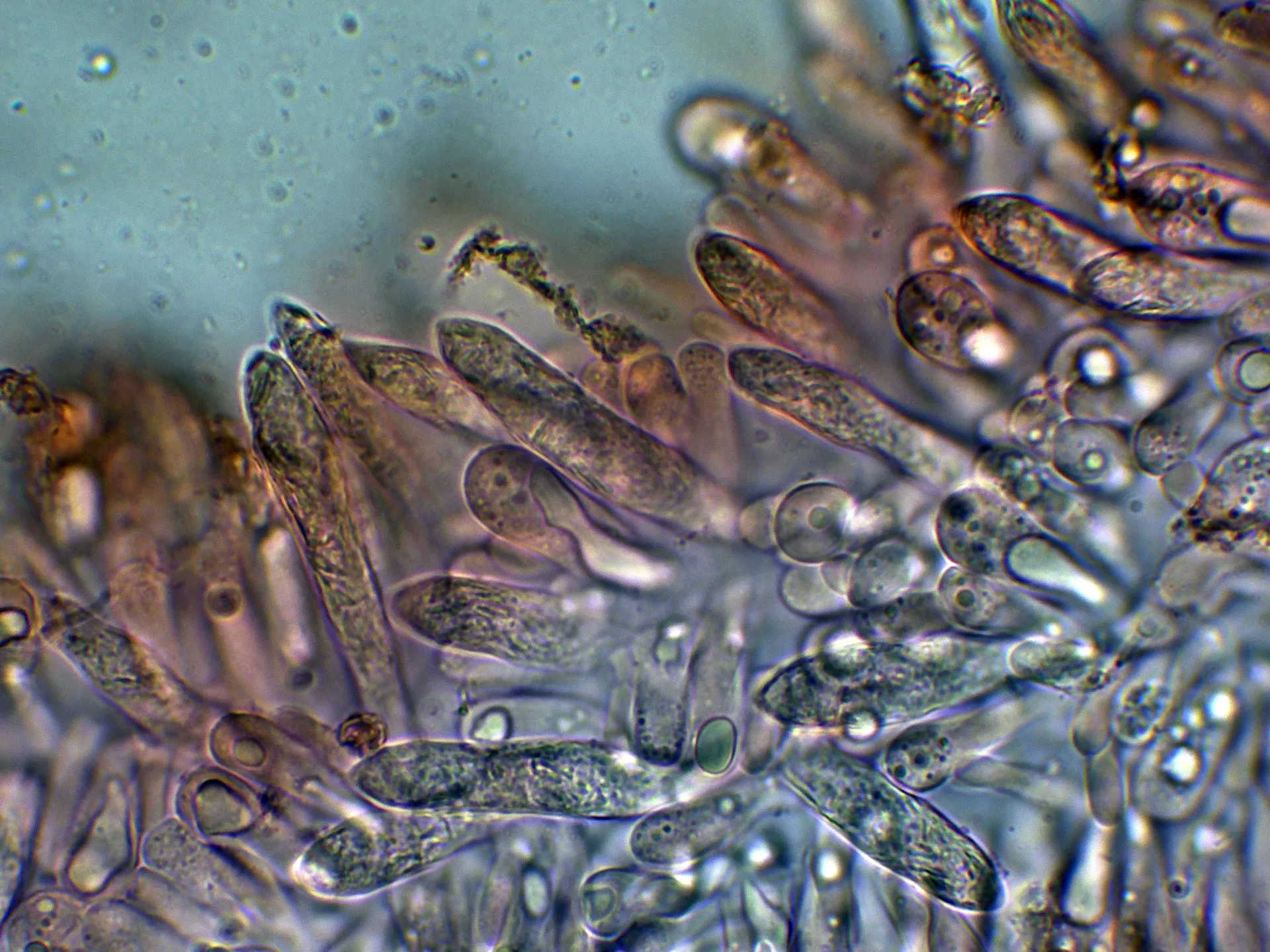
Cheilocystidia abundant, cylindrical to fusiform, 40 to 70 µm long and 5 to 7 µm wide.
Pleurocystidia scattered, very similar in morphology to cheilocystidia, 50 to 85 µm long and 8 to 11 µm wide; both cheilocystidia and pleurocystidia contain abundant blackish-brown granular pigment inside.
Basidia clavate, 45 to 55 µm long, 10 to 12 µm wide, lacking basal clamp connections, bearing two or four sterigmata (two- or four-spored).
Spores subglobose to ellipsoidal, with warts up to 0.8 µm high, 7 to 9 µm long, 5.5 to 7 µm wide, ornamented with isolated warts, some joined together, though not forming ridges.
Geographic references
Map generated from global occurrence data from GBIF. GBIF.
Study measurements
Values in Microns (µm)Macroscopic gallery
Microscopic gallery