Rickenella fibula
(Bull.) Raithelh.
Study description
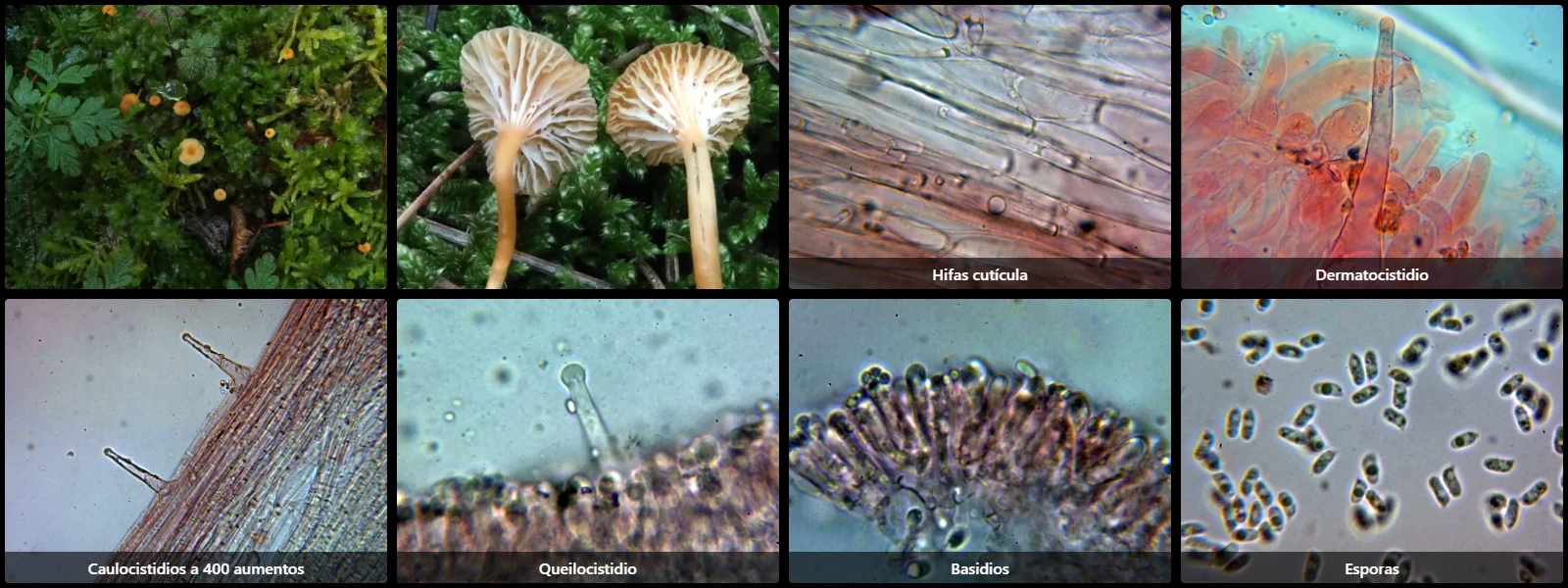
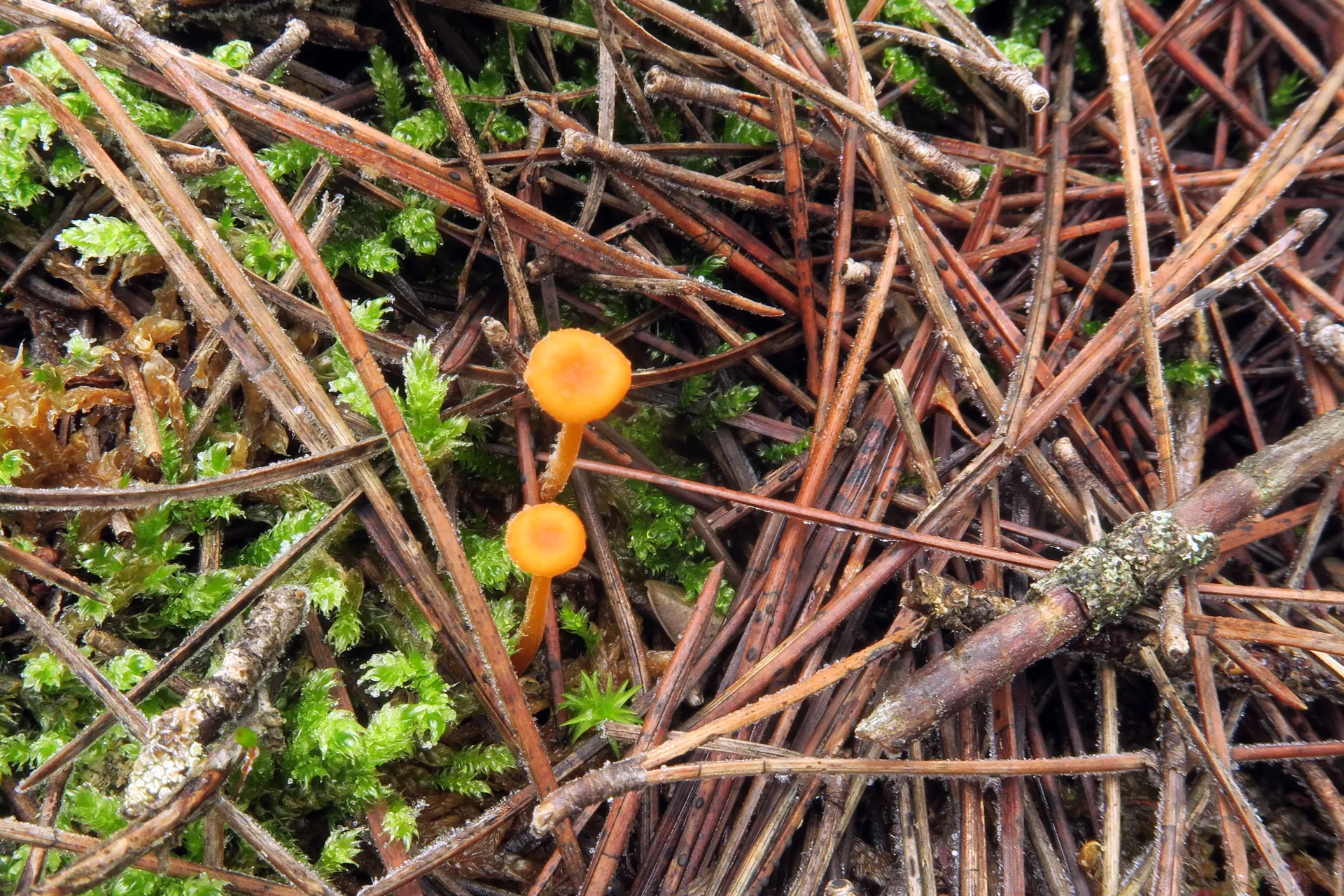
Species typical of woodlands among mosses, with a convex to infundibuliform pileus depressed at the center, 4 to 10 mm in diameter, orange; decurrent, cream-colored, anastomosing lamellae; a cylindrical, hollow, cream-colored stipe; without distinct odor or taste.
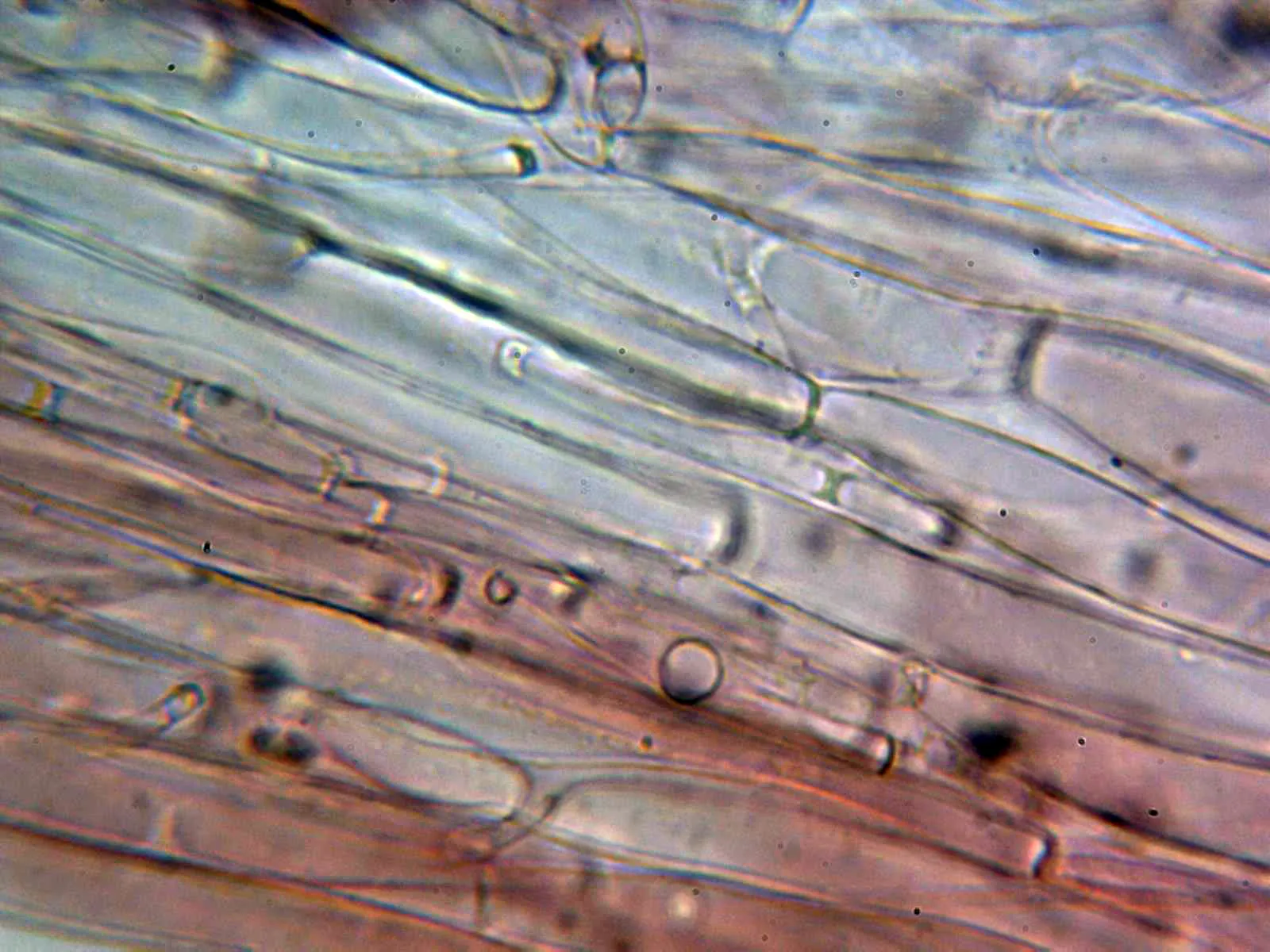
Cuticular hyphae arranged parallel, hyaline or with faint ochraceous intracellular pigment, 4 to 8 µm wide, septate with small clamp connections at the septa, and emergent dermatocystidia 30 to 40 µm long and 4 to 6 µm wide.
Caulocystidia present over the entire stipe surface, hyaline, thick-walled, slightly capitate, 25 to 40 µm long and 4 to 6 µm wide.
Cheilocystidia and pleurocystidia scattered, subcylindrical to slightly lageniform, slightly capitate, 35 to 50 µm long and 6 to 10 µm wide.
Lamellar trama regular or parallel.
Basidia cylindrical-clavate, 15 to 20 µm long, 4 to 5 µm wide, with basal clamp connections and four-spored.
Spores cylindrical, smooth, hyaline, thin-walled, with a prominent lateral apiculus at one end, 6 to 7 µm long, 2.5 to 3 µm wide, containing large oil droplets (guttules) inside, and inamyloid in Melzer's reagent.
Geographic references
Map generated from global occurrence data from GBIF. GBIF.
Study measurements
Values in Microns (µm)Macroscopic gallery
Microscopic gallery