Pseudoboletus parasiticus
(Bull.) Šutara
Study description
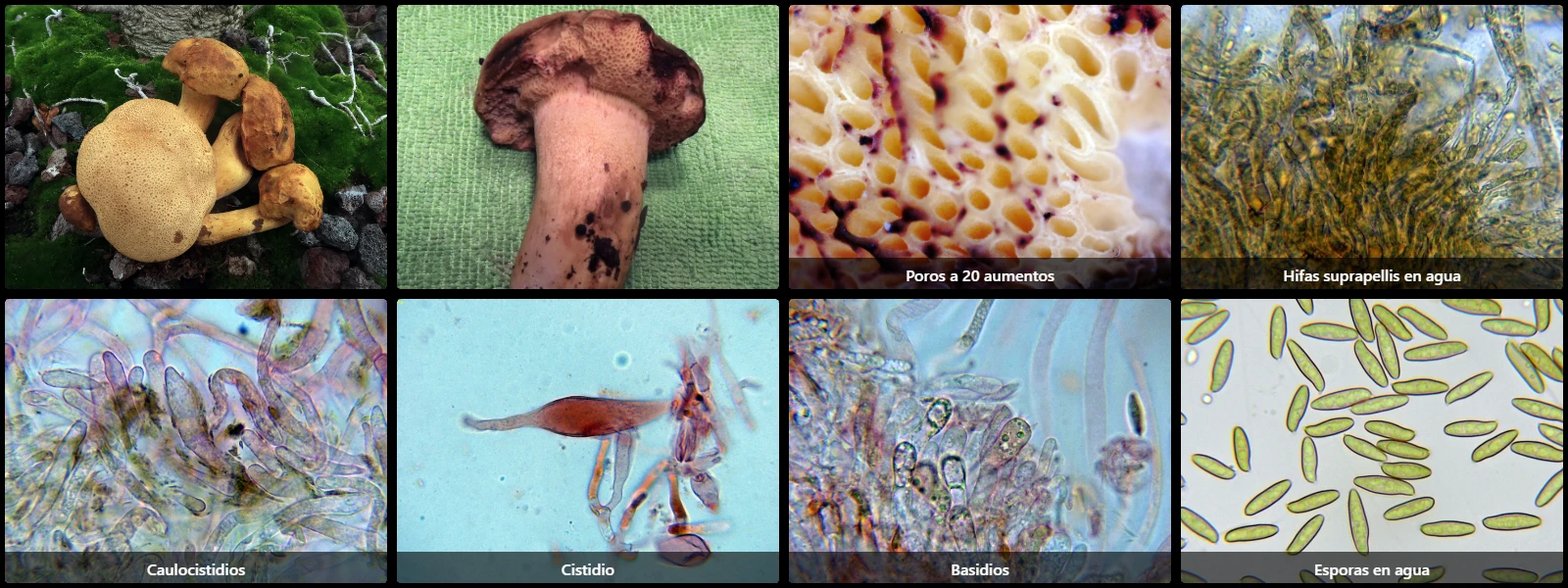
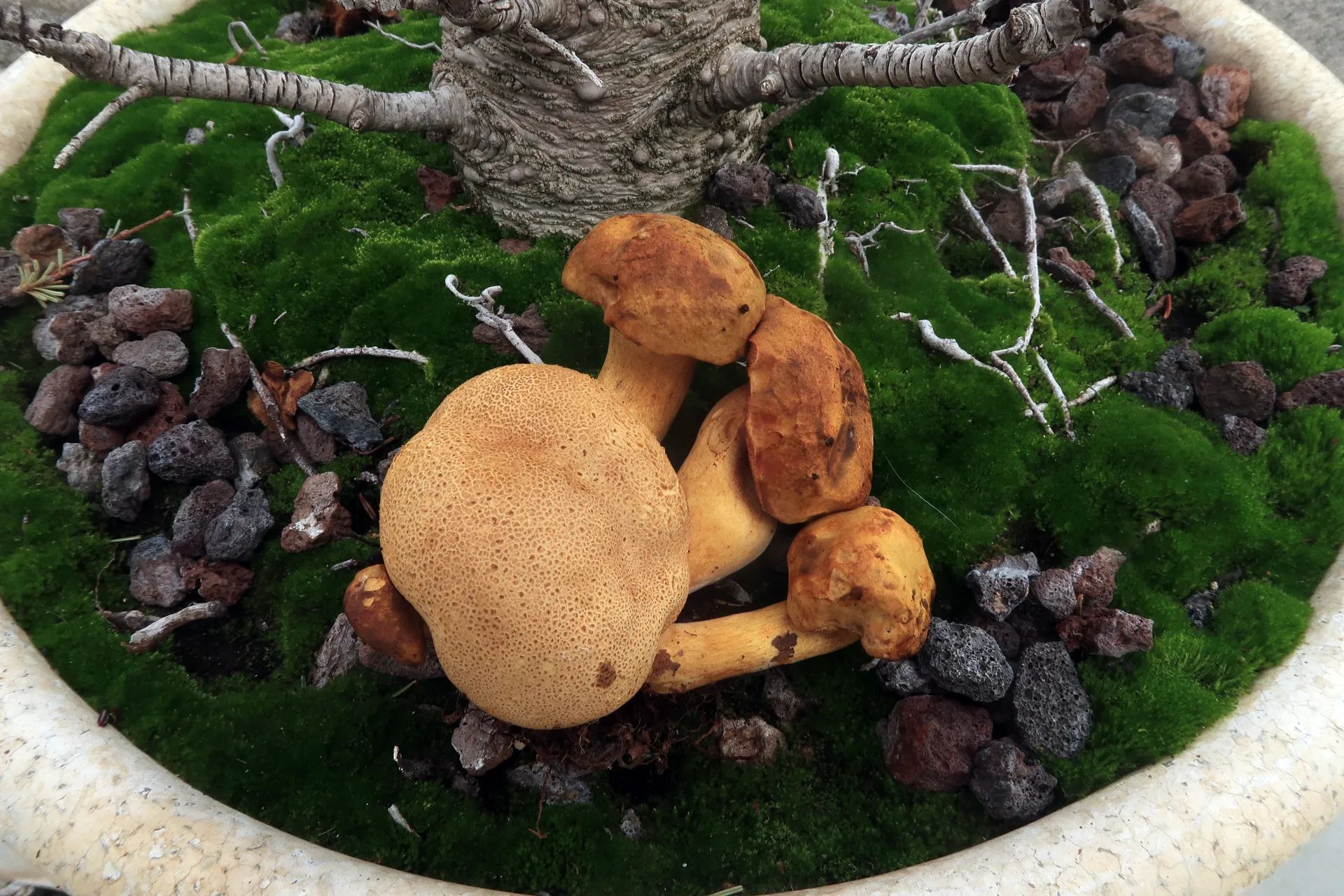
An uncommon parasitic bolete developing directly upon Scleroderma basidiomata, especially on Scleroderma citrinum, with a convex to slightly flattened pileus 3 to 5 cm across, ochraceous, with angular yellow pores, and a cylindrical, slightly curved, yellowish stipe adorned with darker ochre fibrils.
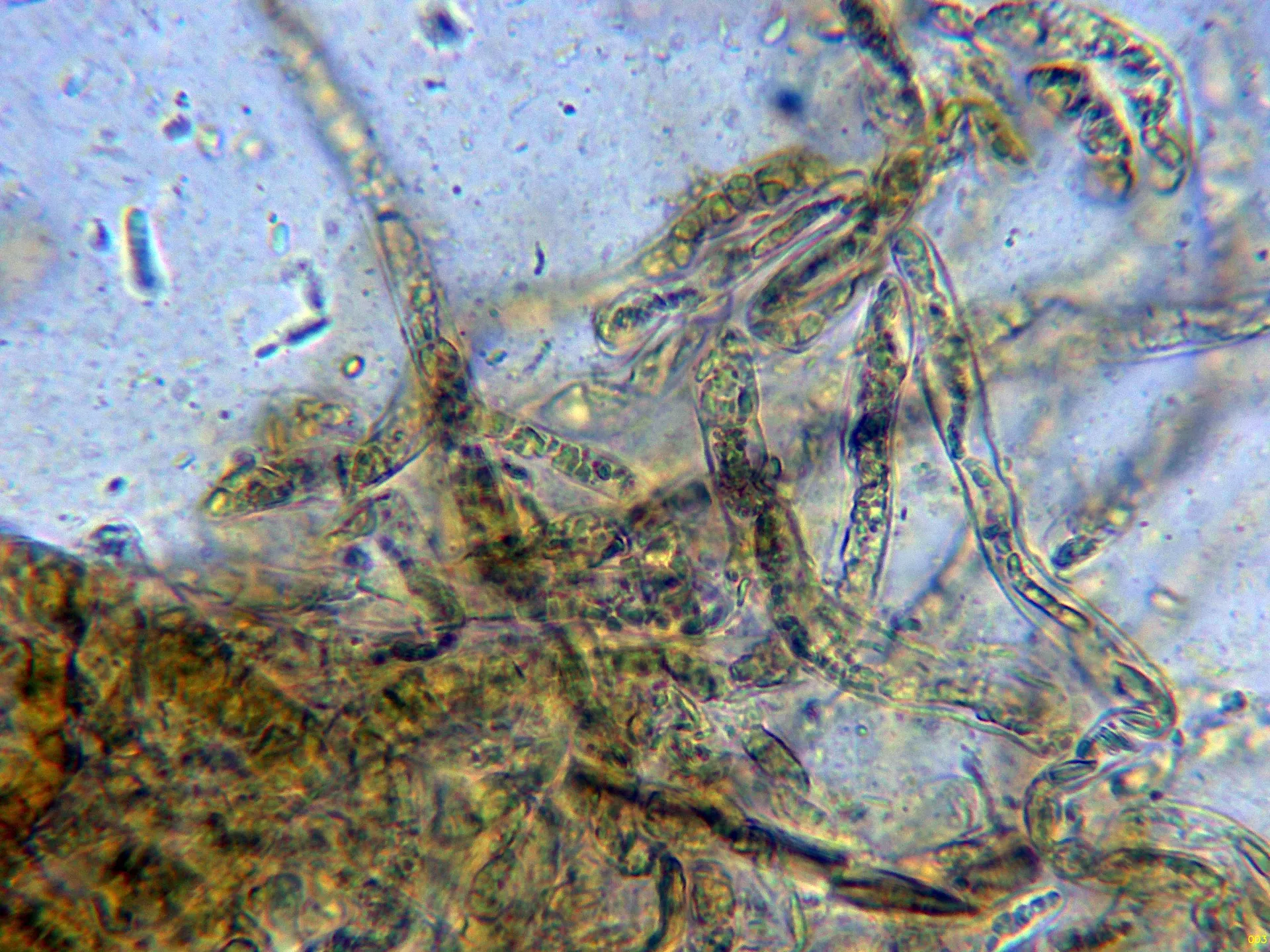
Pileipellis a trichoderm of interwoven filamentous hyphae 4 to 7 µm in diameter, with abundant yellowish-brown encrusting intracellular pigment and emergent rounded terminal ends.
Stipitipellis with cylindrical hyphae 3 to 8 µm wide, bearing abundant terminal caulocystidia that are cylindrical, subclavate to fusiform, 10 to 12 µm wide, with rounded apices.
Cystidia abundant on pore edges (cheilocystidia), scarce inside the tubes, fusiform to lageniform, 50 to 90 µm long and 5 to 15 µm wide.
Basidia clavate, 30 to 50 µm long, 7 to 10 µm wide, simple-septate at the base, 4-spored.
Spores subcylindrical to slightly fusiform (boletoid), smooth- and moderately thick-walled, yellowish-brown under the microscope, with a slightly pointed, hook-like apicular end, 12 to 18 µm long, 4 to 5 µm wide, containing oil guttules of varying sizes.
Herbarium material available: JTP2288/24.
Geographic references
Map generated from global occurrence data from GBIF. GBIF.
Study measurements
Values in Microns (µm)Macroscopic gallery
Microscopic gallery