Pluteus cervinus
(Schaeff.) P.Kumm.
Study description
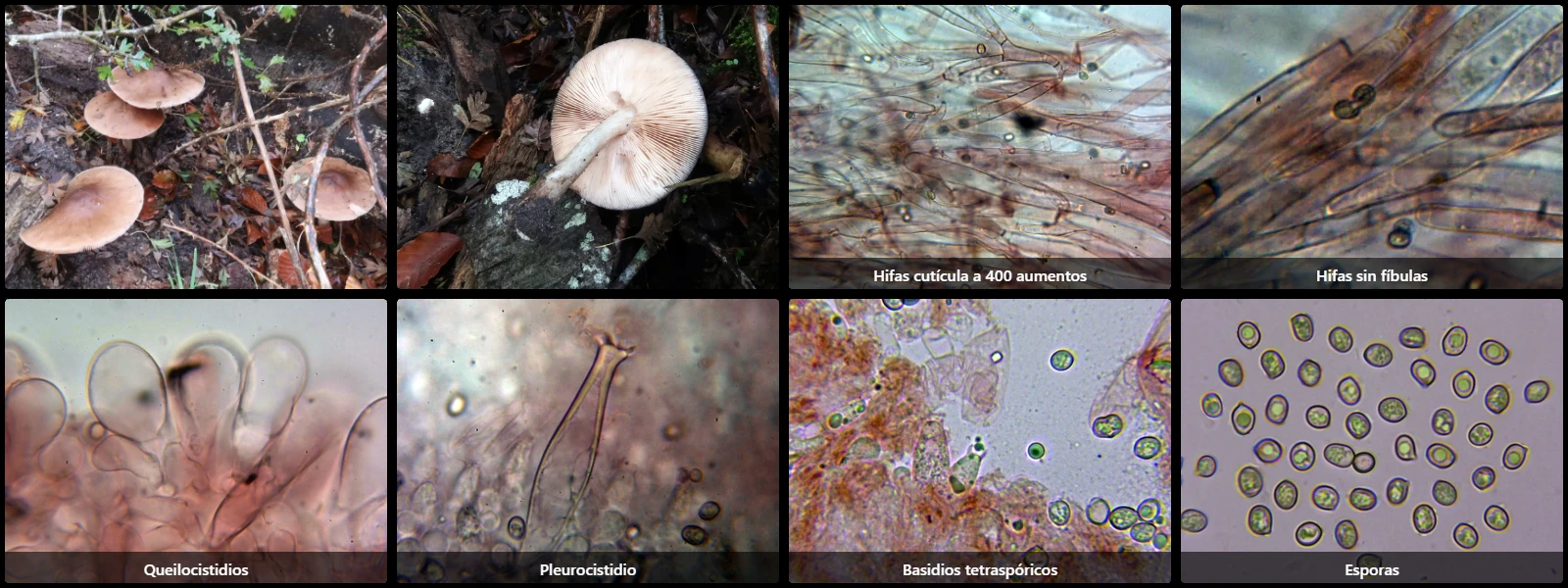
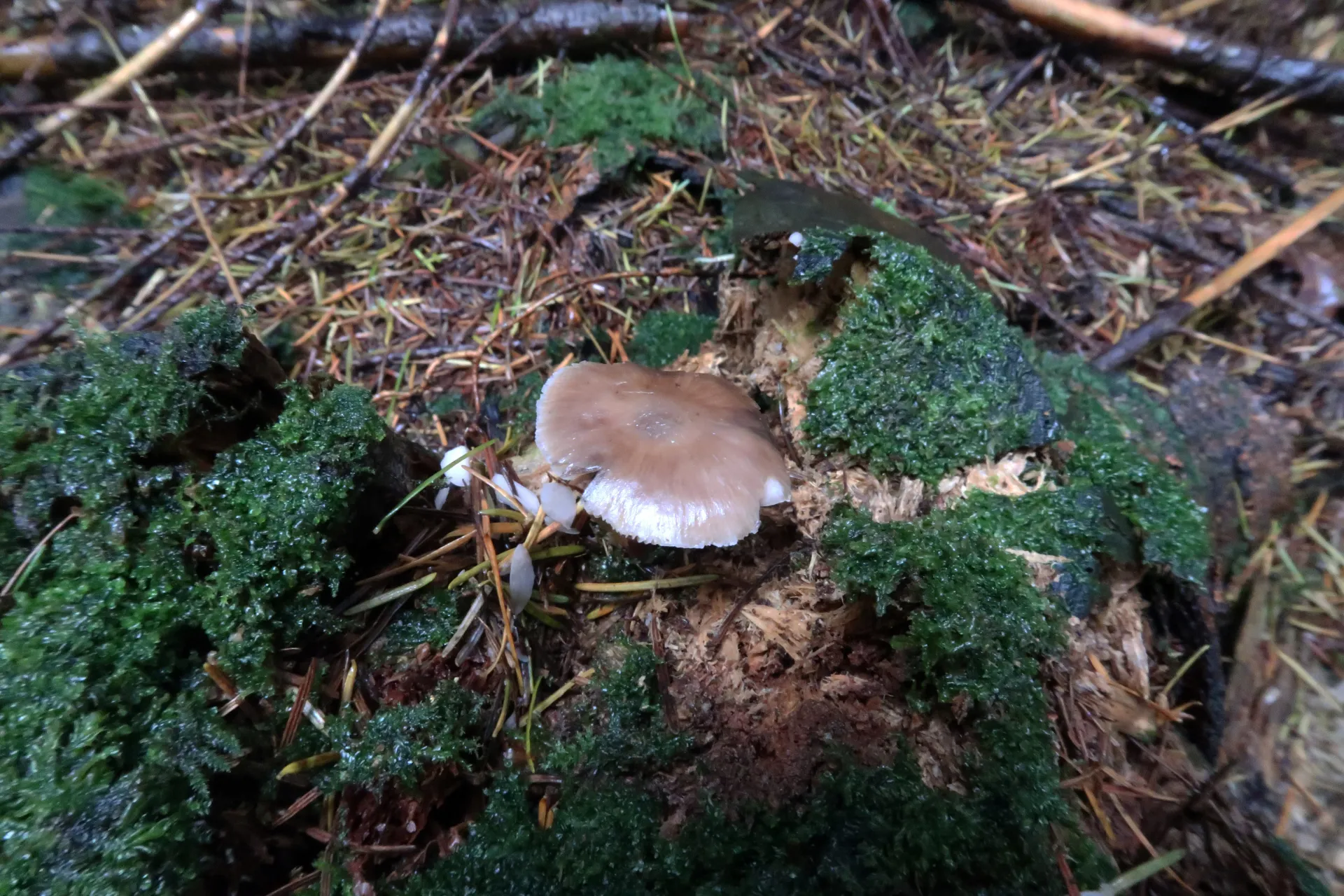
On decaying dead wood or bark on the ground, occurring on both broadleaved trees and conifers, with a convex to flattened pileus 4 to 12 cm across, brown to reddish-brown, darker at the disc, free lamellae, white turning pink with sporulation, a cylindrical stipe slightly enlarged at the base, whitish with greyish longitudinal fibrils, a raphanoid odour, and slightly bitter taste.
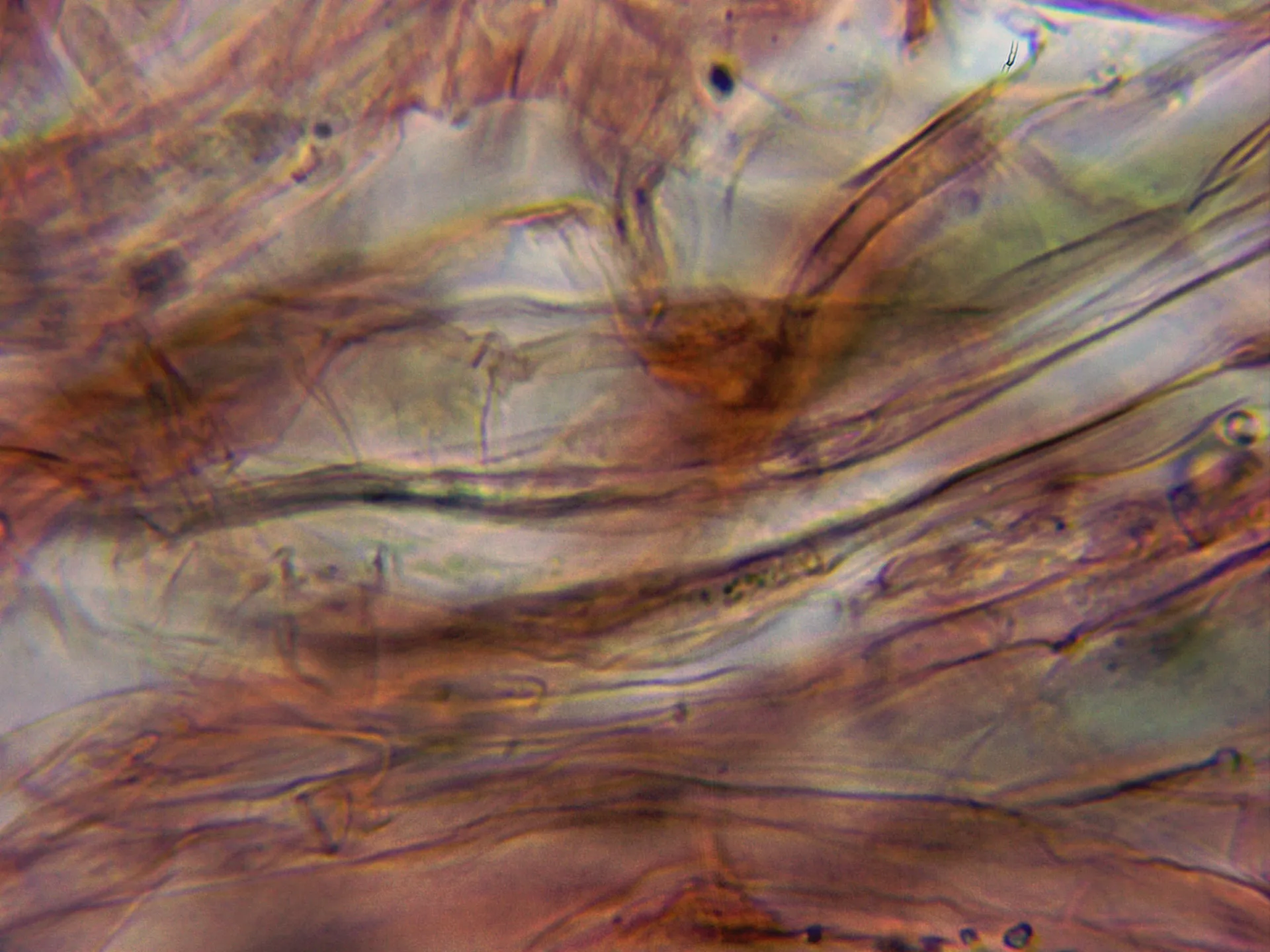
Pileipellis a cutis composed of more or less parallel cylindrical hyphae 5 to 10 µm wide, with emergent terminal cells 120 to 200 µm long, containing brown intracellular pigment, septate with simple septa.
Cheilocystidia clavate to pyriform, hyaline, 25 to 45 µm long, 15 to 25 µm wide, intermixed with occasional thick-walled cystidia resembling pleurocystidia.
Pleurocystidia metuloidal (coronate), subcylindrical to fusiform, thick-walled, 60 to 85 µm long, 15 to 20 µm wide, crowned with 2 to 4 apical hook-like prongs.
Basidia cylindrical, ventricose, 25 to 35 µm long, 8 to 10 µm wide, clampless at the base, 4-spored.
Spores subglobose to ellipsoidal, smooth, hyaline, moderately thick-walled, 6.5 to 8.5 µm long, 4.5 to 6 µm wide, with an inconspicuous apiculus at one end, containing guttules, inamyloid in Melzer's reagent.
Geographic references
Map generated from global occurrence data from GBIF. GBIF.
Study measurements
Values in Microns (µm)Macroscopic gallery
Microscopic gallery