Pleurotus ostreatus
(Jacq.) P.Kumm.
Study description
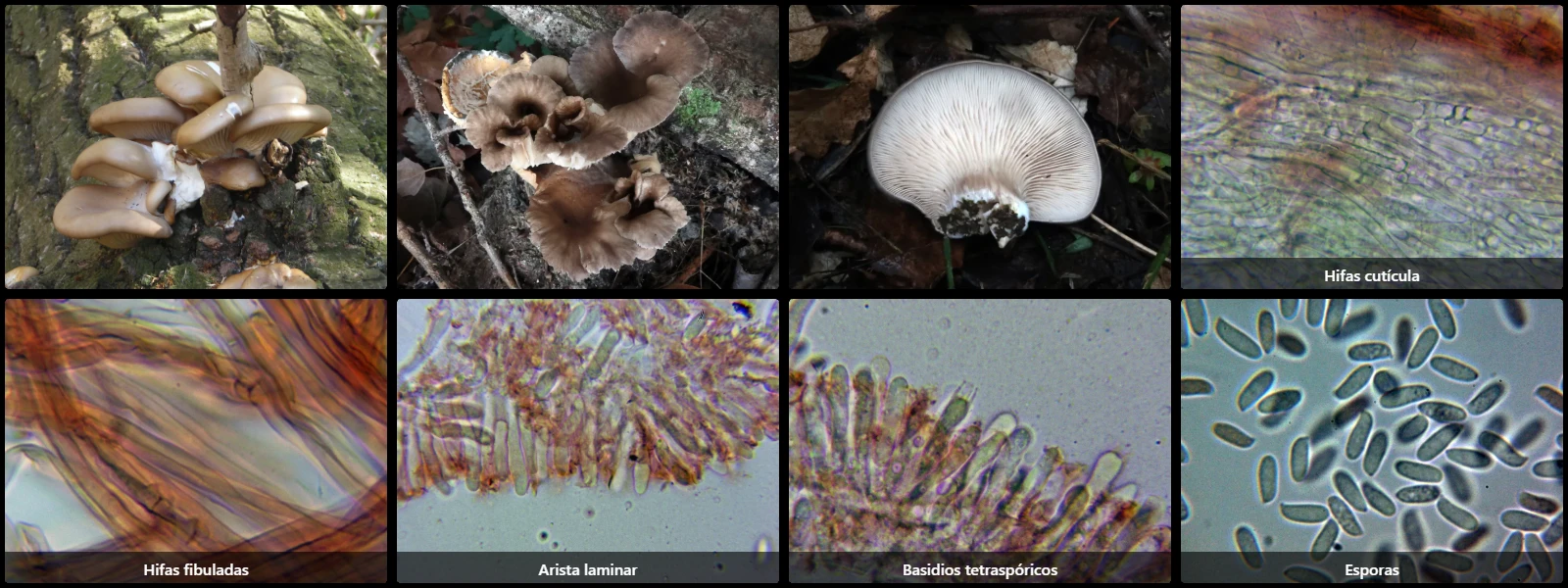
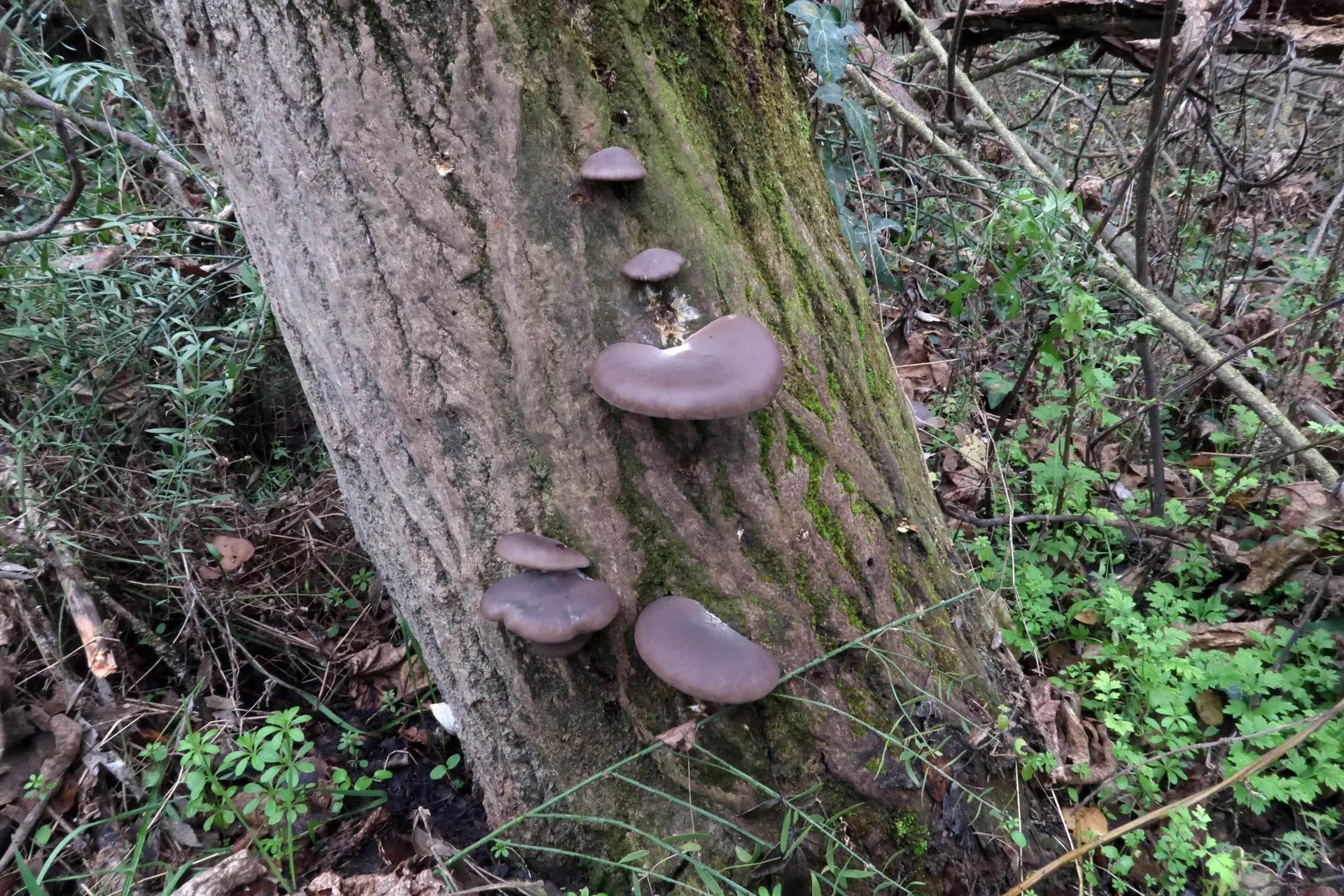
A widely cultivated species also abundant in nature, growing on dead or dying wood of broadleaved trees in forests, parks, and gardens, with a shell- to fan-shaped pileus 4 to 20 cm in diameter, variable in colour from cream or brownish to dark grey or blue-grey, deeply decurrent white lamellae, a rudimentary, almost absent stipe, and a pleasant, mild fungal odour and taste.
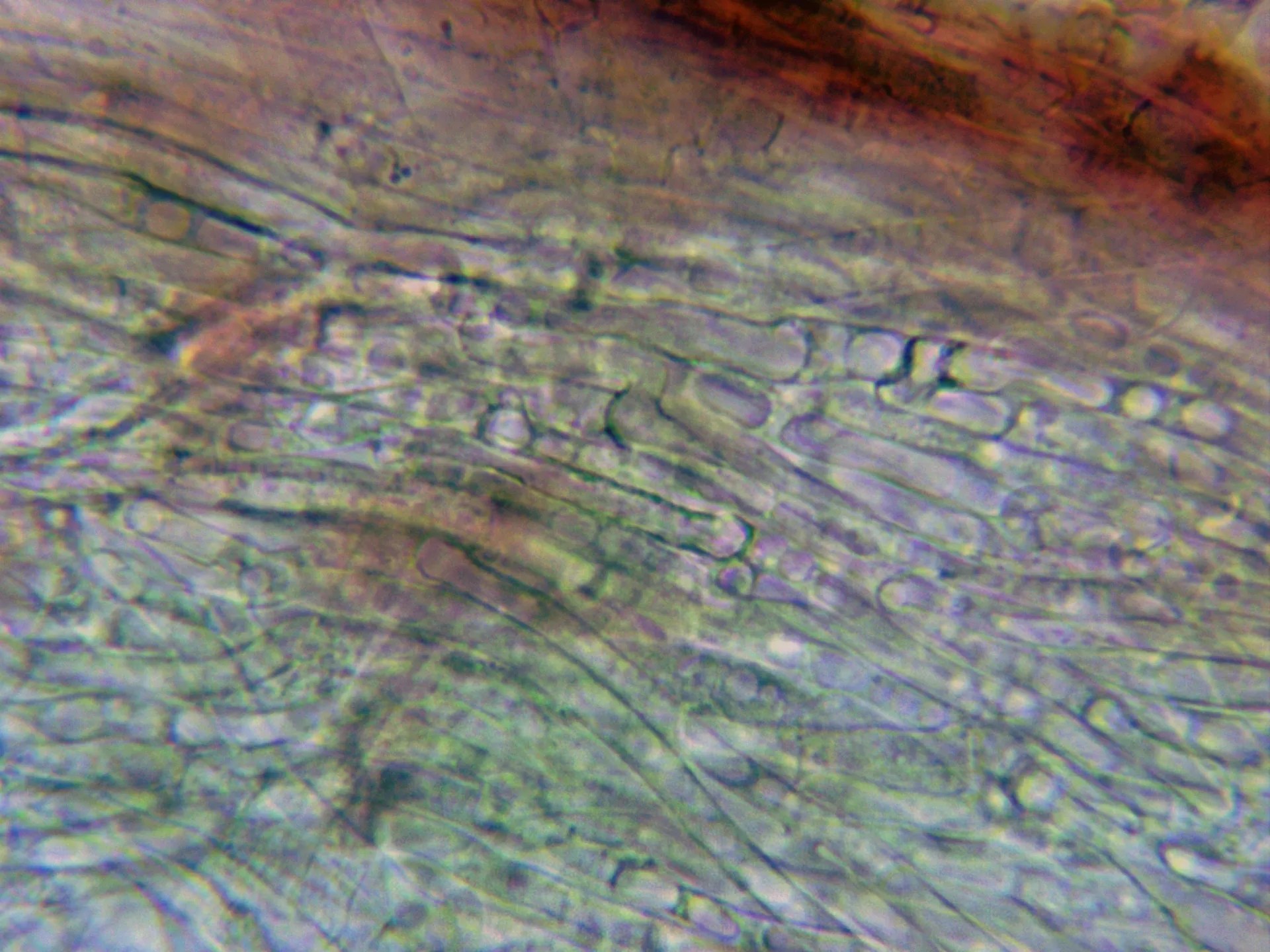
Pileipellis composed of more or less parallel cylindrical hyphae, slender, 2 to 4 µm wide, containing brown intracellular pigment, septate with clamp connections that can occasionally be difficult to locate.
Hymenium fertile, consisting solely of basidia and basidioles, without cystidia or other sterile elements.
Basidia cylindrical-clavate, 25 to 35 µm long, 5 to 7 µm wide, clamped at the base, 4-spored.
Spores cylindrical-ellipsoidal, smooth, hyaline, thin-walled, 8.5 to 11 µm long, 3.5 to 4.5 µm wide, with a conspicuous lateral apiculus at one end, containing small guttules inside, inamyloid in Melzer's reagent.
Geographic references
Map generated from global occurrence data from GBIF. GBIF.
Study measurements
Values in Microns (µm)Macroscopic gallery
Microscopic gallery