Pleurotus eryngii
(DC.) Quél.
Study description
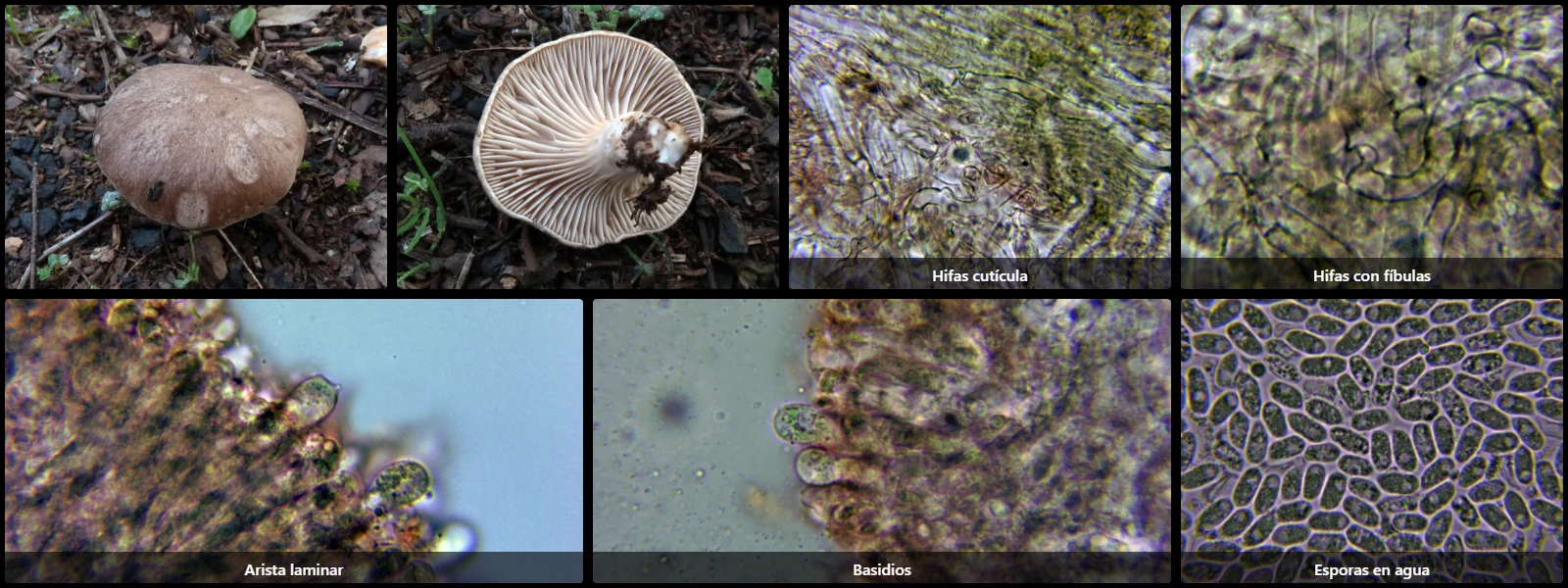
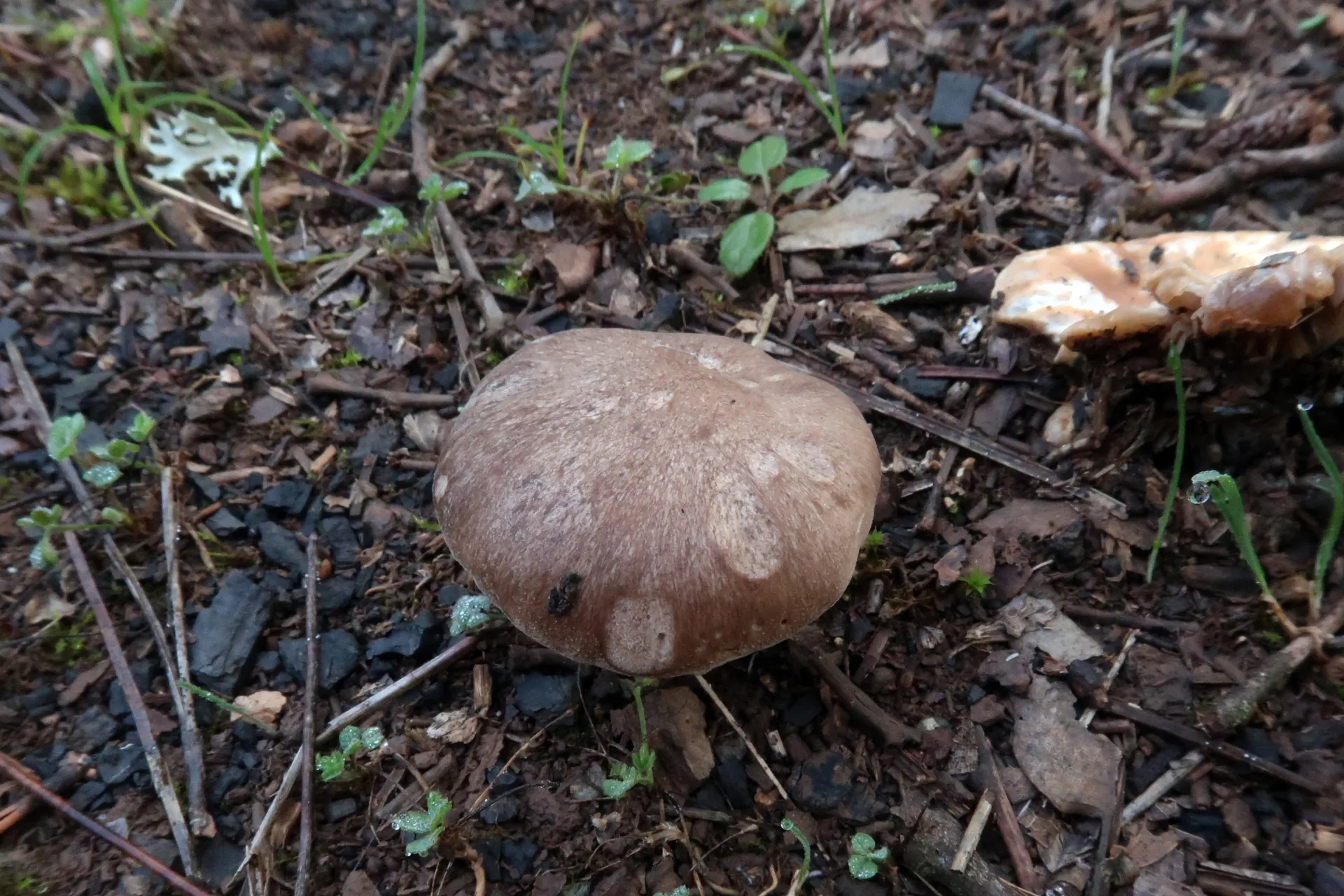
The king oyster mushroom, growing in open grasslands on calcareous soils parasitizing or saprophytizing roots of Eryngium campestre, with a convex to flattened, fan-shaped pileus 5 to 10 cm across, cream to greyish-brown, inrolled margin, deeply decurrent white to pale orange lamellae, a short eccentric stipe, fungal odour, and sweet, pleasant taste.
Pileipellis composed of slightly interwoven cylindrical hyphae 4 to 6.5 µm wide, thin-walled, hyaline or containing pale brown intracellular pigment, with some emergent rounded terminal cells, septate with prominent clamp connections.
Cystidia and other sterile hymenial elements absent.
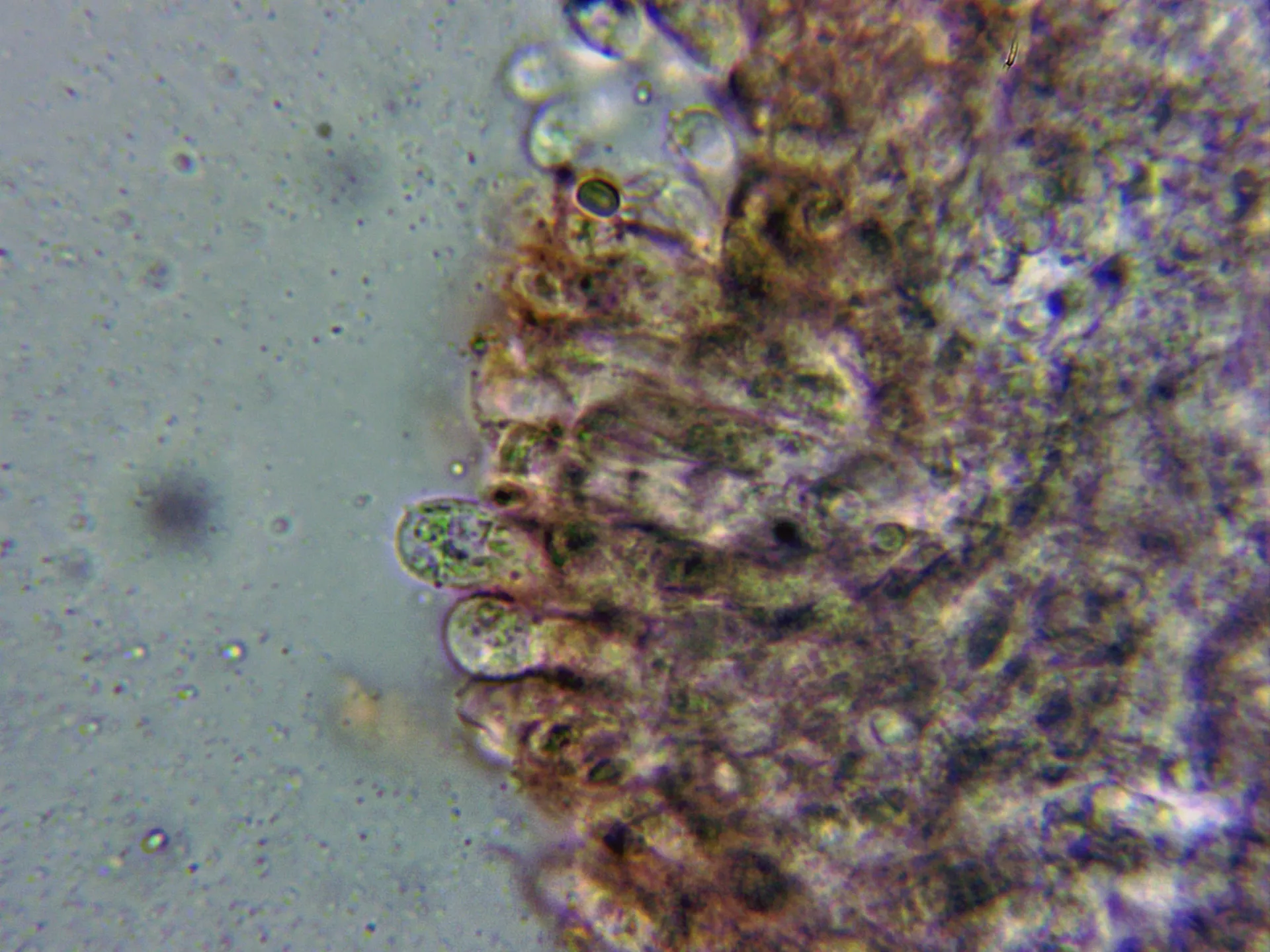
Basidia cylindrical-clavate, 40 to 60 µm long, 6 to 8 µm wide, clamped at the base, 4-spored.
Spores cylindrical-ellipsoidal, smooth, hyaline, thin-walled, 9.5 to 11 µm long, 4 to 5.5 µm wide, with an eccentric apiculus at one end, containing small guttules, inamyloid in Melzer's reagent.
Geographic references
Map generated from global occurrence data from GBIF. GBIF.
Study measurements
Values in Microns (µm)Macroscopic gallery
Microscopic gallery