Pisolithus arhizus
(Scop.) Rauschert
Study description
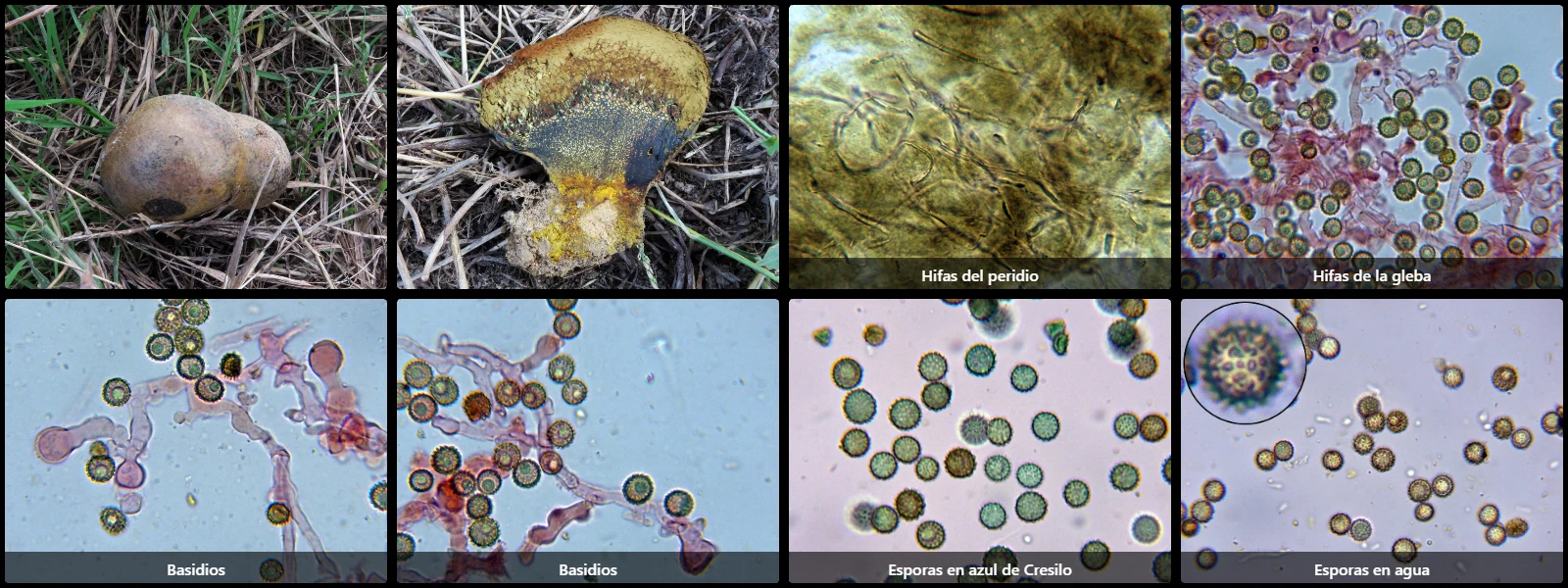
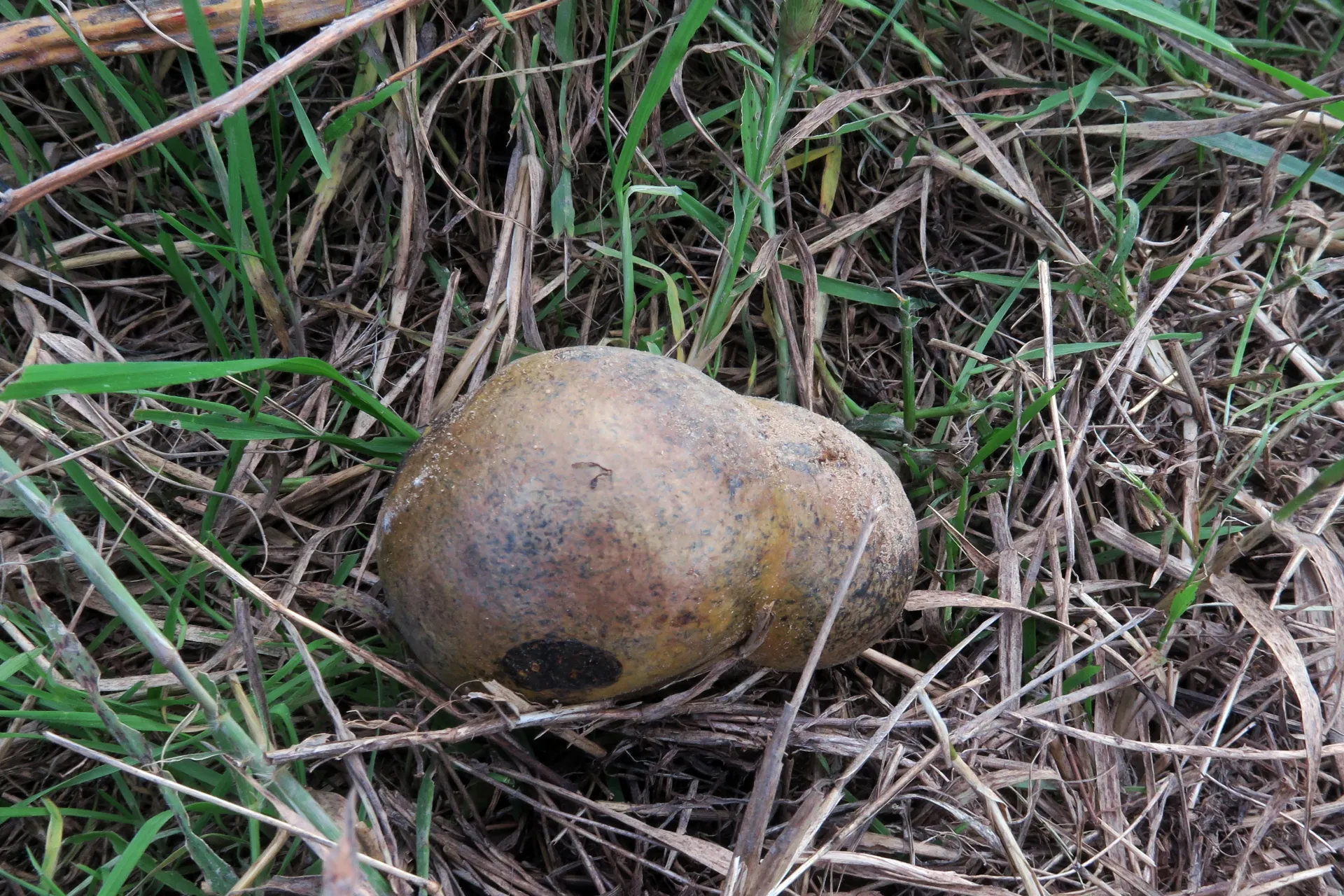
A fungus with a peculiar habit, irregularly shaped like a stone or animal droppings, subglobose, pyriform to clavate, 4 to 14 cm across and up to 20 cm high, with a rugose pale yellow to brown surface and a stout, woody, rooting pseudostipe anchored by abundant sulphur-yellow mycelium at the base.
The gleba in section exhibits a unique mosaic-like structure composed of pea-sized compartments (pseudoperidioles) 2 to 4 mm across, the outermost ones brown and disintegrating into powdery spores, the basal ones younger and yellowish.
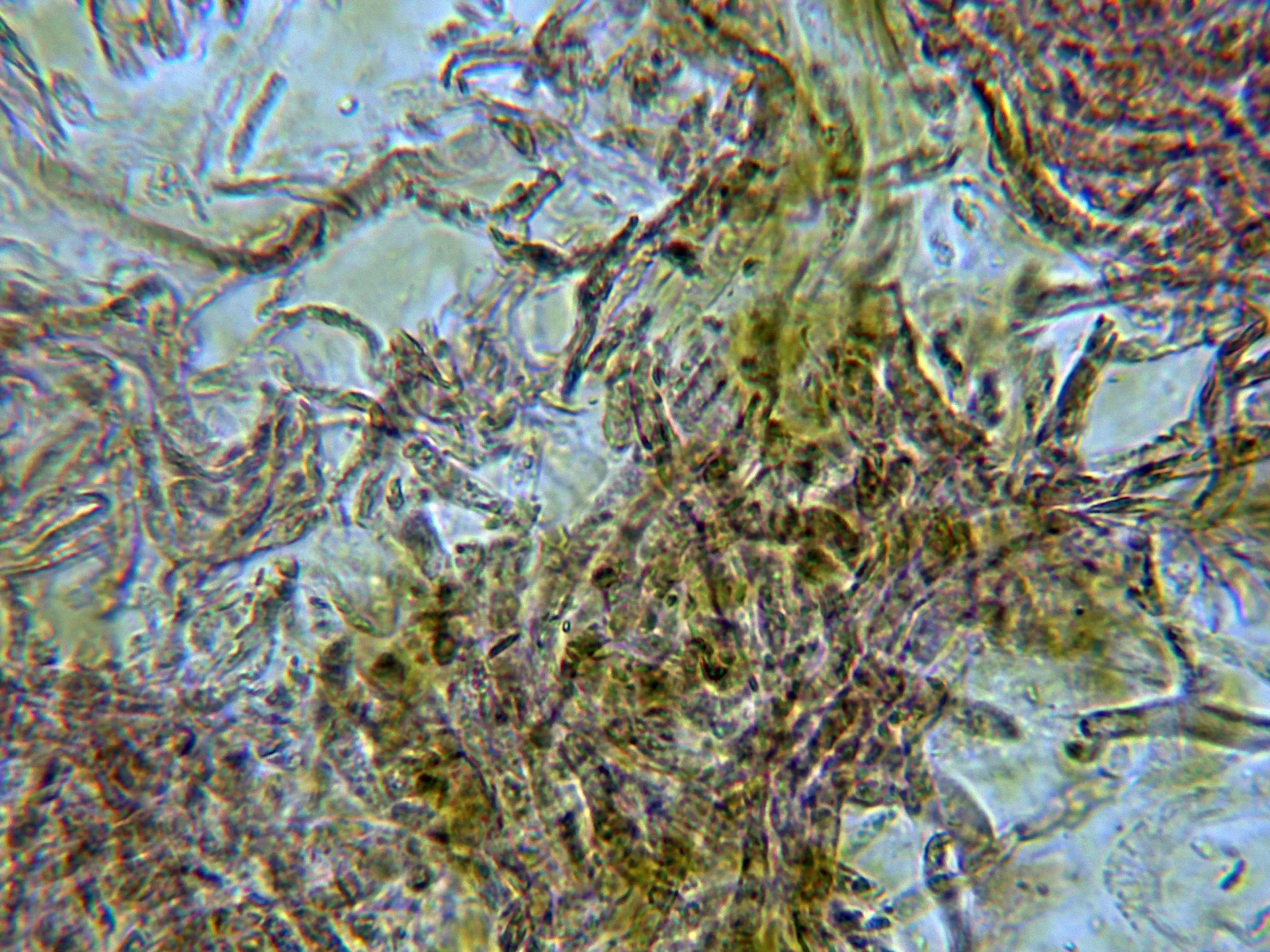
Peridial hyphae filamentous, filled with brownish-olivaceous intracellular pigment, 3 to 5 µm wide, separated by gelatinization, septate.
Glebal contextual hyphae cylindrical, hyaline, 3 to 6 µm wide, septate with clamp connections.
Basidia clavate to pyriform, hyaline, highly evanescent, disintegrating completely upon spore maturation.
Spores globose, thick-walled and coarsely echinulate/verrucose, hyaline to pale yellowish, 6.5 to 9 µm in diameter (excluding ornamentation), densely covered with blunt spines or warts 1 to 2 µm high and up to 0.5 µm wide at the base, containing lipid inclusions.
Geographic references
Map generated from global occurrence data from GBIF. GBIF.
Study measurements
Values in Microns (µm)Macroscopic gallery
Microscopic gallery