Phlegmacium inexspectatum
(Brandrud) Niskanen & Liimat.
Study description
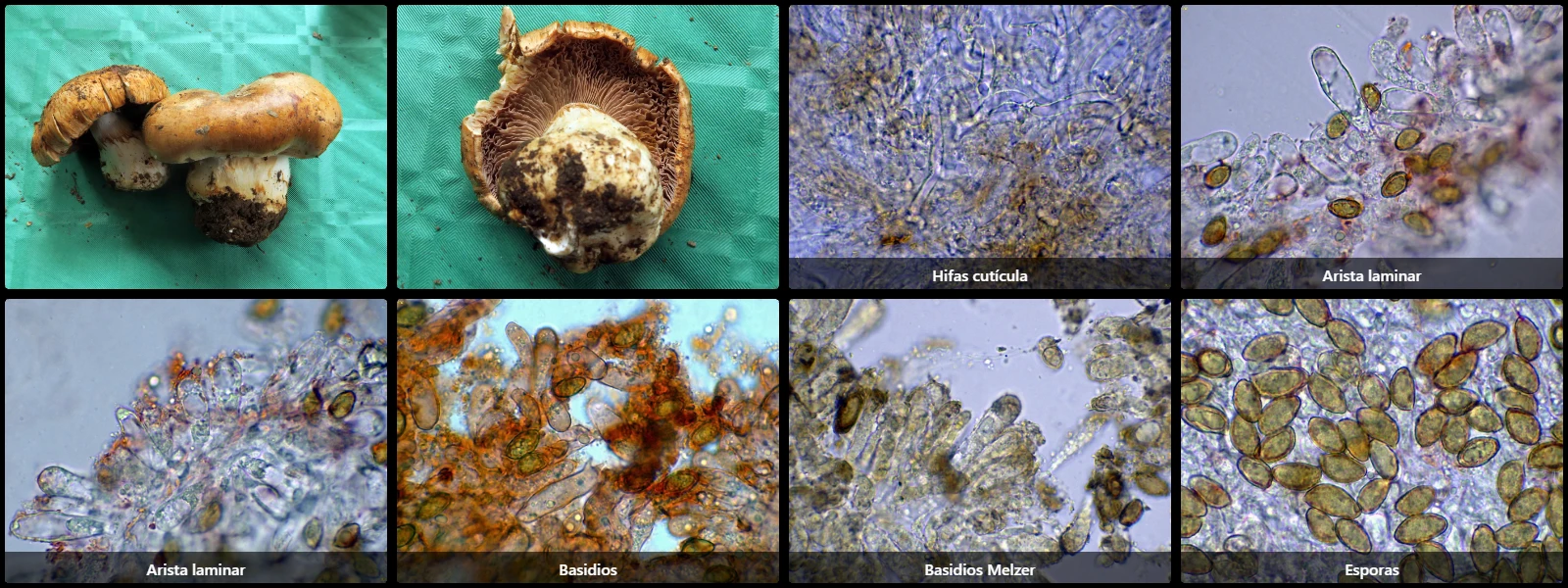
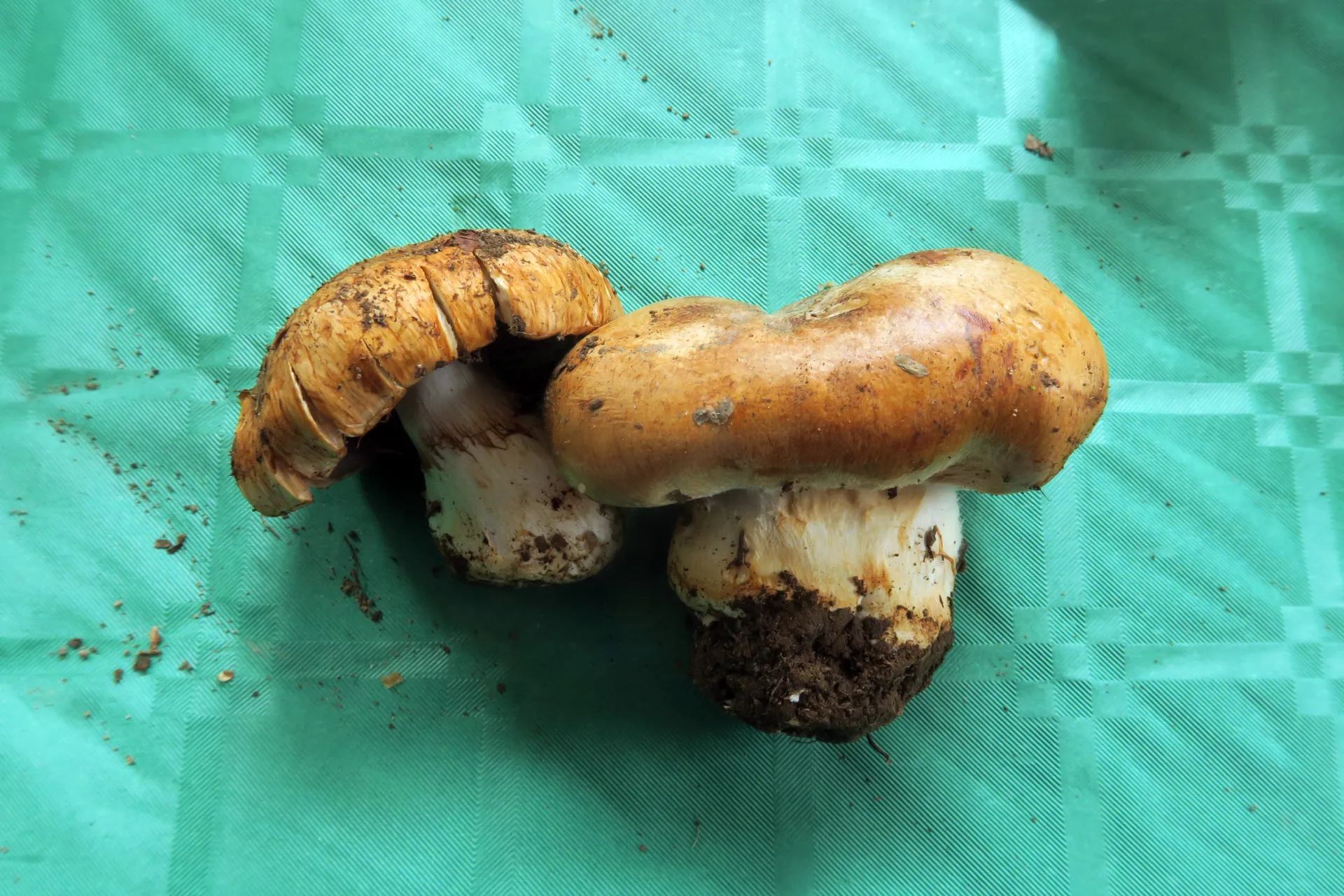
A spring species typical of calcareous soils, formerly known as Cortinarius inexspectatus, associated with Pinus sylvestris in high-elevation montane pine forests, of very robust stature, with a convex to flattened brown pileus, adnate lamellae, a bulbous stipe, and mild, sweetish flesh.
Field photographs are unavailable for this taxon, as the studied specimens were obtained from a mycological exhibition.
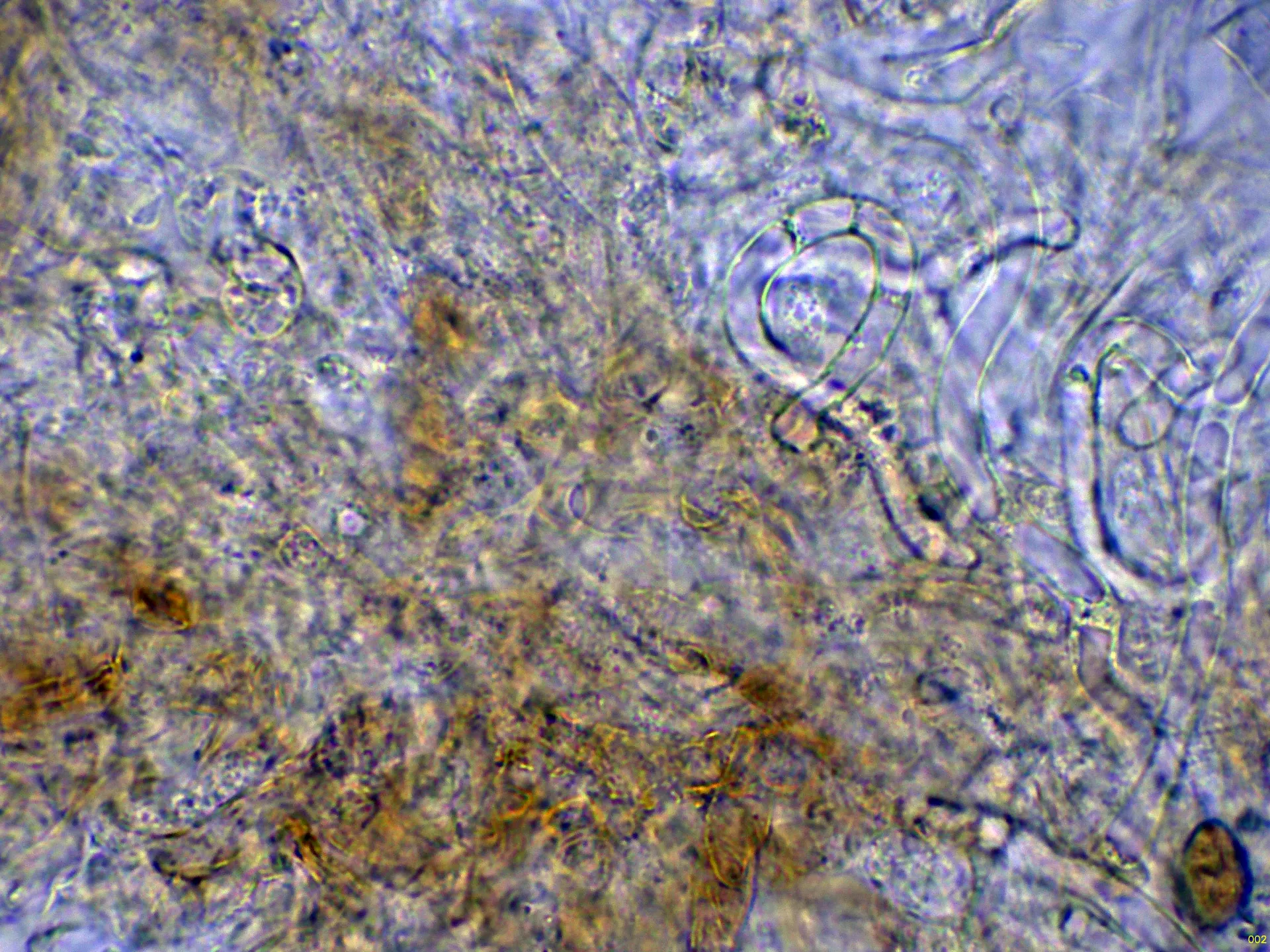
Pileipellis composed of thin-walled, interwoven hyphae 3 to 6 µm wide, containing yellowish-brown encrusting intracellular pigment, separated by a gelatinous matrix, septate with clamp connections.
Lamellar edge without differentiated cystidia, but with abundant sterile, clavate, hyaline marginal cells.
Basidia cylindrical-clavate, 30 to 45 µm long, 8 to 10 µm wide, clamped at the base, 4-spored.
Spores amygdaliform to pip-shaped, slightly verrucose, pale brown to yellowish under the microscope, 11 to 14.5 µm long, 7 to 8 µm wide, with an apiculus at one end, practically non-reactive in Melzer's reagent.
Herbarium material available: JTP2459/25.
Geographic references
Map generated from global occurrence data from GBIF. GBIF.
Study measurements
Values in Microns (µm)Macroscopic gallery
Microscopic gallery