Peziza varia
(Hedw.) Alb. & Schwein.
Study description
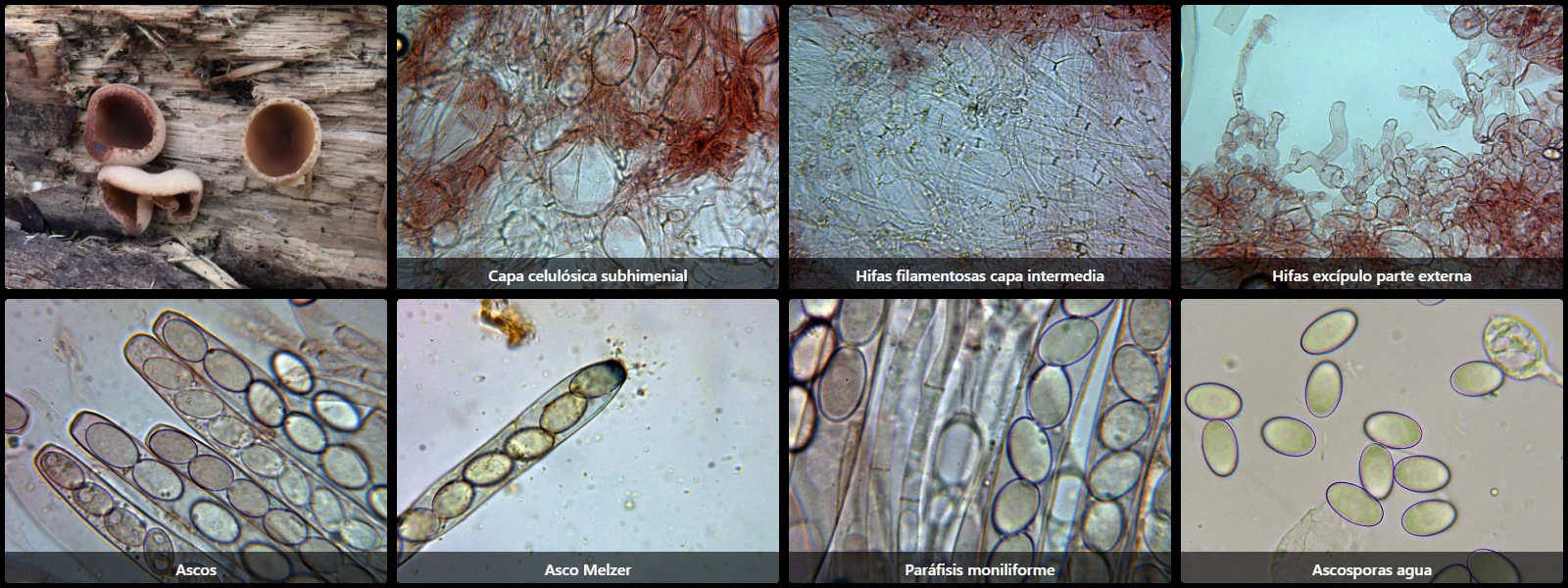
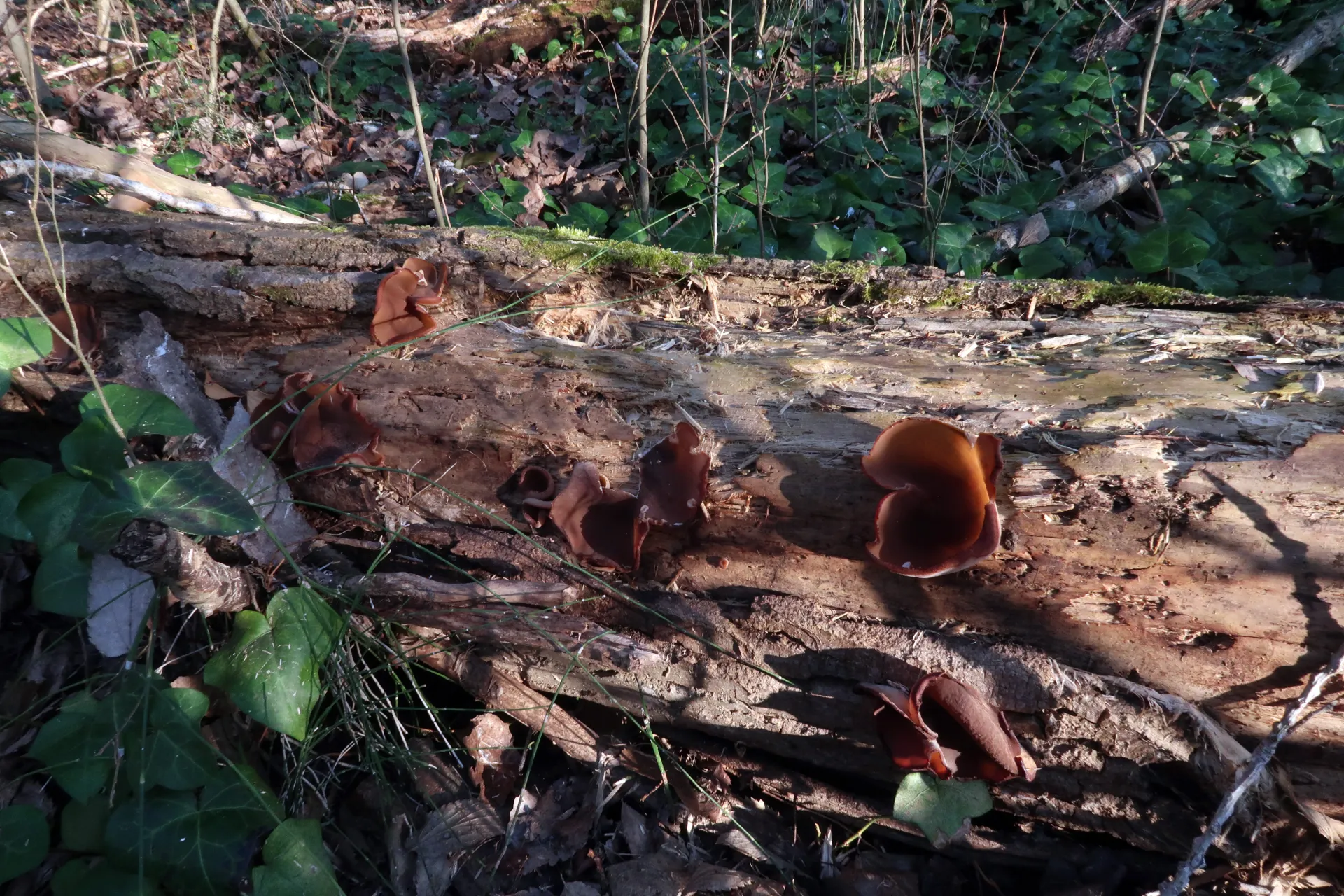
Saprophytic species on decaying wood or even cardboard, with cup-shaped apothecia tending to flatten with an undulating margin, 2 to 6 cm across, cognac-brown hymenium, whitish external surface, flesh showing up to 5 distinct stratified layers in section, and moniliform paraphyses.
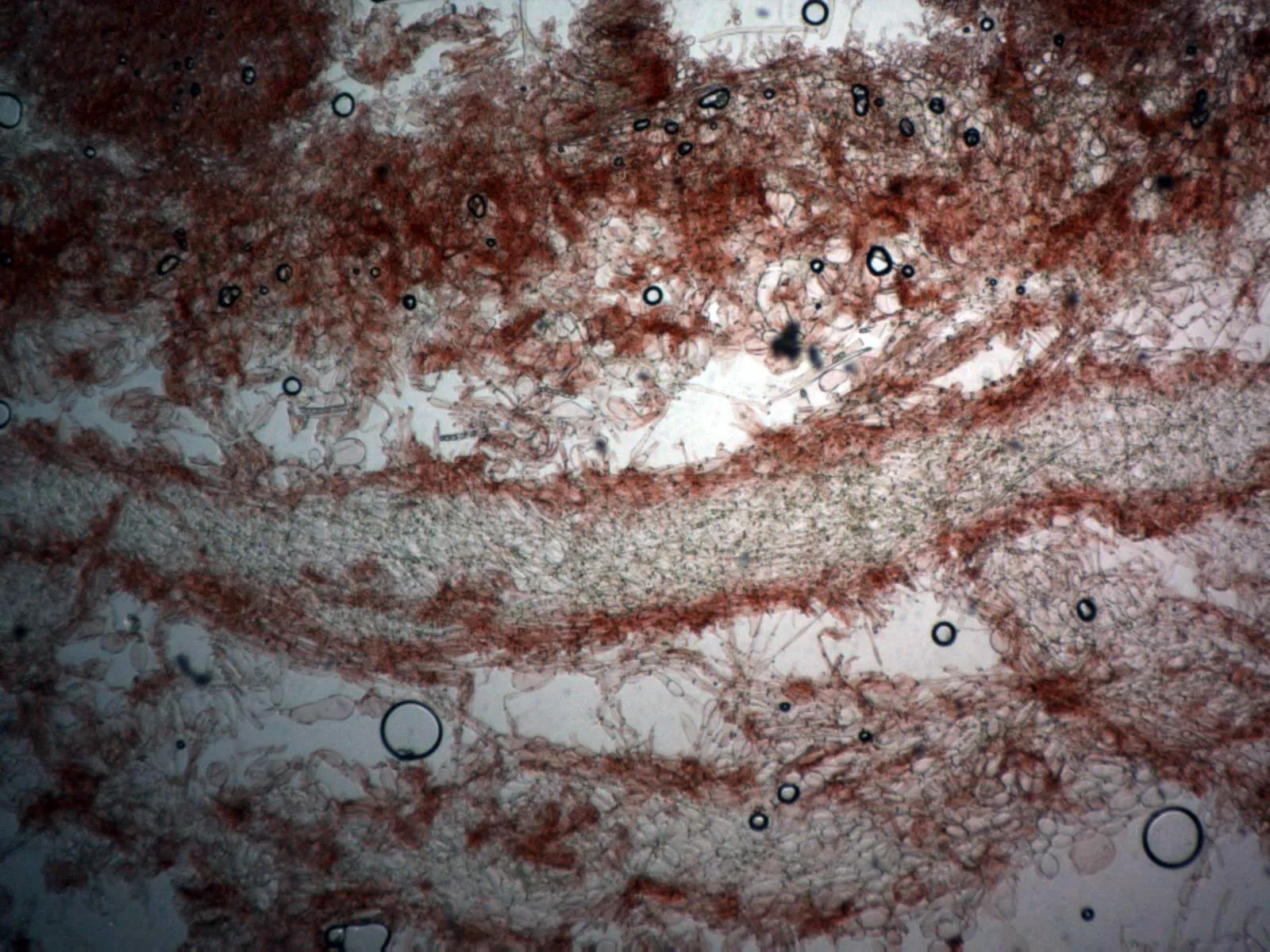
Excipulum composed of 5 well-defined layers: beneath the asci lies a very thin transitional layer of textura intricata interconnected with globose hyphae; below this, a second layer of large hyaline globose hyphae (or with very pale brownish intracellular pigment) 20 to 80 µm in diameter; in the central part, a third layer of densely compacted, septate, branching filamentous hyphae 5 to 11 µm wide; beneath this, a fourth layer of globose hyphae smaller than those of the second layer (15 to 50 µm long); and externally, a fifth layer of short, erect, flexuous cylindrical hyphae 5 to 10 µm wide.
Asci cylindrical, 8-spored, operculate, 250 to 300 µm long, 11 to 14 µm wide, uniseriate, lacking basal croziers, and showing an amyloid reaction in Melzer's reagent.
Paraphyses filiform, septate, 3 to 5 µm wide, with constrictions at the septa and apical swellings up to 10 µm wide (distinctly moniliform).
Ascospores ellipsoidal, smooth, hyaline, thin-walled, 14 to 17 µm long, 9 to 11 µm wide, with a homogeneous interior devoid of guttules or vacuoles.
Herbarium material available: JTP2021/23.
Geographic references
Map generated from global occurrence data from GBIF. GBIF.
Study measurements
Values in Microns (µm)Macroscopic gallery
Microscopic gallery