Peziza arvernensis
Roze & Boud.
Study description
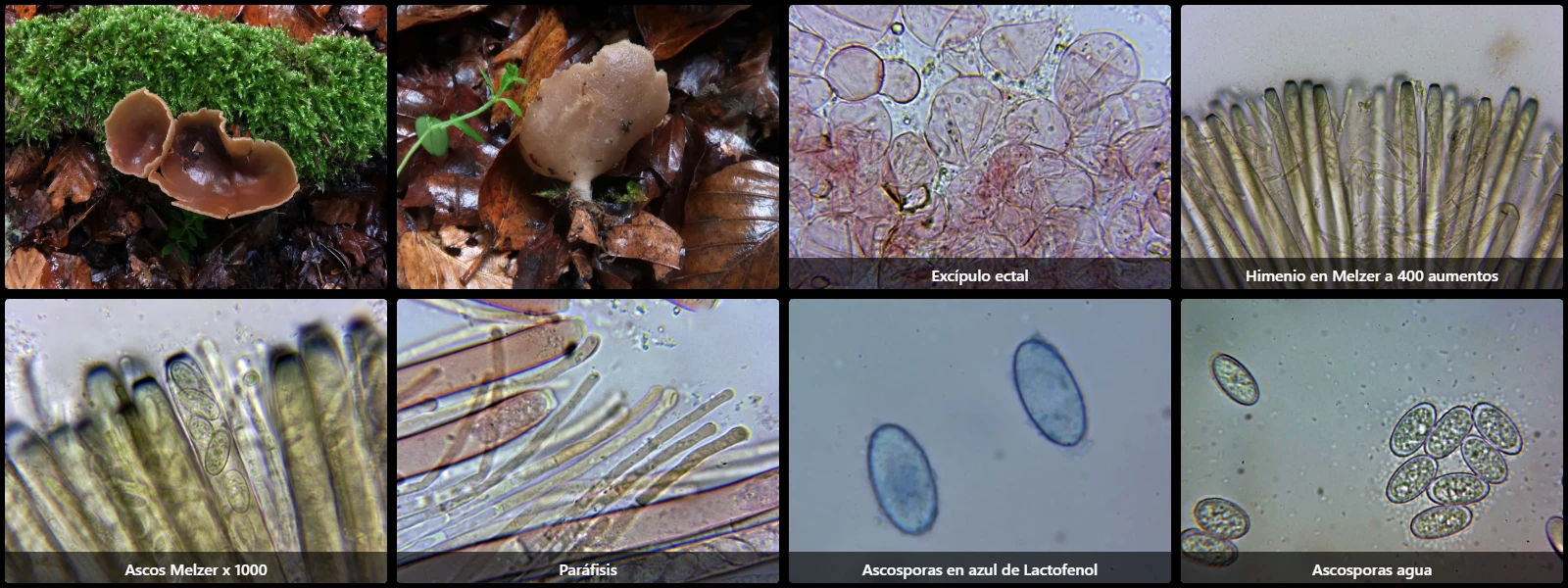
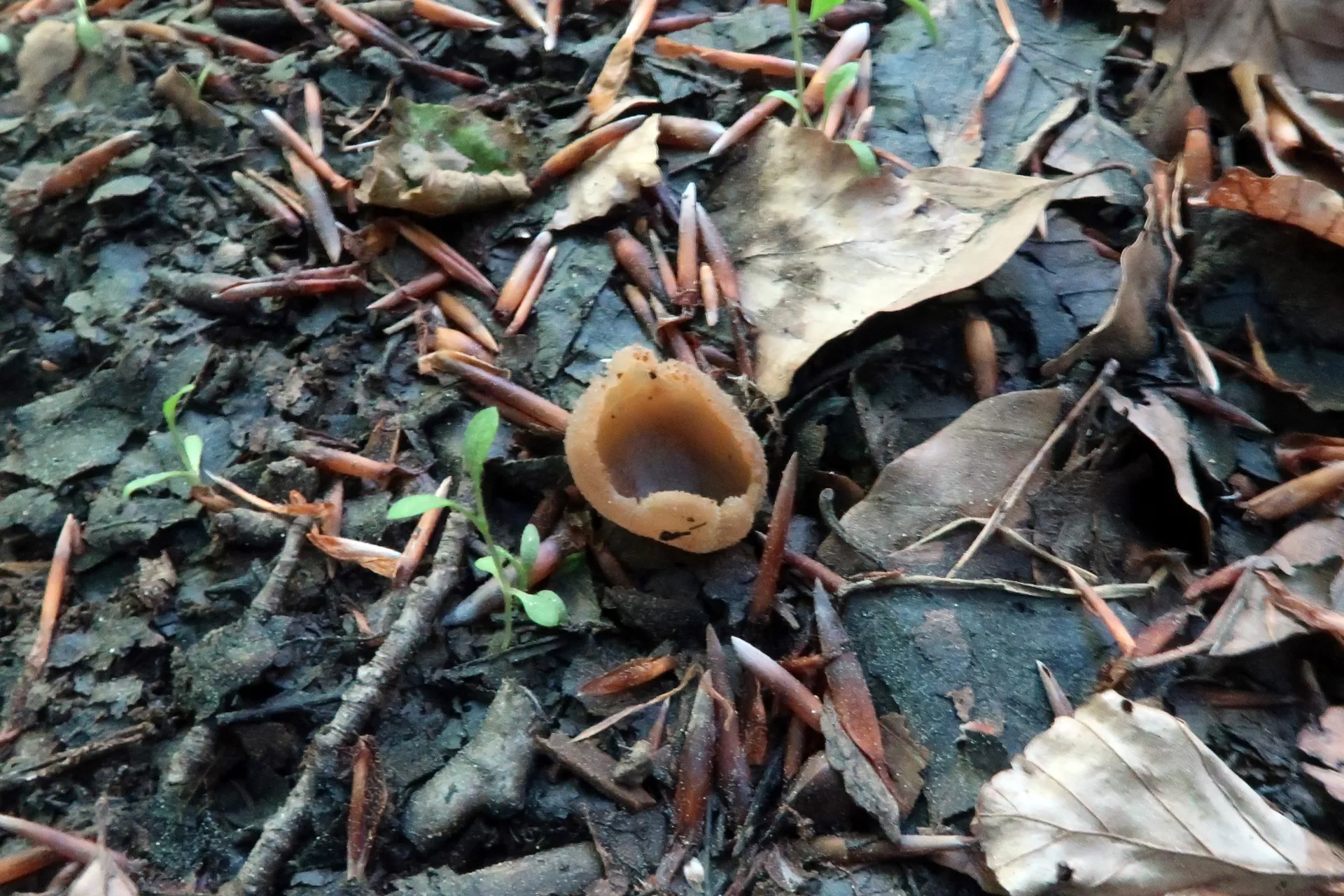
A species characteristic of beech forests (Fagus), with cup-shaped ascomata measuring 3 to 9 cm across, with an undulating margin, reddish-brown hymenium, paler and minutely granulose outer surface, and fragile, brittle flesh.
Medullary excipulum with cylindrical hyphae up to 11 µm wide, intermixed with globose hyphae 20 to 60 µm in diameter.
Ectal excipulum of textura globulosa-angularis, with hyaline hyphae, thin- to slightly thick-walled, 30 to 40 µm in diameter.
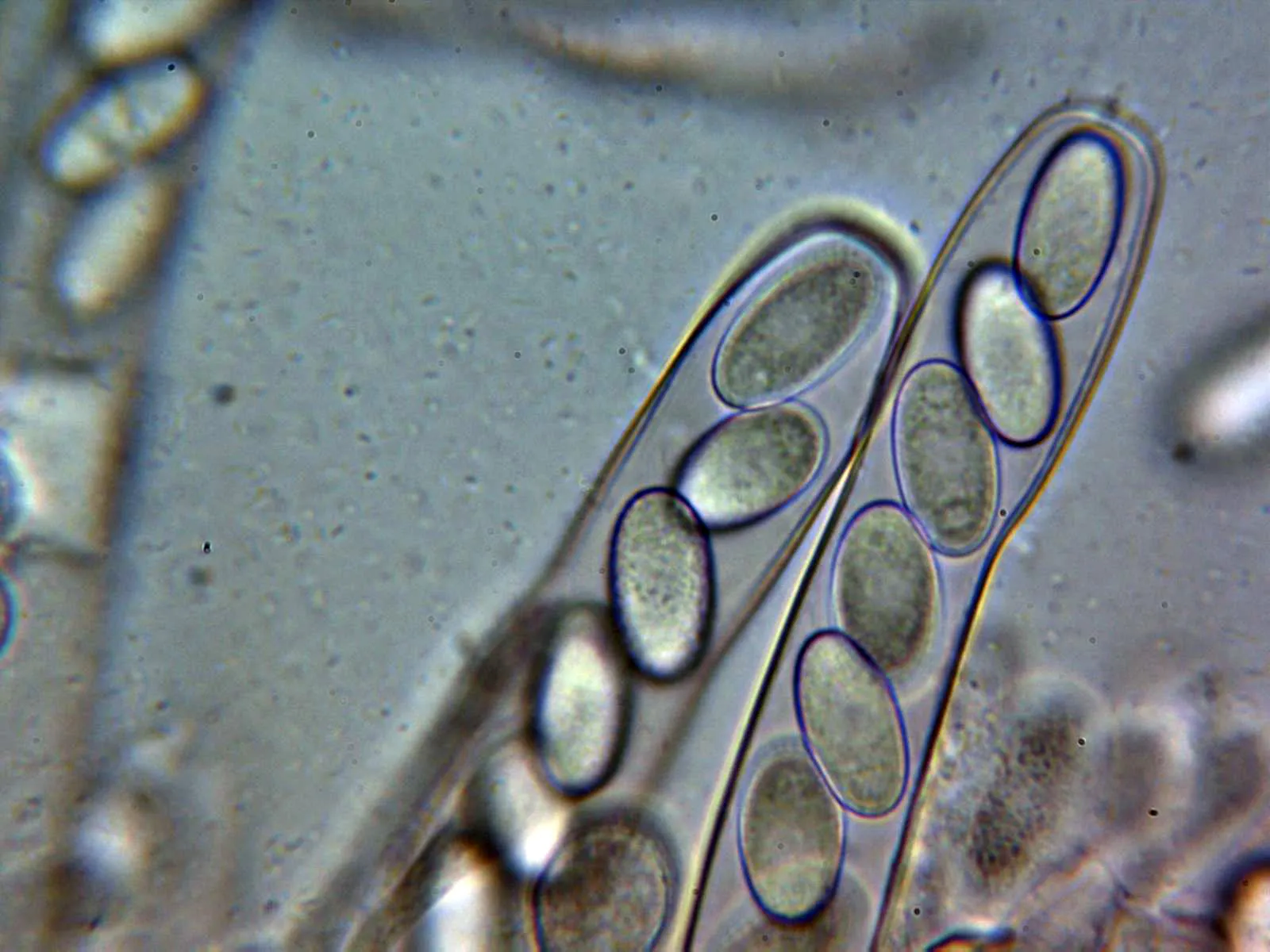
Asci cylindrical, 8-spored, operculate, 180 to 230 µm long, 11 to 13 µm wide, with uniseriate spore arrangement, and with an amyloid reaction of the apical apparatus in Melzer's reagent.
Paraphyses filiform, septate, branched from the base, cylindrical, with only very slight apical enlargements up to 4 to 6.5 µm wide, containing granular brownish-ochraceous pigment.
Ascospores ellipsoidal, hyaline, smooth- to very faintly verruculose-walled, 16 to 18.5 µm long, 8.5 to 10 µm wide, with slight granular content inside.
Geographic references
Map generated from global occurrence data from GBIF. GBIF.
Study measurements
Values in Microns (µm)Macroscopic gallery
Microscopic gallery