Paxillus rubicundulus
P.D.Orton
Study description
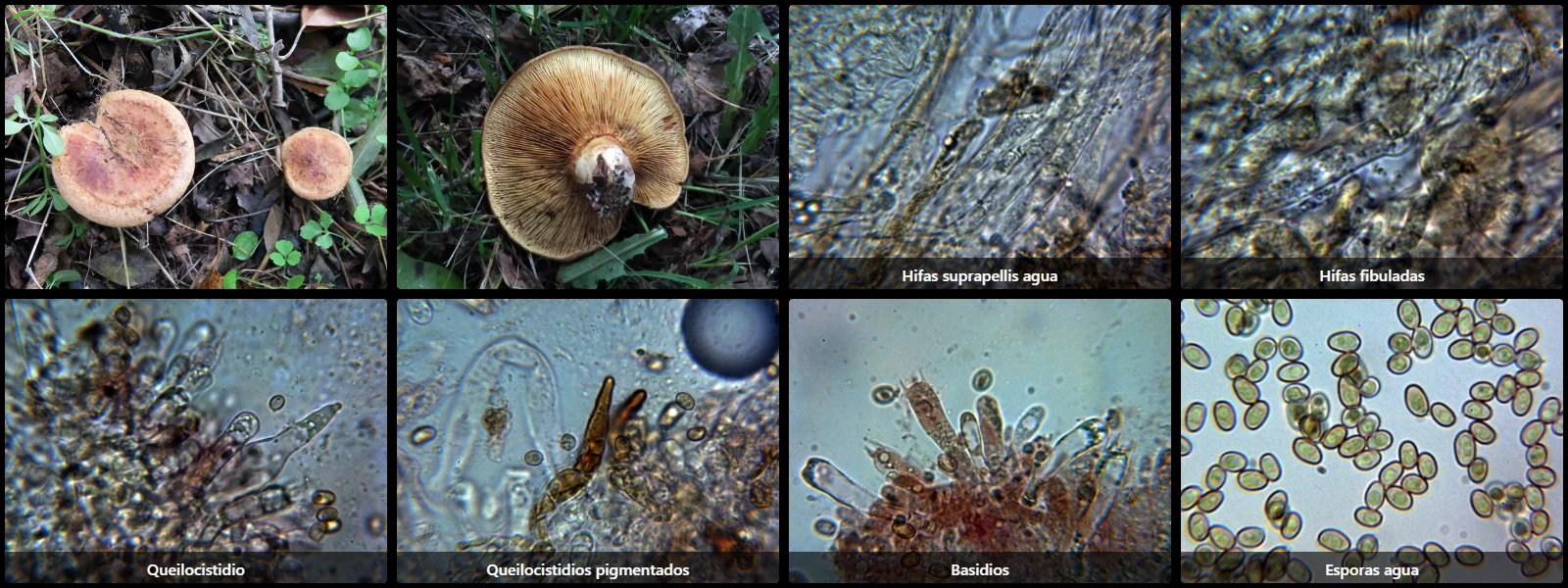
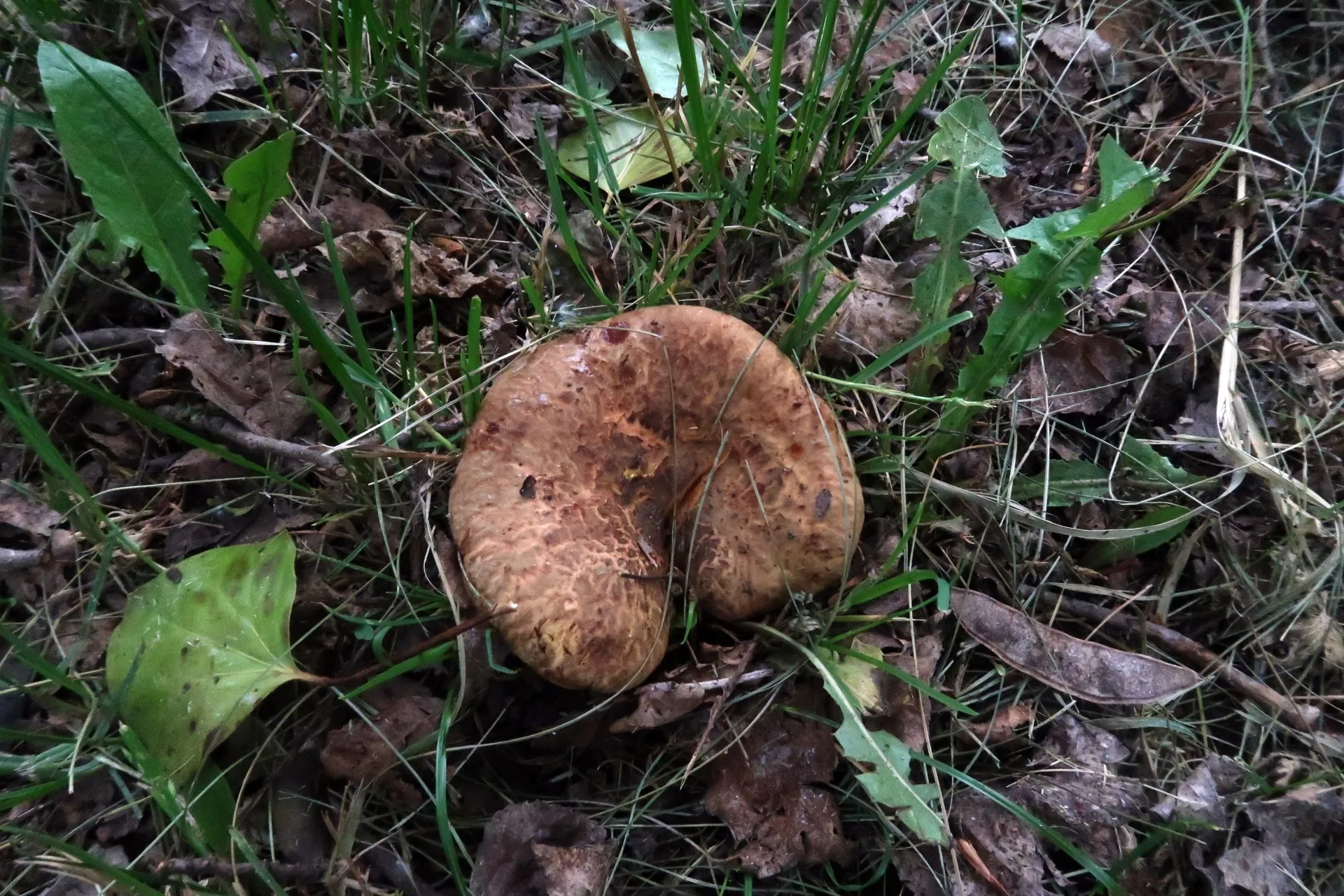
Also known as Paxillus filamentosus, strictly associated with alders (Alnus) along riverbanks and riparian zones, with a convex to flattened, occasionally slightly depressed pileus 4 to 14 cm across, yellowish-brown, mottled or scaly-fibrillose, decurrent, forked yellowish-brown lamellae that bruise darker brown, a solid, cylindrical pale brown stipe with whitish fibrils, and flesh with a slightly bitter taste.
Pileipellis composed of cylindrical hyphae arranged more or less parallel to slightly interwoven, 4 to 8 µm wide, containing brown intracellular pigment, septate with clamp connections.
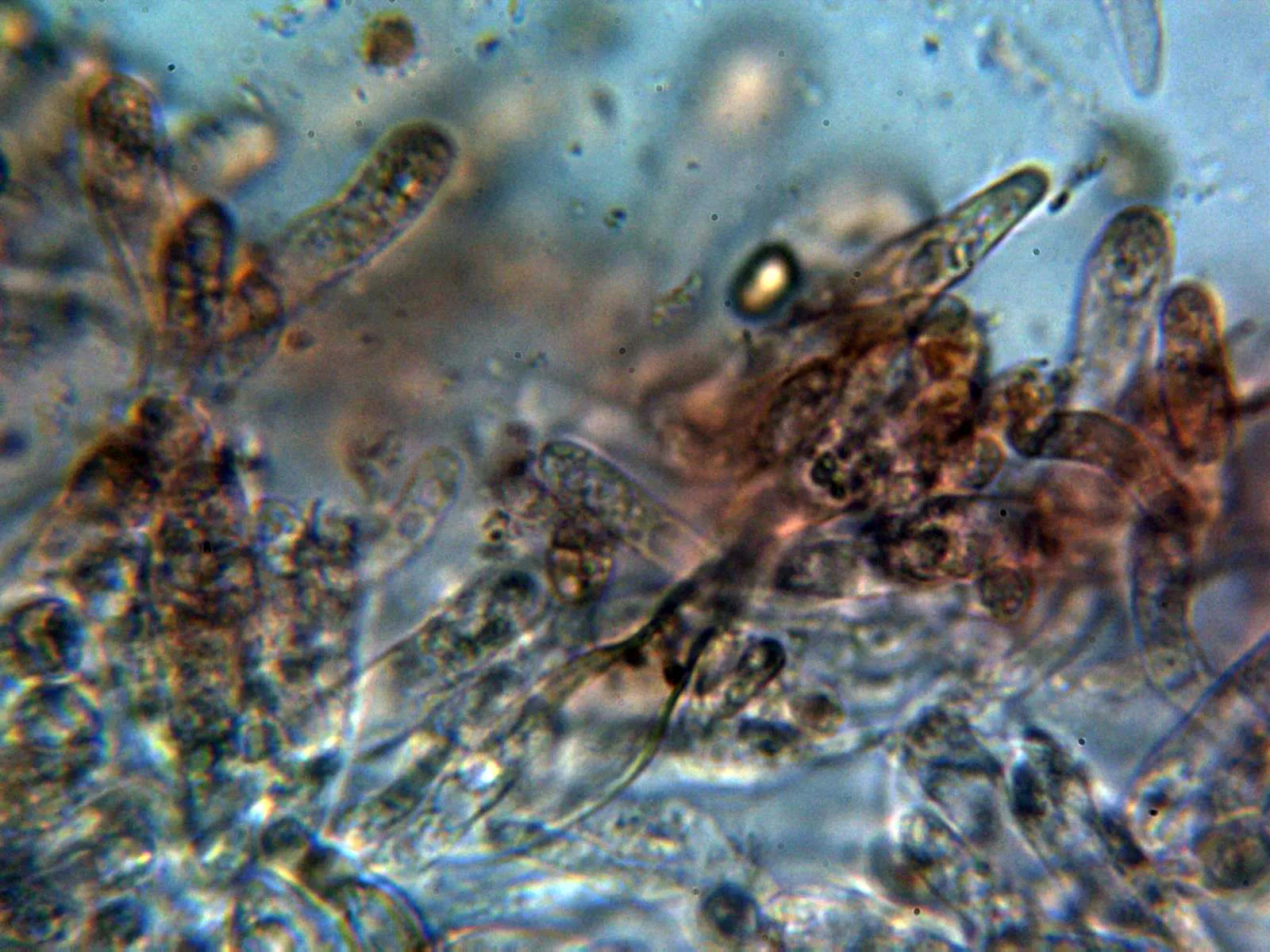
Cheilocystidia and pleurocystidia fusiform to lageniform with an elongated neck, 35 to 60 µm long, 5 to 10 µm wide, occasionally containing brown intracellular pigment.
Lamellar trama regular to parallel.
Basidia clavate, 30 to 40 µm long, 8 to 10 µm wide, clamped at the base, 2- or 4-spored.
Spores ellipsoidal, thick- and smooth-walled, pale yellowish-brown under the microscope, 5.5 to 7.5 µm long, 3.8 to 4.5 µm wide, with an eccentric hyaline apiculus at one pole, inamyloid in Melzer's reagent.
Geographic references
Map generated from global occurrence data from GBIF. GBIF.
Study measurements
Values in Microns (µm)Macroscopic gallery
Microscopic gallery