Panaeolus semiovatus
(Sowerby) S.Lundell & Nannf.
Study description
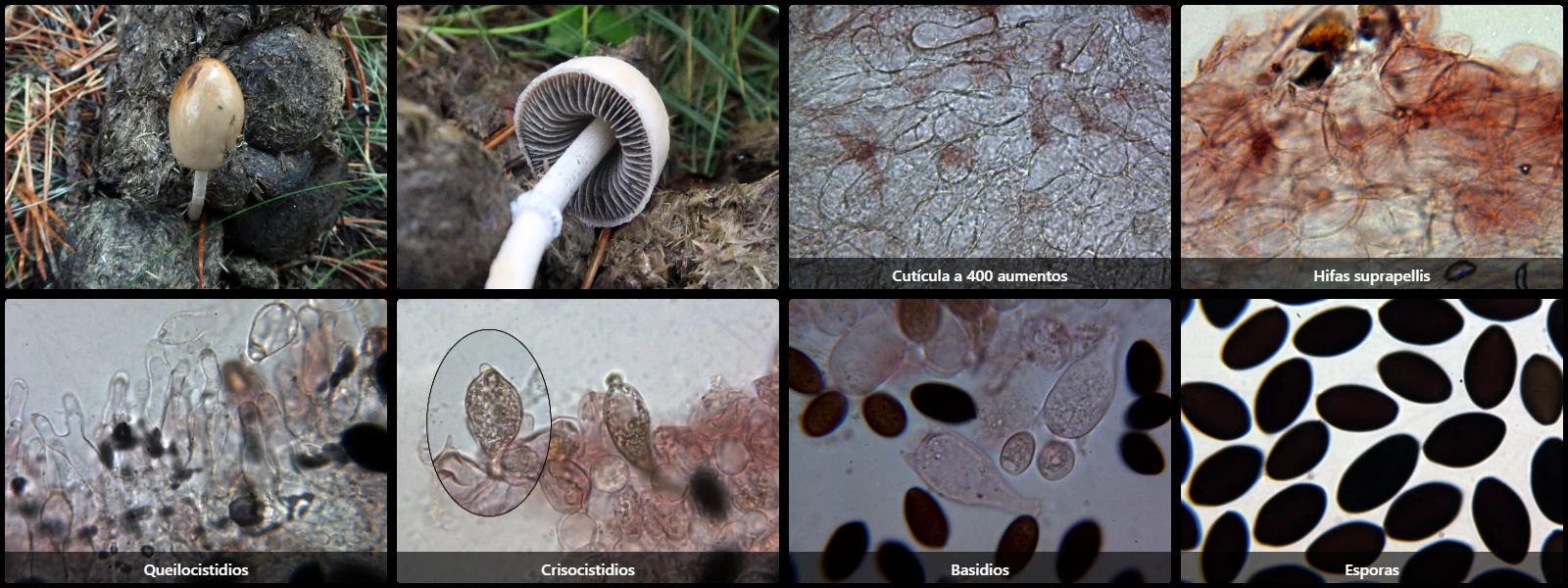
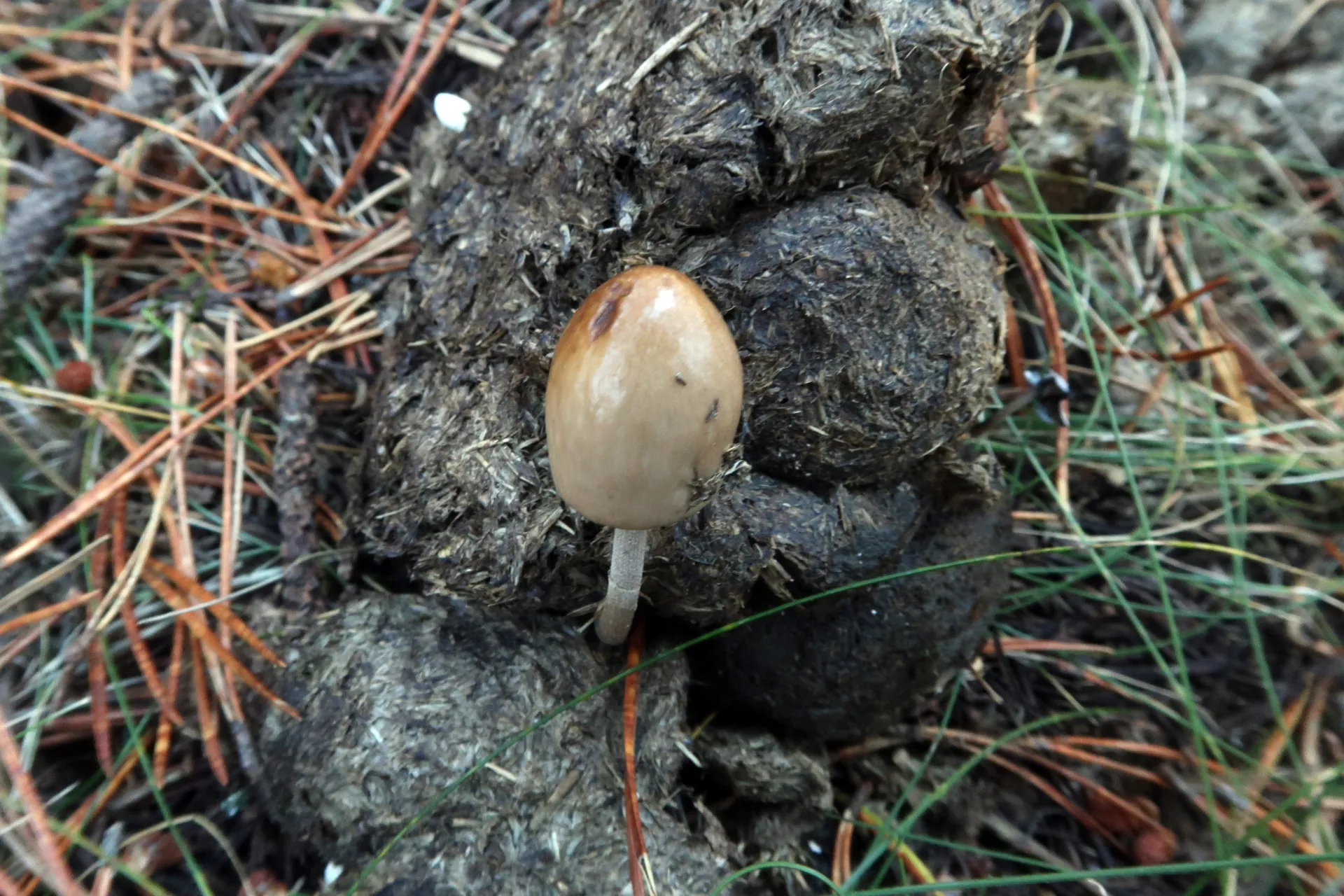
A coprophilous species fruiting directly on dung, especially cattle or horse droppings, with an ovoid to hemispherical pileus 1.5 to 4 cm in diameter, pale cream, adnate greyish to blackish lamellae, and a cylindrical stipe, widened at the base, bearing a membranous ring in its upper third.
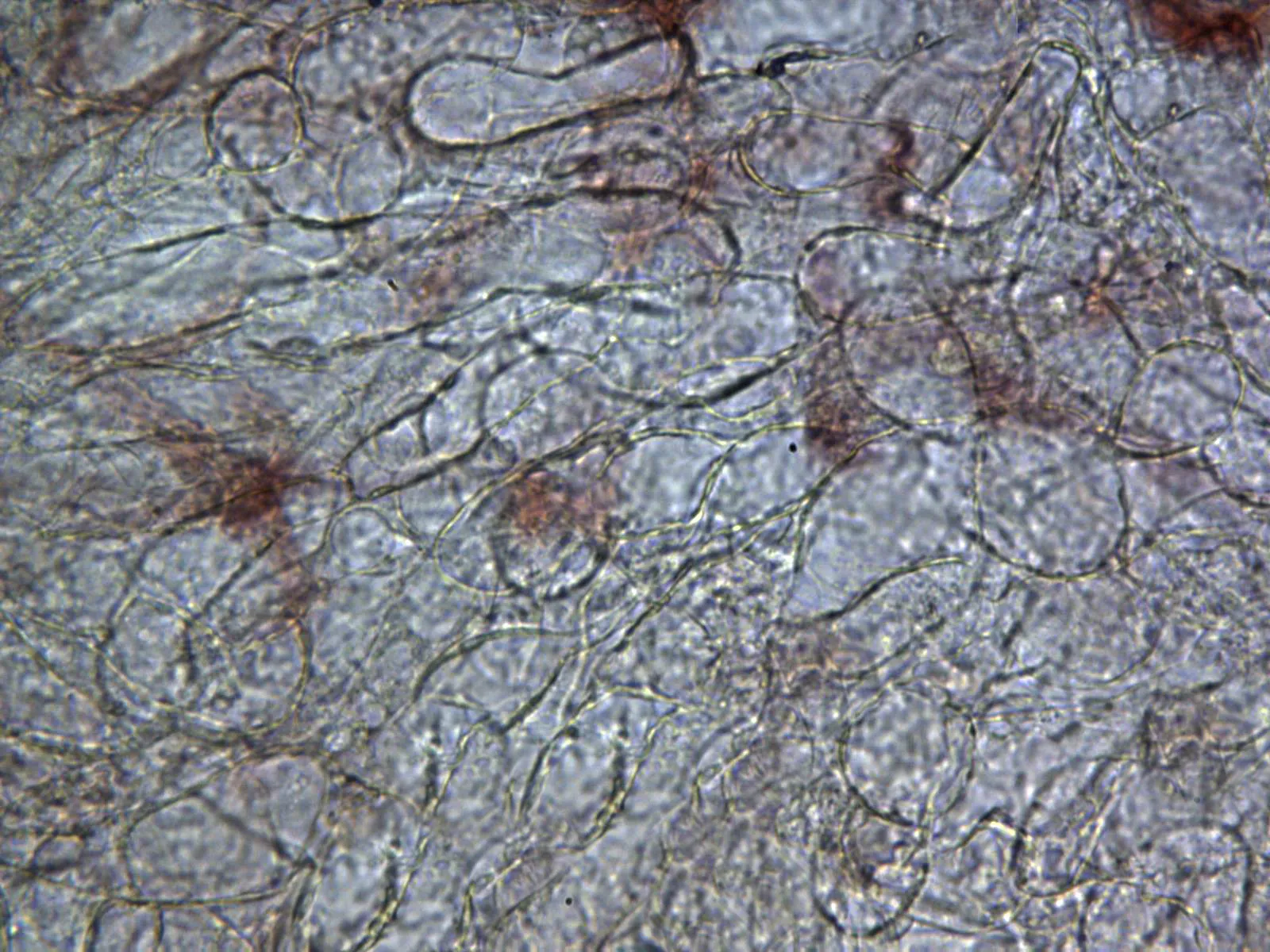
Pileipellis cellular, composed of globose to pyriform cells, hyaline or containing faint yellowish intracellular pigment, 20 to 40 µm long and 15 to 25 µm wide.
Cheilocystidia polymorphic, cylindrical to lageniform, some branched, clavate, 30 to 55 µm long and 8 to 20 µm wide.
Pleurocystidia (chrysocystidia) scarce, scattered, fusiform to ventricose-clavate, containing refractive yellow inclusions in KOH/ammonia, 30 to 45 µm long and 20 to 25 µm wide.
Basidia clavate, 35 to 45 µm long, 16 to 20 µm wide, clamped at the base, 4-spored.
Spores ellipsoidal, smooth, dark brown under the microscope, 18 to 21 µm long, 10.5 to 12 µm wide, with an indistinct apiculus and a conspicuous apical germ pore.
Geographic references
Map generated from global occurrence data from GBIF. GBIF.
Study measurements
Values in Microns (µm)Macroscopic gallery
Microscopic gallery