Panaeolus fimicola
(Pers.) Gillet
Study description
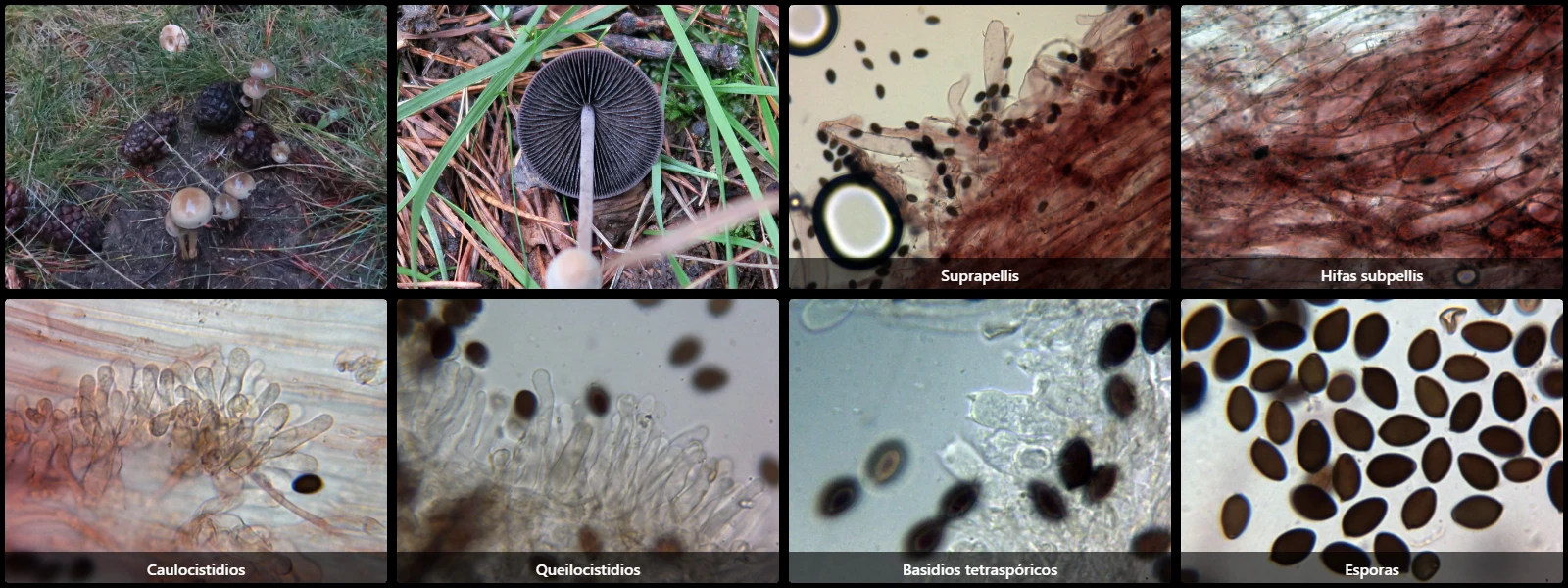
A coprophilous species developing on heavily manured soils or directly on herbivore dung, with a campanulate to convex pileus 1.5 to 3 cm in diameter, greyish-brown to blackish, adnate blackish lamellae with a whitish margin, and a cylindrical, hollow stipe, paler than the cap and slightly pruinose at the apex.
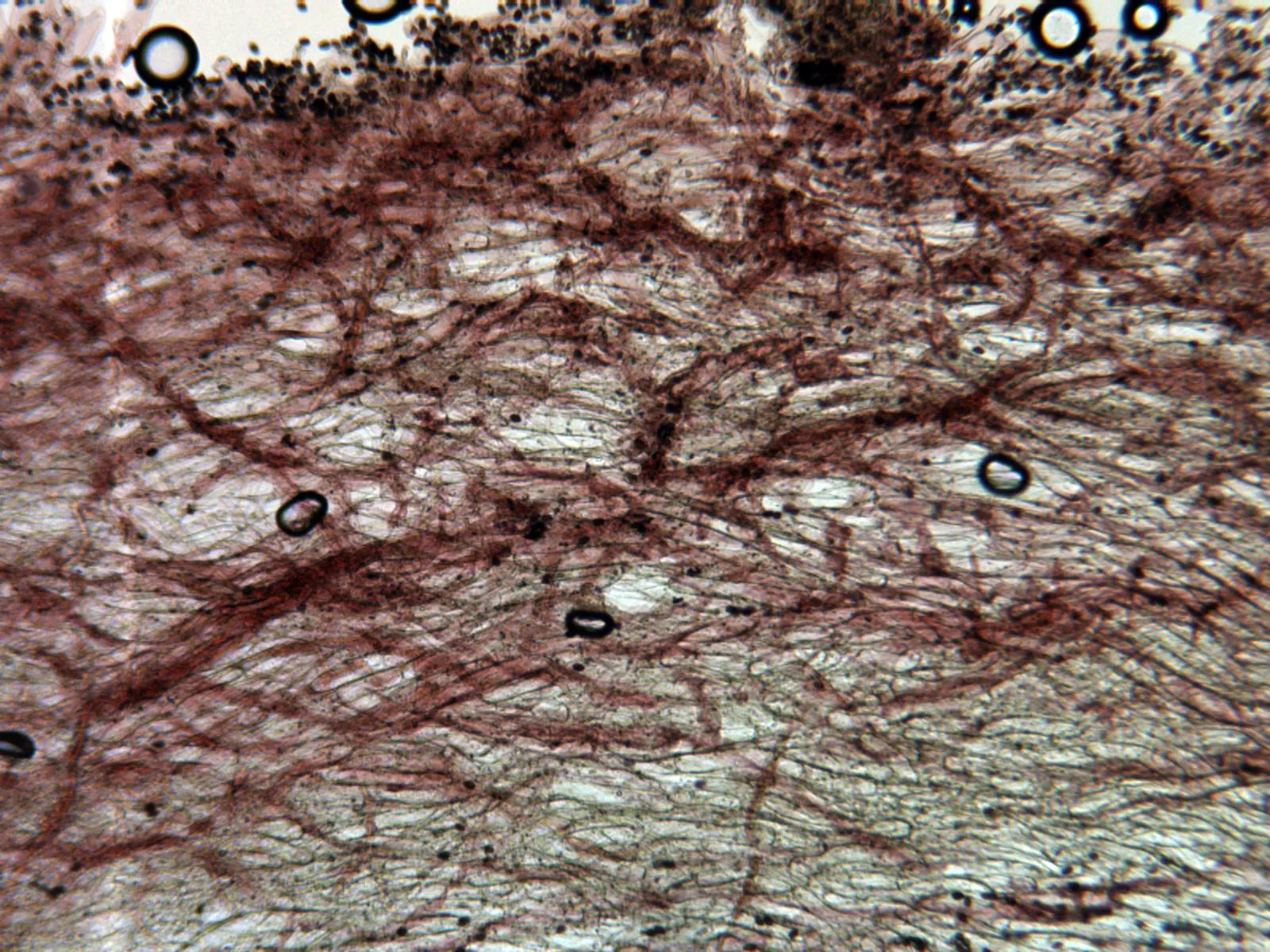
Suprapellis with a layer of globose to pyriform cells 15 to 25 µm long and 15 to 20 µm wide, with emergent cylindrical to clavate terminal cells 30 to 50 µm long and 14 to 20 µm wide.
Subpellis formed by cylindrical, filamentous hyphae arranged in parallel to slightly interwoven, 6 to 12 µm wide, septate with clamp connections.
Caulocystidia present especially on the upper stipe, arranged in bundles or tufts, cylindrical, slightly flexuous, with rounded apices.
Cheilocystidia very abundant, rendering the gill edge virtually sterile, cylindrical, flexuous, slightly widened at the base, 25 to 45 µm long and 5 to 7 µm wide.
Pleurocystidia absent.
Basidia subcylindrical to clavate, 25 to 32 µm long, 8 to 11 µm wide, simple-septate at the base, 4-spored.
Spores ellipsoidal to citriform, smooth- and moderately thick-walled, dark brown under the microscope, 10 to 12 µm long, 6 to 7.5 µm wide, with an inconspicuous apiculus at one end and a central germ pore at the opposite end.
Geographic references
Map generated from global occurrence data from GBIF. GBIF.
Study measurements
Values in Microns (µm)Macroscopic gallery
Microscopic gallery