Neoboletus erythropus
(Pers.) C.Hahn
Study description
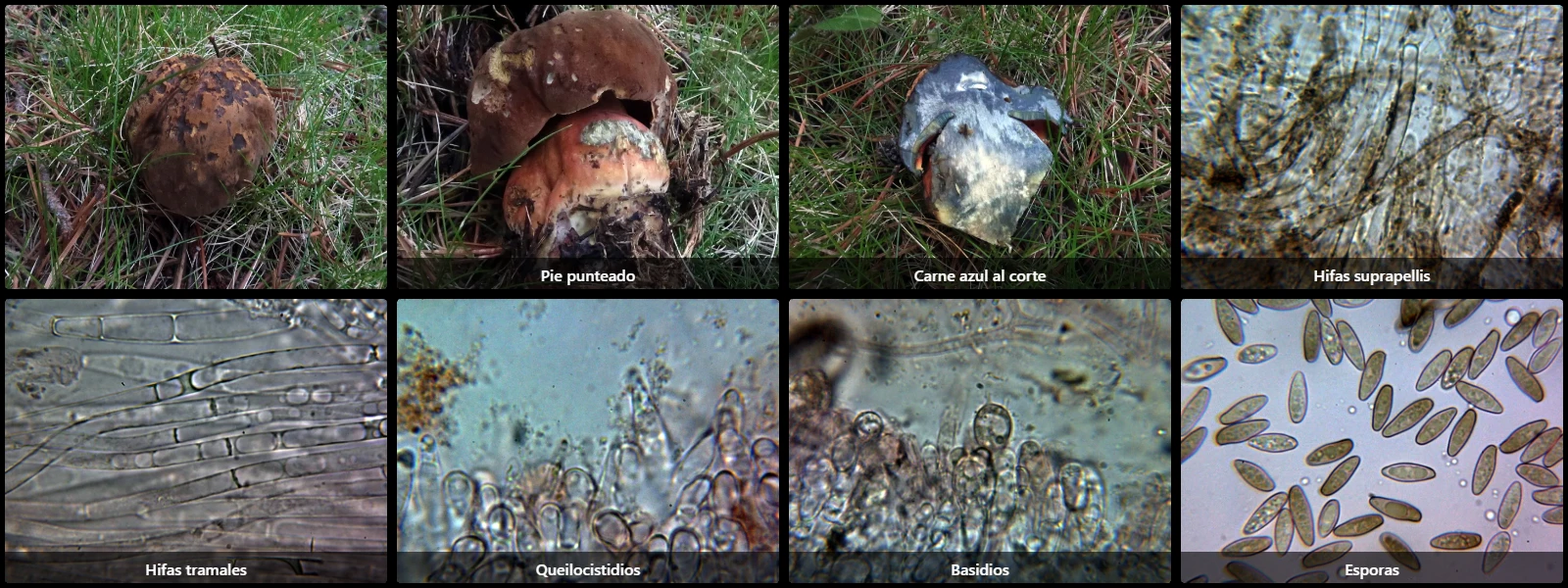
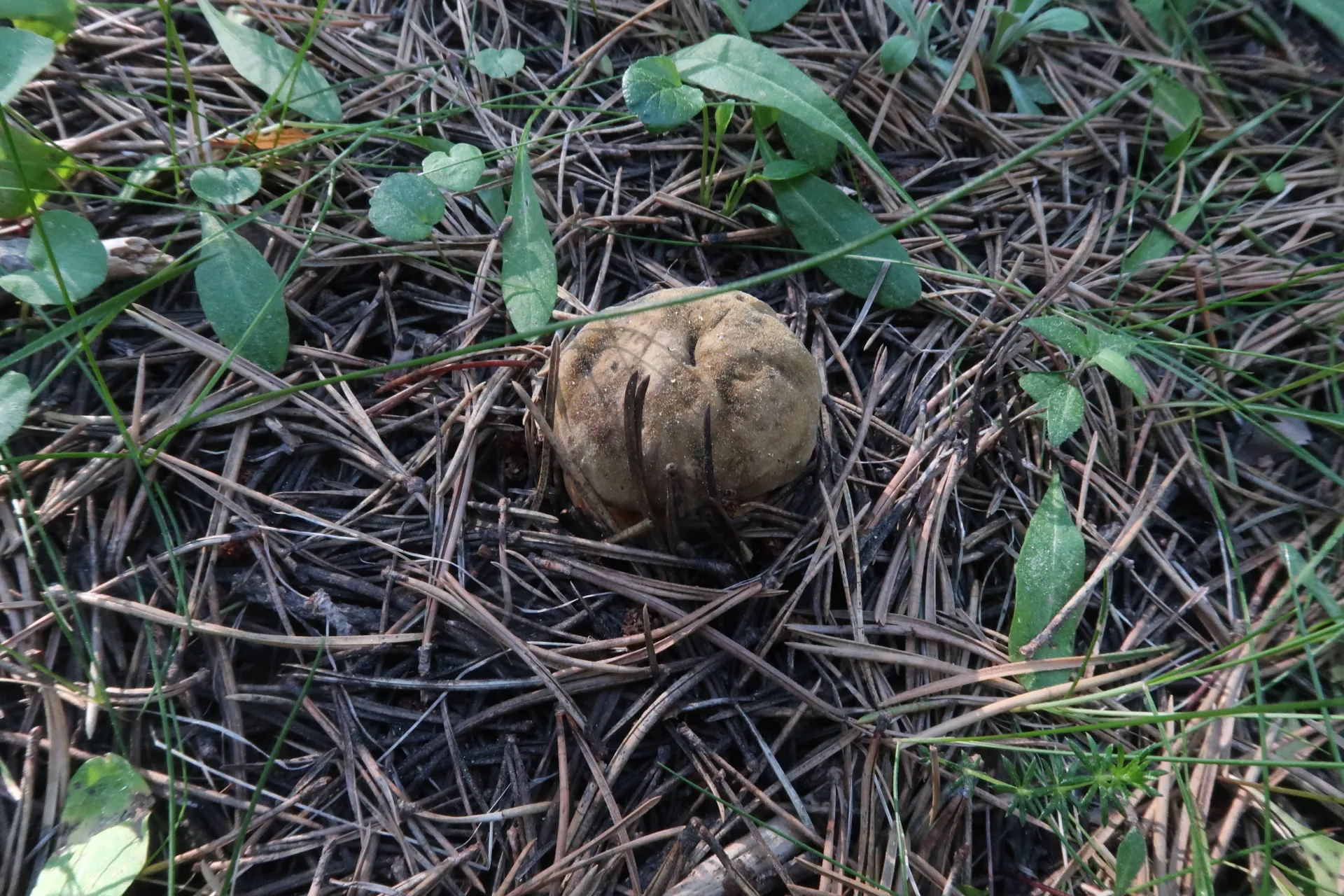
Species typical of broadleaf woodlands, especially beech or oak (though also recorded under Pinus mugo), with a highly variable pileus from brownish to dark brown, up to 15 cm across, bluing on handling, red to orange-red pores over a yellow background, a punctate (non-reticulate) red-dotted stipe, and yellow flesh that blues intensely immediately upon cutting.
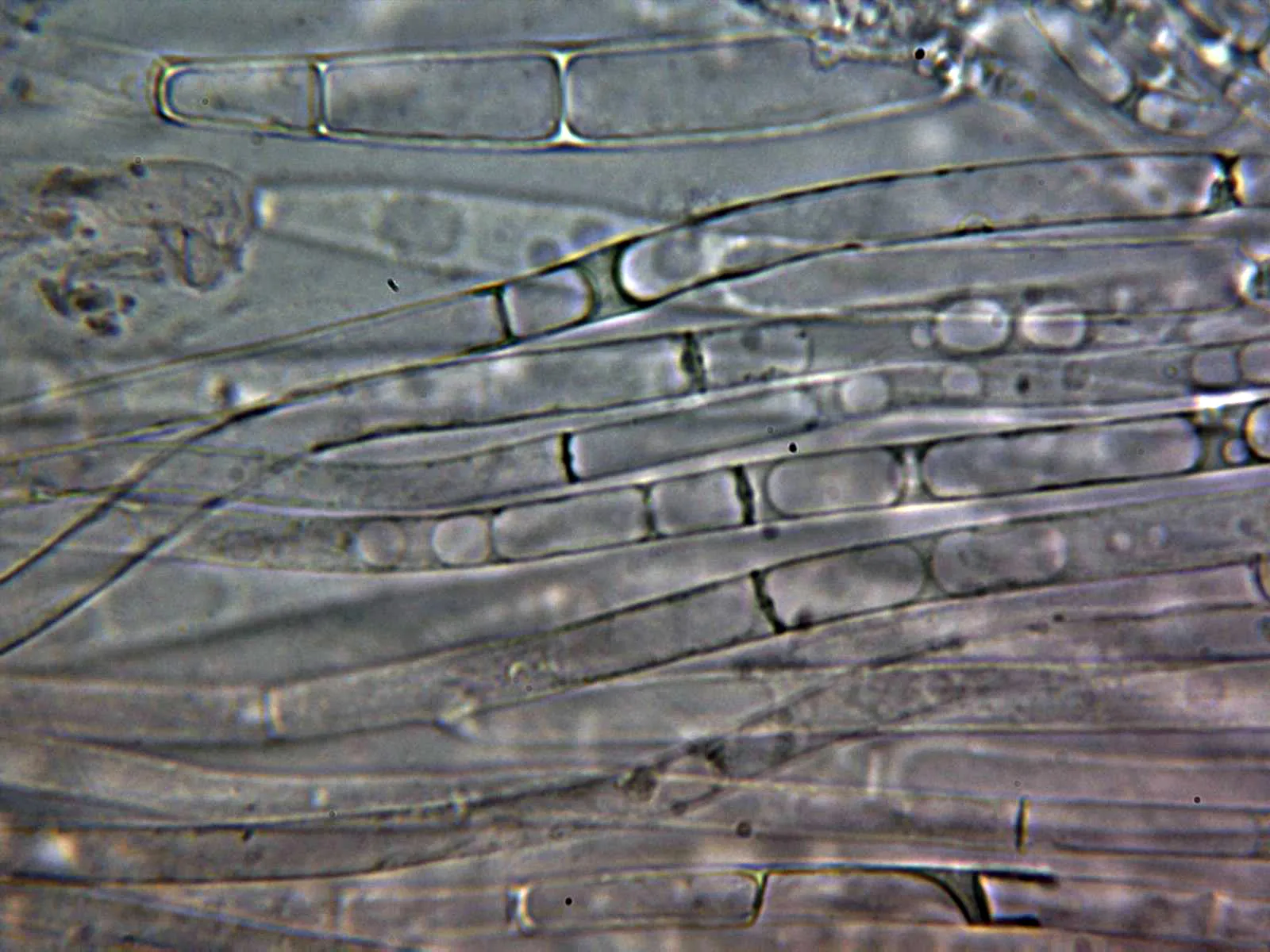
Filamentous cuticle (pileipellis), composed of interwoven hyphae 3–6 µm wide with light brown intracellular pigment, scattered encrustations of the same colour, septate with simple septa (without clamp connections).
Cheilocystidia and pleurocystidia fusiform, hyaline or containing faint pale brown intracellular pigment, measuring 25–50 µm long by 6–10 µm wide.
Basidia clavate, 30–40 µm long by 11–14 µm wide, simple-based, generally 4-spored.
Spores cylindrical-fusiform (boletoid), yellowish-brown under the microscope, with a slightly curved end bearing a hyaline apiculus, measuring 13–17.5 µm long by 4.5–5.5 µm wide, containing oil guttules inside.
Geographic references
Map generated from global occurrence data from GBIF. GBIF.
Study measurements
Values in Microns (µm)Macroscopic gallery
Microscopic gallery