Naucoria scolecina
(Fr.) Quél.
Study description
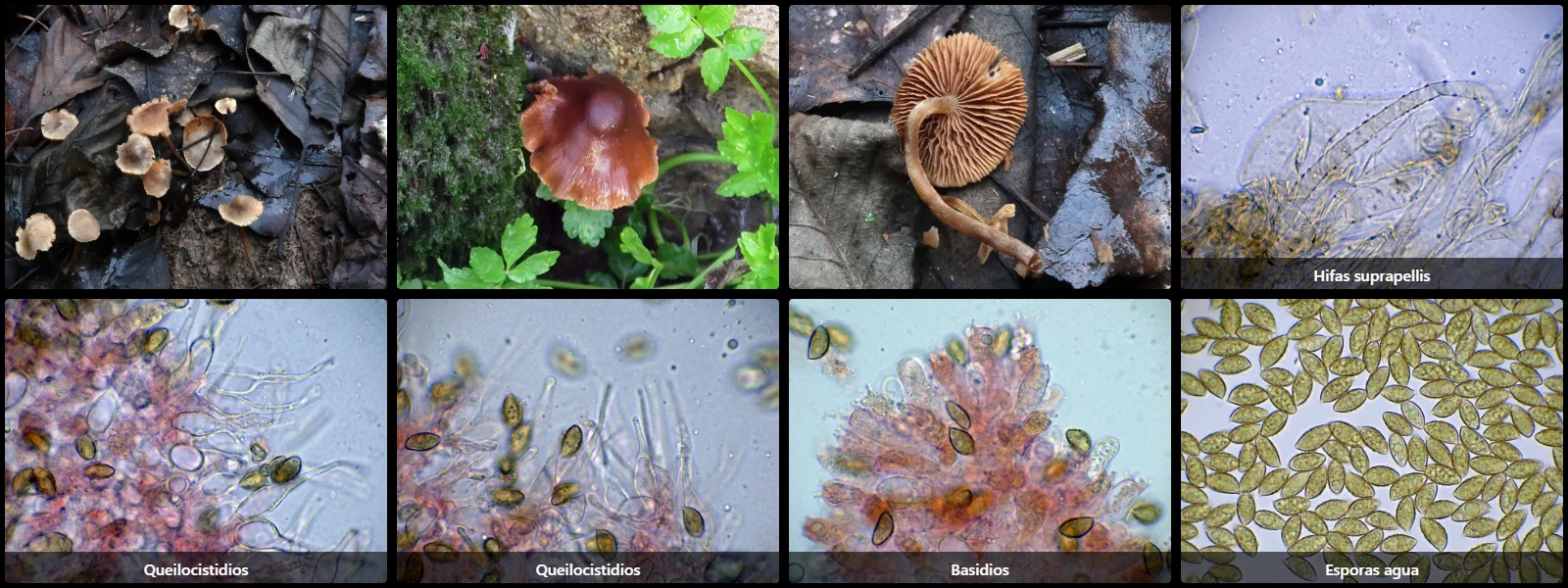
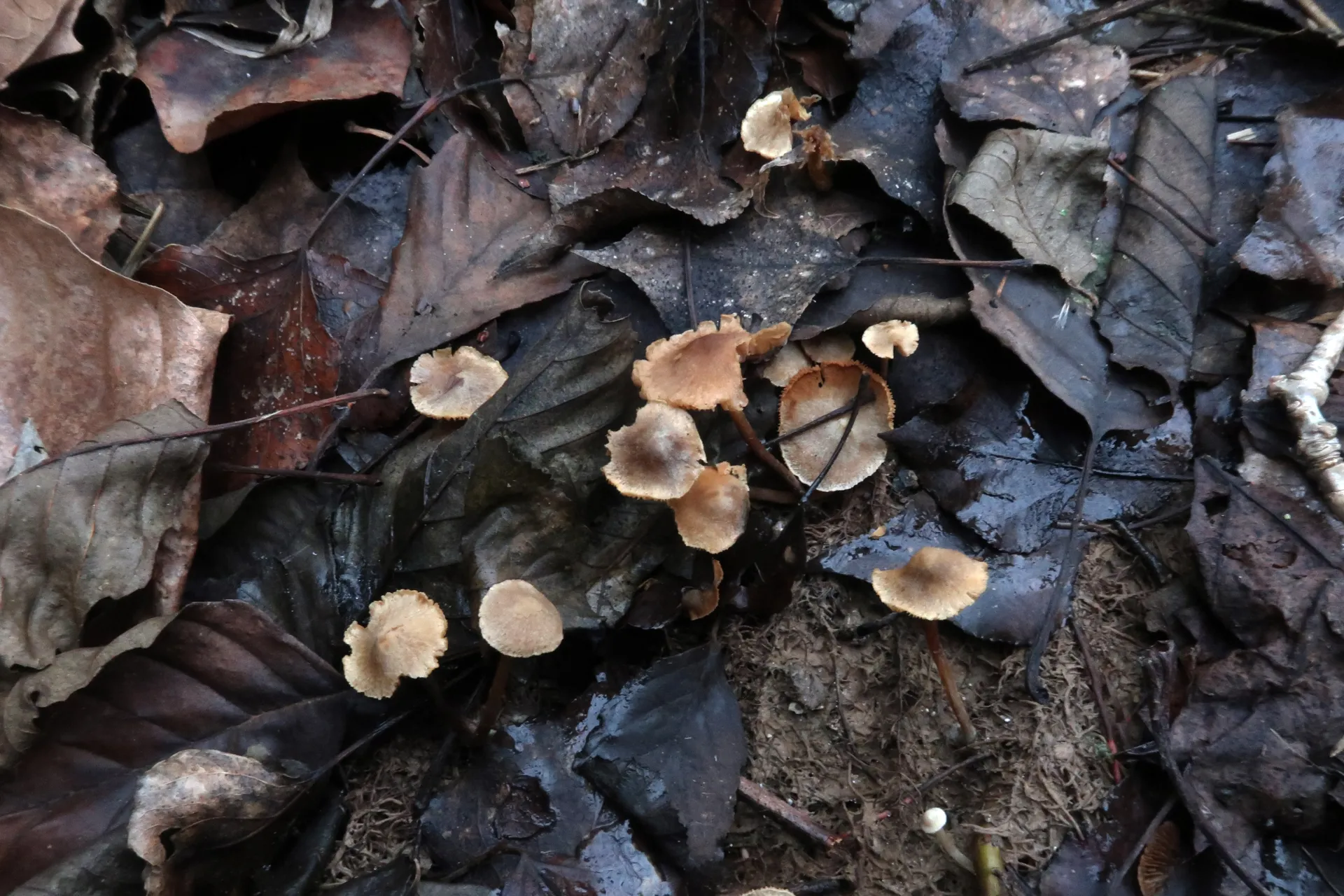
Species usually fruiting in groups, associated with Alnus spp., growing among decaying leaf litter on the ground, with a conical to flattened pileus 1–4 cm across, dark brown with a paler margin, adnate lamellae, a cylindrical reddish-brown stipe with whitish longitudinal fibrils, and a raphanoid odour and taste (reminiscent of radish).
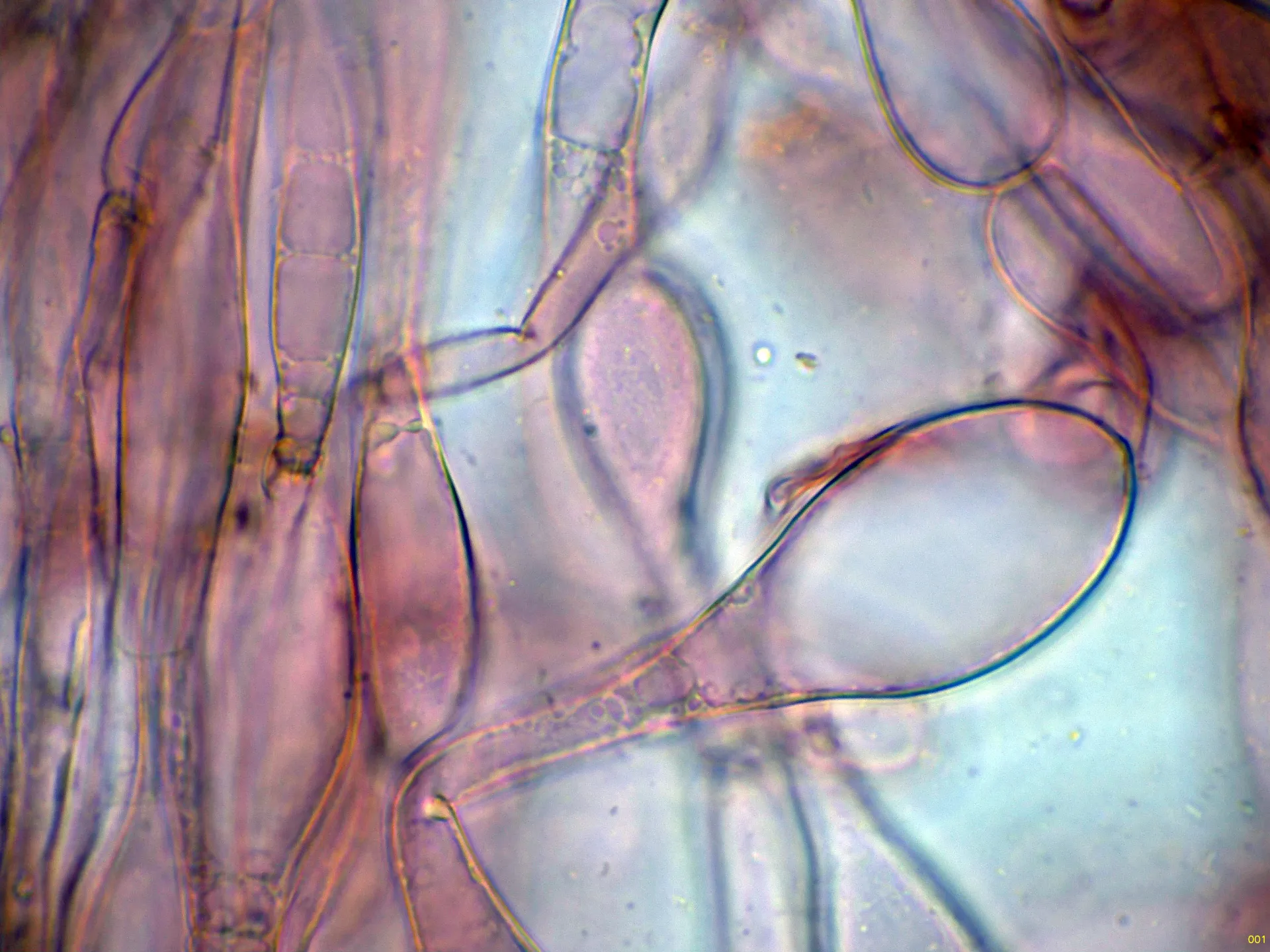
Cuticular hyphae (pileipellis) with a superficial layer of cylindrical, filamentous hyphae 3–5 µm wide with brown intracellular pigment and emergent fusiform terminal elements, septate and clamped, underlain by broader, shorter hyphae with a subhymeniform appearance.
Cheilocystidia lageniform with a long, slender, sometimes subcapitate neck, measuring 30–60 µm long, 7–12 µm wide at the base, and with a neck 1.5–2.5 µm wide.
Pleurocystidia absent.
Basidia cylindrical to clavate, 25–35 µm long by 7–11 µm wide, with basal clamps, generally 4-spored.
Spores ellipsoidal to amygdaliform, with a pointed end where the apiculus is located, slightly thick-walled and delicately verruculose, measuring 12.5–15 µm long by 6–8 µm wide, pale yellowish-brown under the microscope, ornamented with low, darker warts.
Very similar to Naucoria escharioides, which differs in having shorter-necked cheilocystidia, slightly smaller spores, and coarser verrucose ornamentation.
Herbarium material available: JTP2744/26.
Geographic references
Map generated from global occurrence data from GBIF. GBIF.
Study measurements
Values in Microns (µm)Macroscopic gallery
Microscopic gallery