


Microglossum nudipes
Boud.
Study description
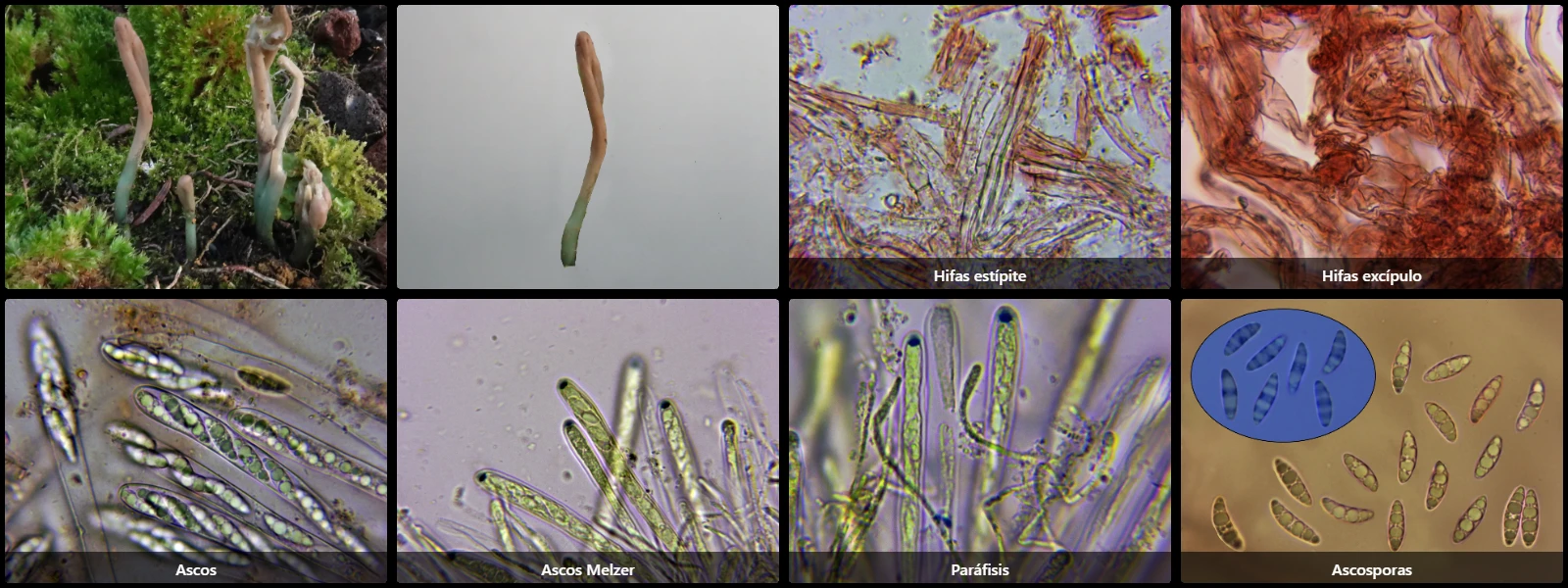
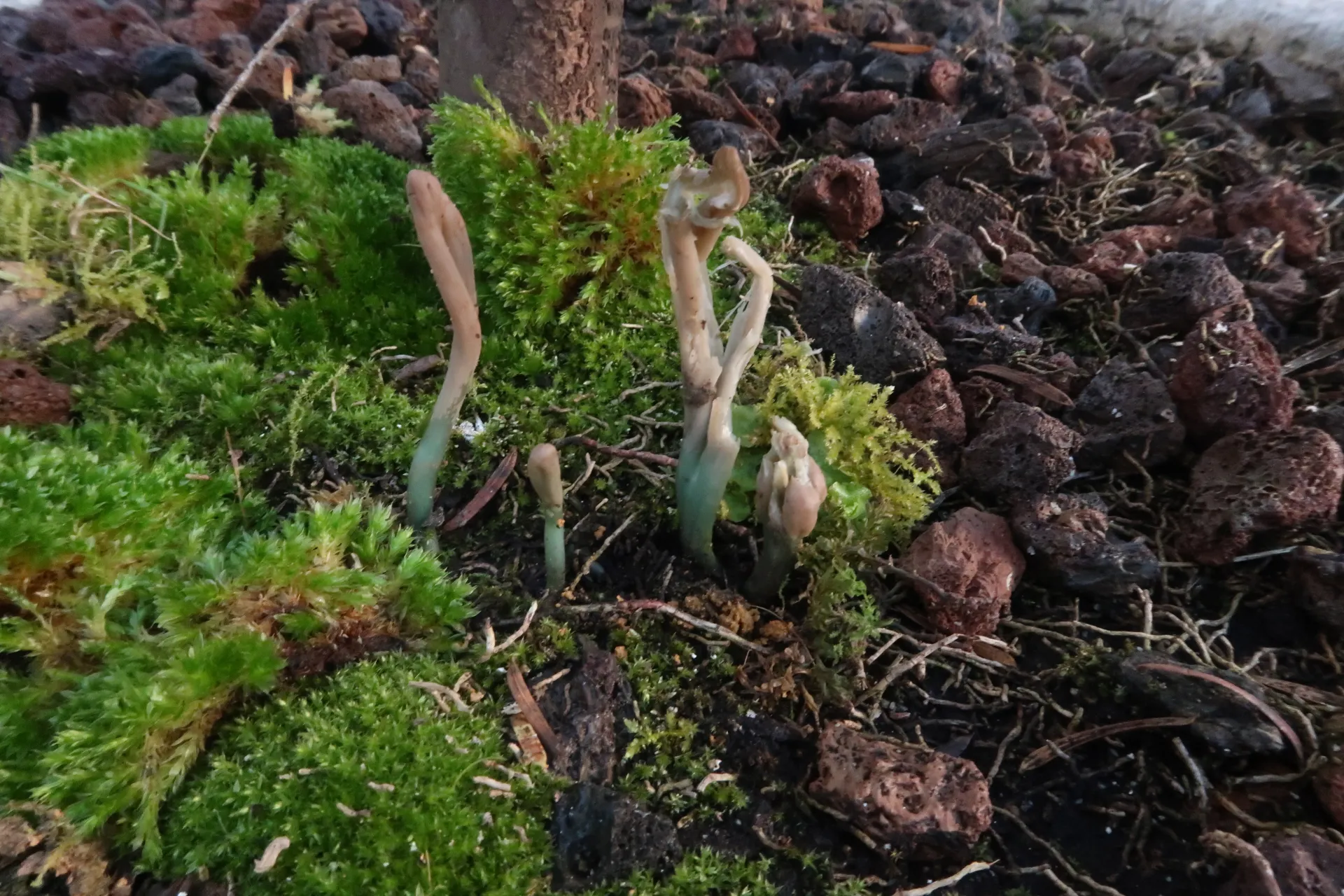
General: Clavate to spathulate ascomycete displaying a wide color range from cream to green or brownish, consistently with a greenish stipe, with a marked preference for calcareous soils.
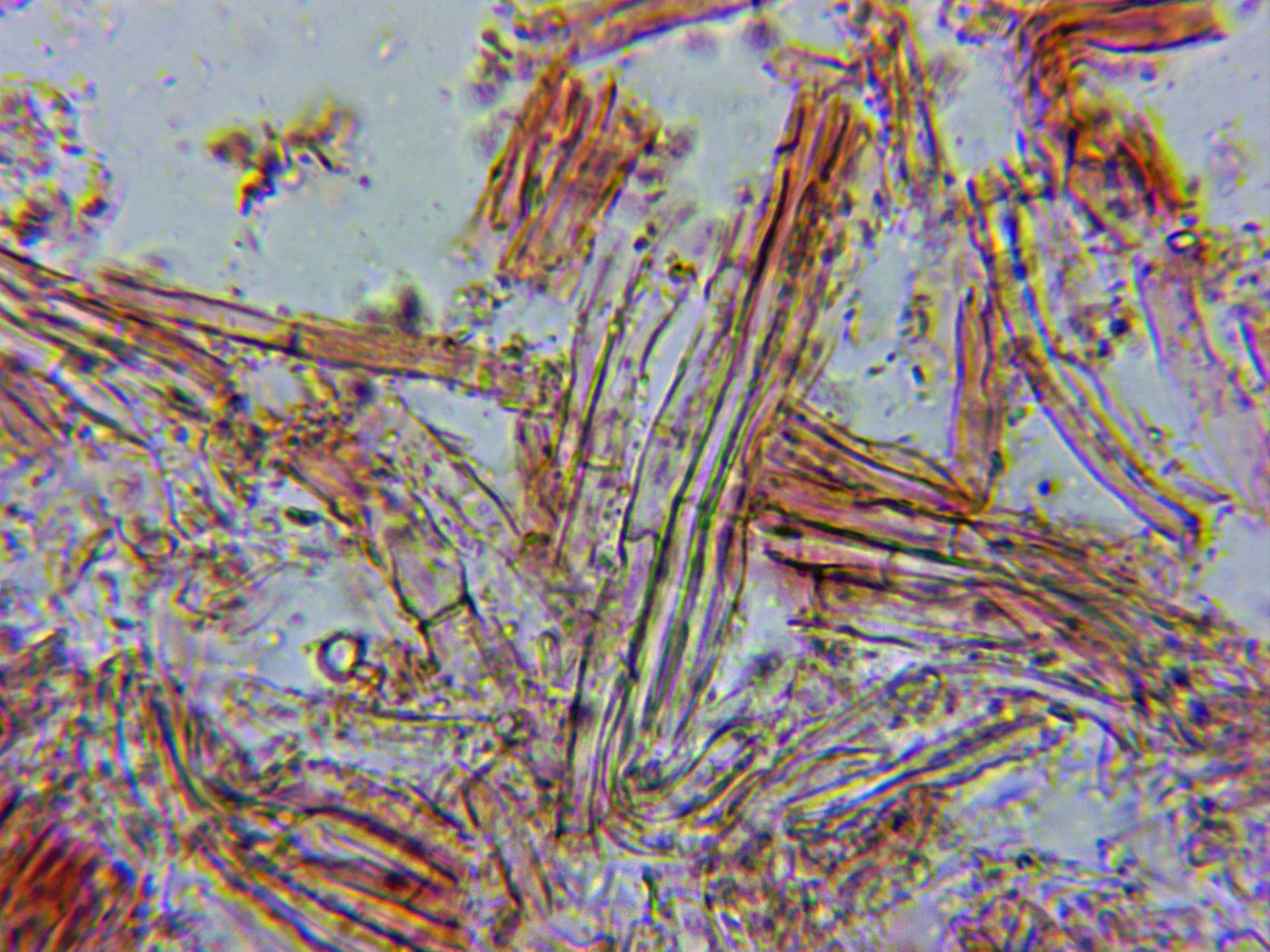
Stipe hyphae: Cylindrical, septate, moderately thick-walled, hyaline, arranged parallel.
Asci: Cylindric-clavate, 8-spored, 100-130 x 8-11 µm, biseriate to irregular, apical pore strongly amyloid in Melzer's reagent.
Paraphyses: Filiform, smooth, 1.5-2 µm wide, apices swollen up to 3.5 µm, curved to sinuous, with greenish granular intracellular pigment more visible in Melzer's reagent.
Ascospores: Ellipsoid to fusiform, hyaline, smooth, thin-walled, 13-18 x 4-5.5 µm, densely filled with oil droplets.
Stipe hyphae: Cylindrical, septate, moderately thick-walled, hyaline, arranged parallel.
Asci: Cylindric-clavate, 8-spored, 100-130 x 8-11 µm, biseriate to irregular, apical pore strongly amyloid in Melzer's reagent.
Paraphyses: Filiform, smooth, 1.5-2 µm wide, apices swollen up to 3.5 µm, curved to sinuous, with greenish granular intracellular pigment more visible in Melzer's reagent.
Ascospores: Ellipsoid to fusiform, hyaline, smooth, thin-walled, 13-18 x 4-5.5 µm, densely filled with oil droplets.
Geographic references
Map generated from global occurrence data from GBIF. GBIF.
Study measurements
Values in Microns (µm)Macroscopic gallery
1 / 5Microglossum nudipes - 1 - IMG_2741
Microscopic gallery
1 / 23Microglossum nudipes - 10 - Hifas pié 2