


Megacollybia platyphylla
(Pers.) Kotl. & Pouzar
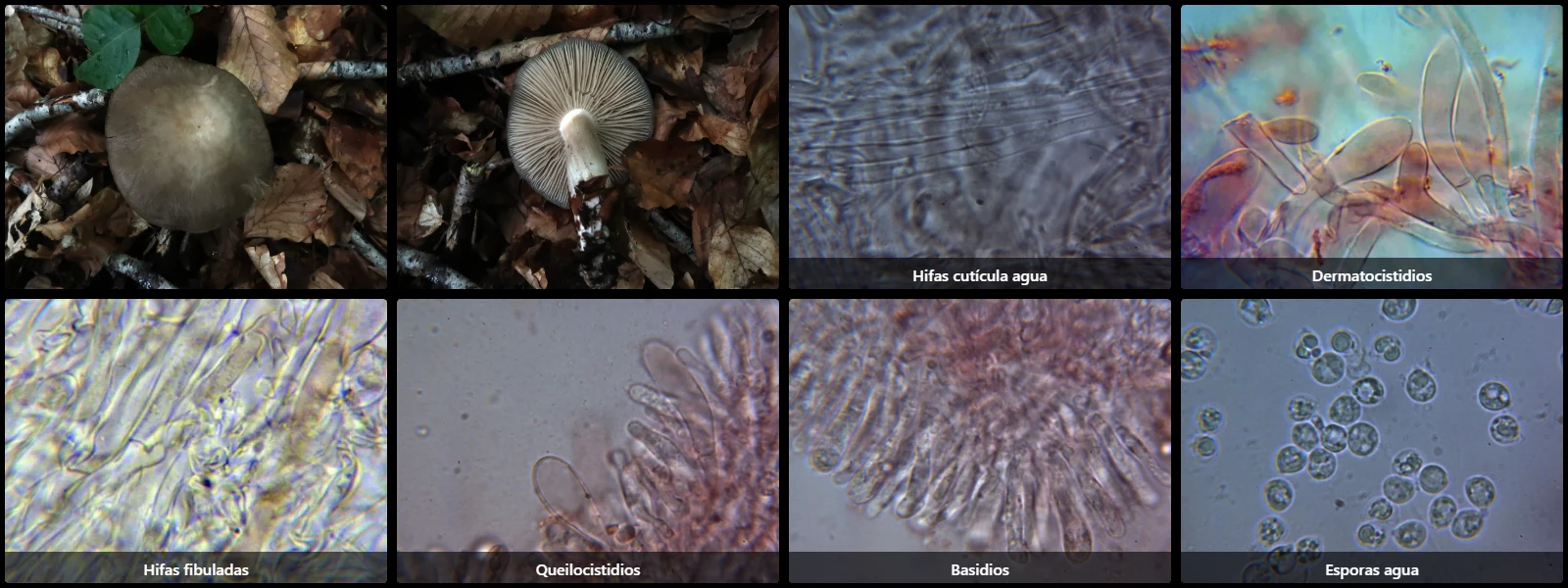
Study description
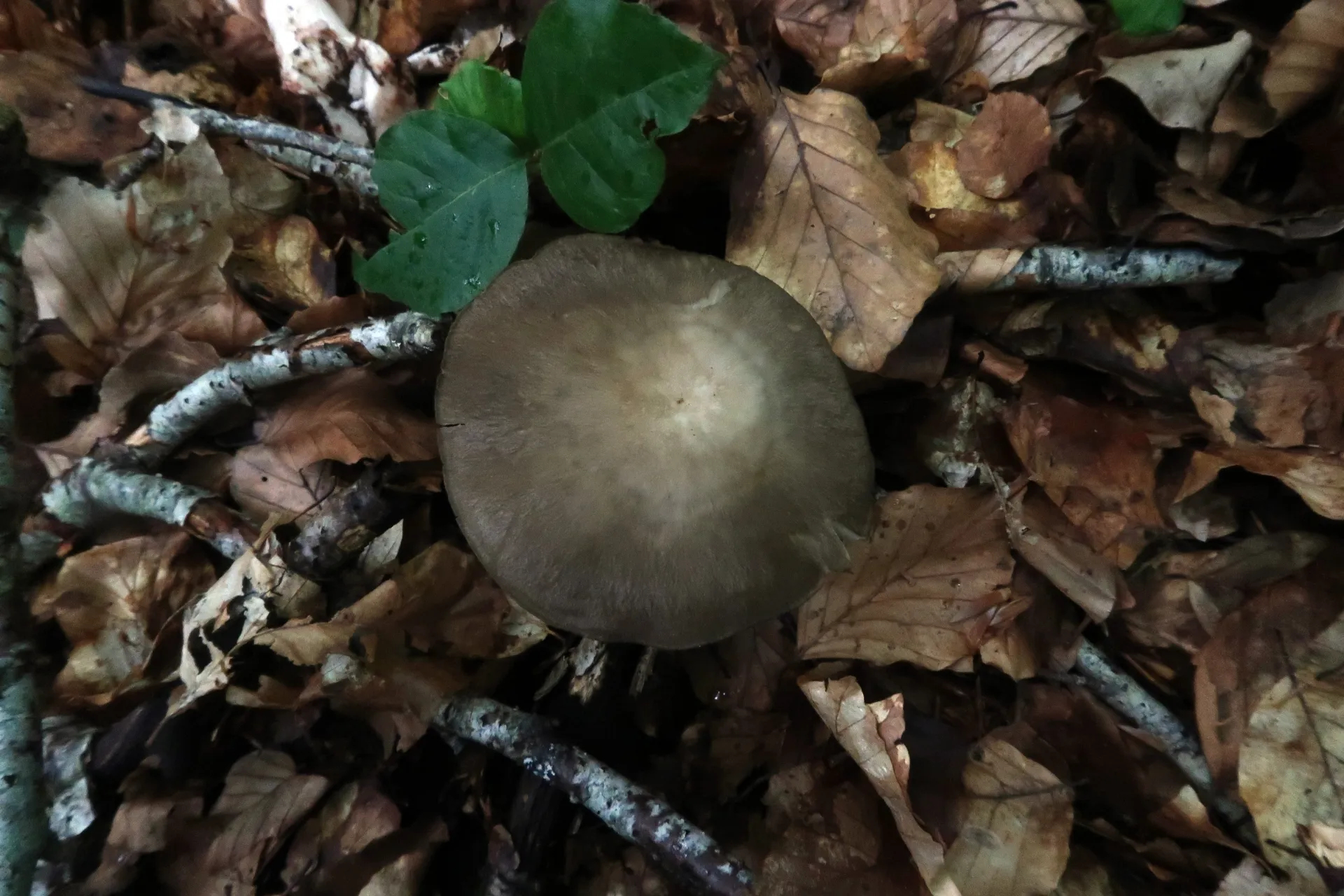
General: Frequent lignicolous species in beech forests, developing on stumps and buried roots with prominent white rhizomorphic cords, pileus radially fibrillose, greyish-brown, up to 10 cm or more, broad white to cream lamellae, slightly bitter taste.
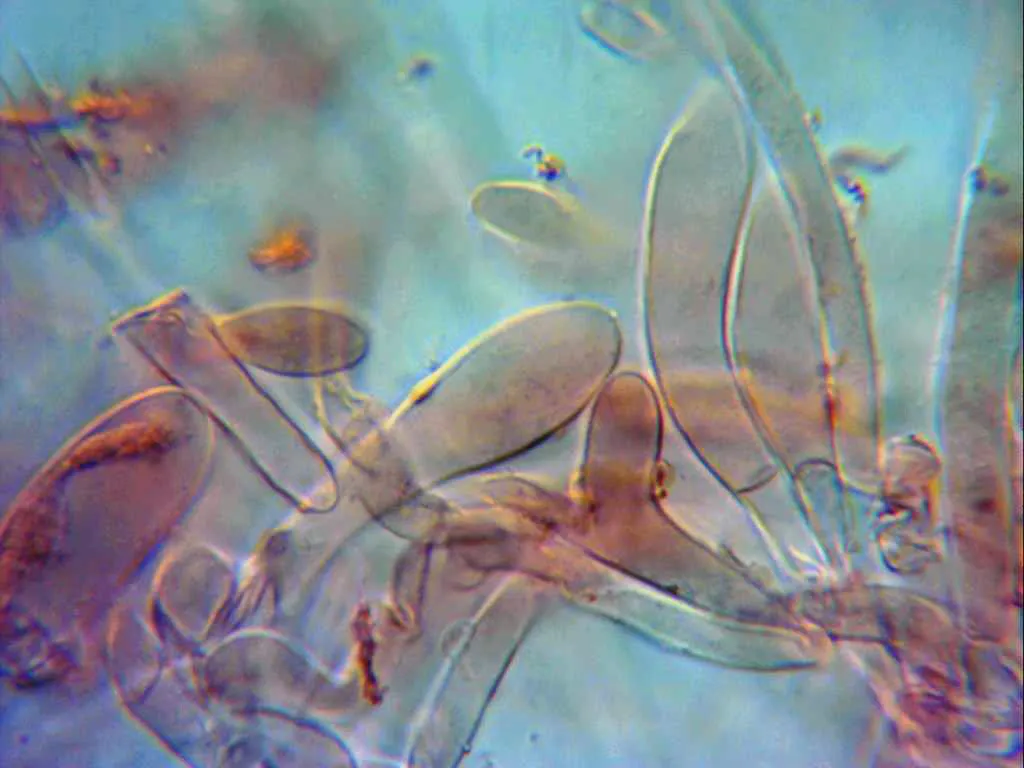
Pileipellis: Cutis of cylindrical hyphae 4-7 µm wide with greyish-brown intracellular pigment, bearing numerous emergent cylindrical to clavate dermatocystidia with inflations up to 10 µm, septate with clamp connections.
Cheilocystidia: Clavate to vesiculose, 40-65 x 12-20 µm.
Pleurocystidia: Absent.
Lamellar trama: Subregular to parallel.
Basidia: Cylindric-clavate, 45-55 x 9-11 µm, with basal clamp connections, 4-spored.
Spores: Subglobose to ellipsoid, smooth, hyaline, thin-walled, 6-8.5 x 5.5-7 µm, with a hyaline apiculus and irregular oil droplets.
Pileipellis: Cutis of cylindrical hyphae 4-7 µm wide with greyish-brown intracellular pigment, bearing numerous emergent cylindrical to clavate dermatocystidia with inflations up to 10 µm, septate with clamp connections.
Cheilocystidia: Clavate to vesiculose, 40-65 x 12-20 µm.
Pleurocystidia: Absent.
Lamellar trama: Subregular to parallel.
Basidia: Cylindric-clavate, 45-55 x 9-11 µm, with basal clamp connections, 4-spored.
Spores: Subglobose to ellipsoid, smooth, hyaline, thin-walled, 6-8.5 x 5.5-7 µm, with a hyaline apiculus and irregular oil droplets.
Geographic references
Map generated from global occurrence data from GBIF. GBIF.
Study measurements
Values in Microns (µm)Macroscopic gallery
1 / 12Megacollybia platyphylla - 1 - IMG_7062
Microscopic gallery
1 / 32Megacollybia platyphylla - 10 - Pileocistidios