


Macrolepiota procera
(Scop.) Singer
Study description
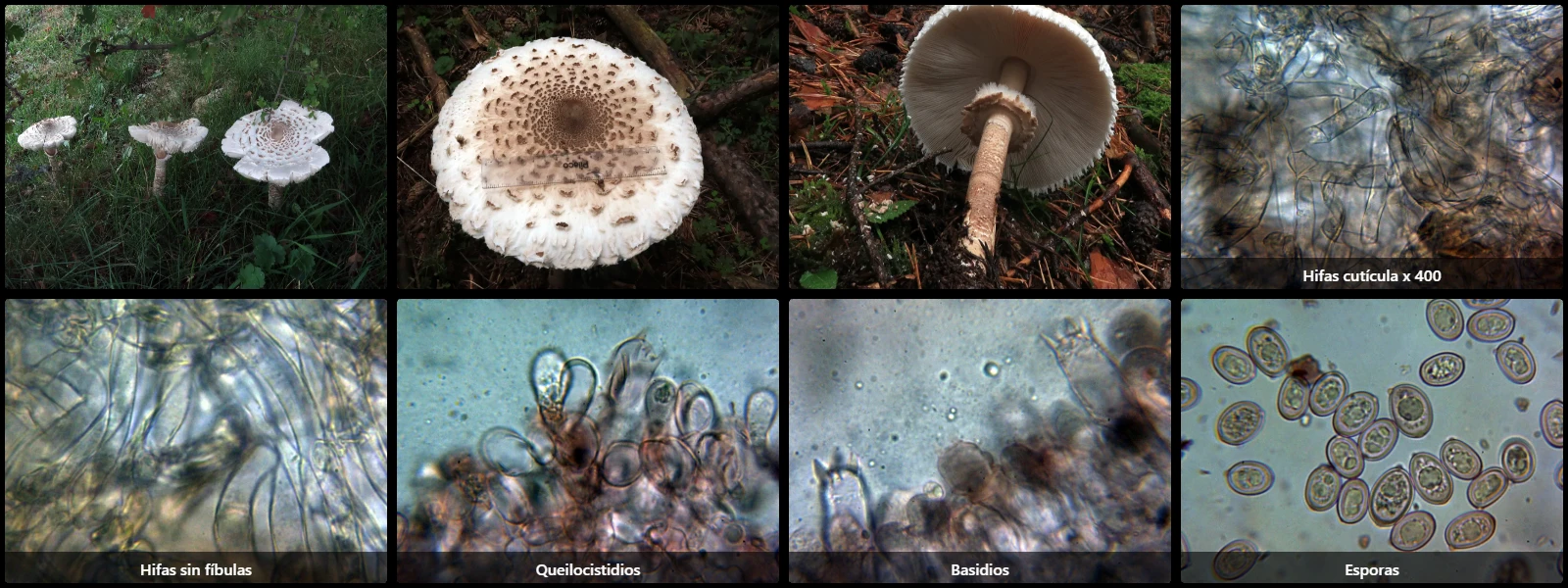
General: Common large parasol (pileus up to 30 cm or more), scaly hazel-brown over a whitish background, dark brown at the disc, stipe tall with conspicuous dark brown zig-zag snakeskin bands over a whitish ground, movable double ring, nutty taste.
Pileipellis: Cutis composed of cylindrical filamentous hyphae 6-13 µm wide with pale brown intracellular pigment, emergent terminal elements up to 350 µm long, septate with simple septa (clamp connections absent).
Cheilocystidia: Clavate, irregular, 25-45 x 6-12 µm.
Pleurocystidia: Absent.
Basidia: Clavate, 35-50 x 13-15 µm, clampless, 2- or 4-spored.
Spores: Ellipsoid, smooth, hyaline, thick-walled, 12-17 x 8.5-10 µm, with an eccentric apiculus, a covered apical germ pore, containing lipid droplets, dextrinoid in Melzer's reagent.
Pileipellis: Cutis composed of cylindrical filamentous hyphae 6-13 µm wide with pale brown intracellular pigment, emergent terminal elements up to 350 µm long, septate with simple septa (clamp connections absent).
Cheilocystidia: Clavate, irregular, 25-45 x 6-12 µm.
Pleurocystidia: Absent.
Basidia: Clavate, 35-50 x 13-15 µm, clampless, 2- or 4-spored.
Spores: Ellipsoid, smooth, hyaline, thick-walled, 12-17 x 8.5-10 µm, with an eccentric apiculus, a covered apical germ pore, containing lipid droplets, dextrinoid in Melzer's reagent.
Geographic references
Map generated from global occurrence data from GBIF. GBIF.
Study measurements
Values in Microns (µm)Macroscopic gallery
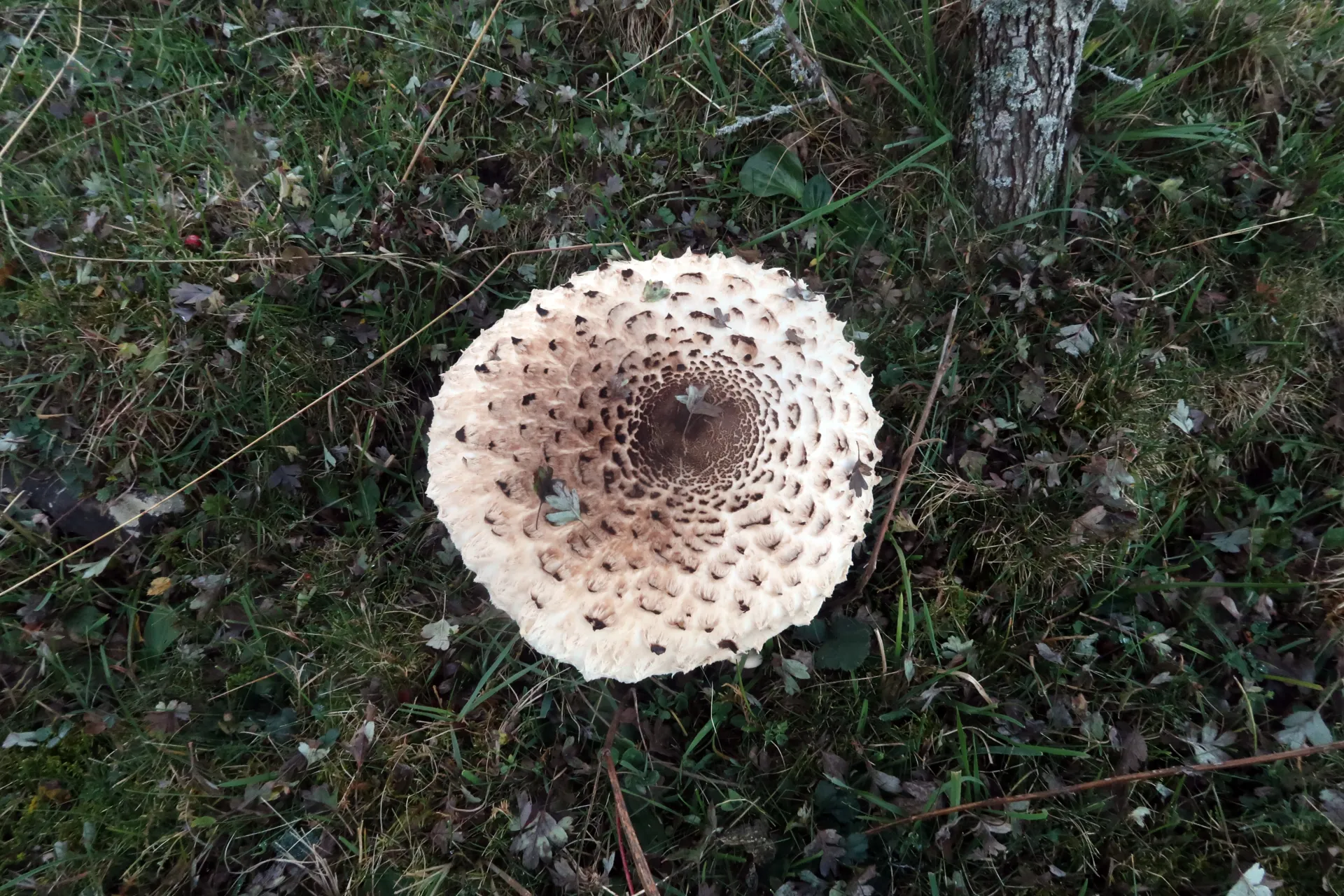
1 / 13Macrolepiota procera - 1 - IMG_5657
Microscopic gallery
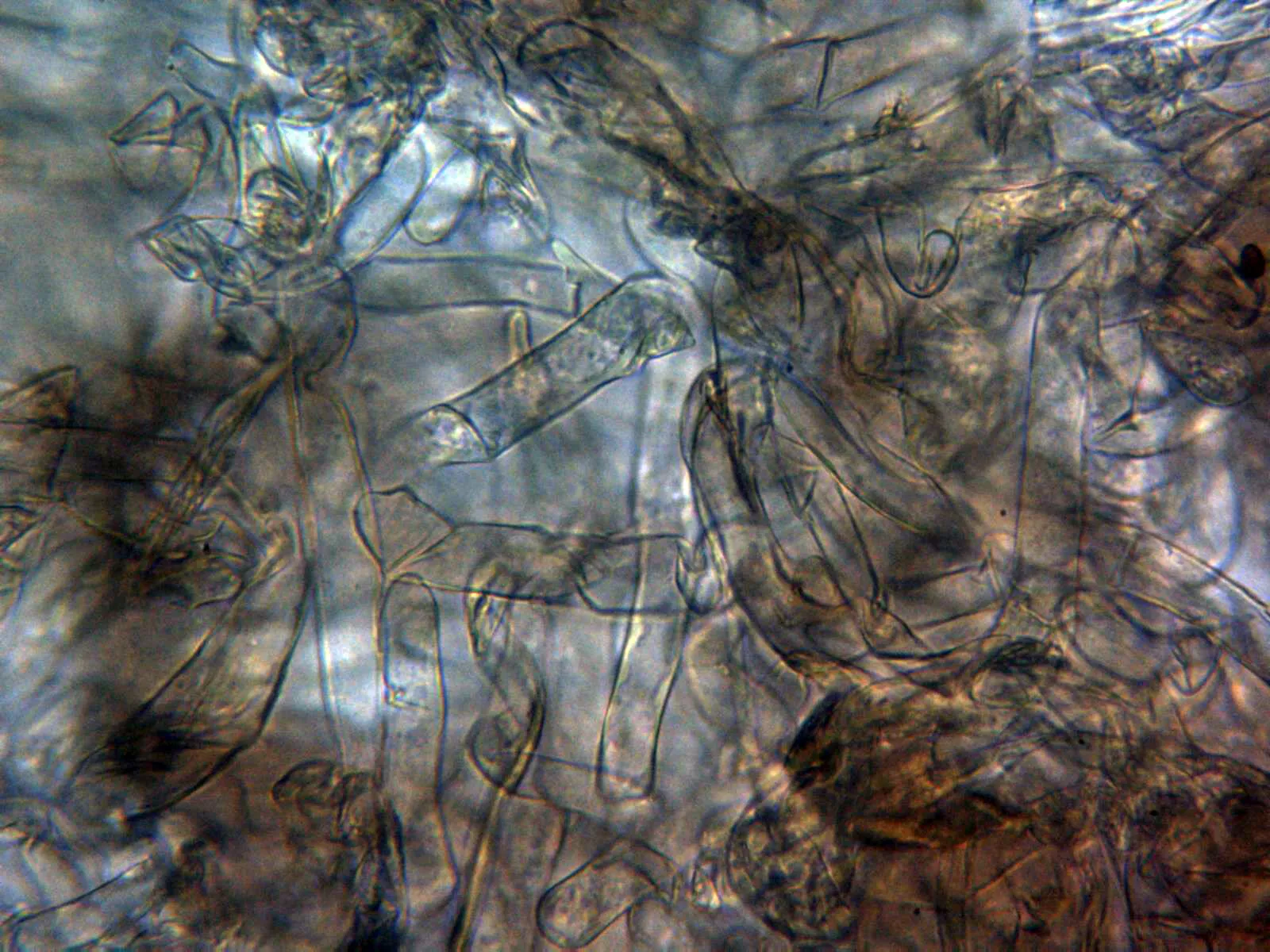
1 / 9Macrolepiota procera - 11 - Cutícula agua x 400