


Macrolepiota mastoidea
(Fr.) Singer
Study description
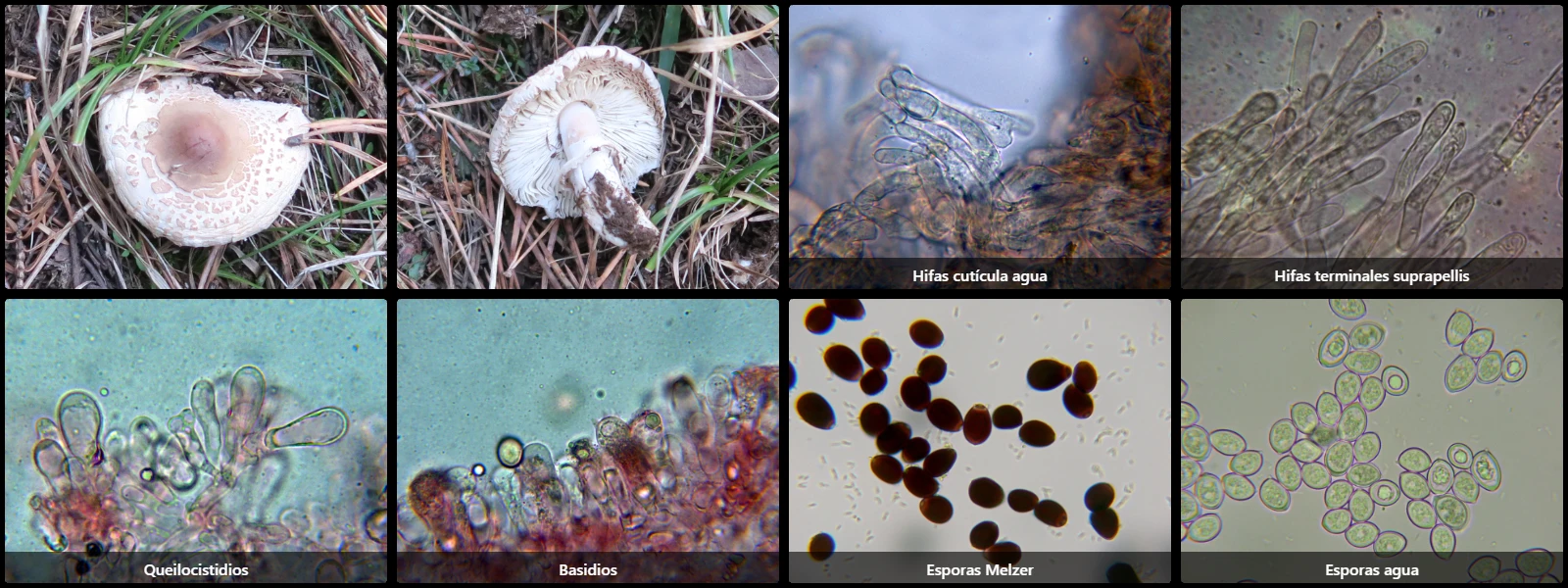
General: Small parasol for the genus (pileus up to 12-13 cm) with a prominently pointed central umbo, hazel-brown at the disc, cracking into fine scales over a whitish background, stipe smooth and unbanded, sweet nutty taste.
Pileipellis: Cutis with emergent terminal elements up to 150 µm long and 8-11 µm wide, with pale brown intracellular pigment, septate with simple septa (clamp connections absent).
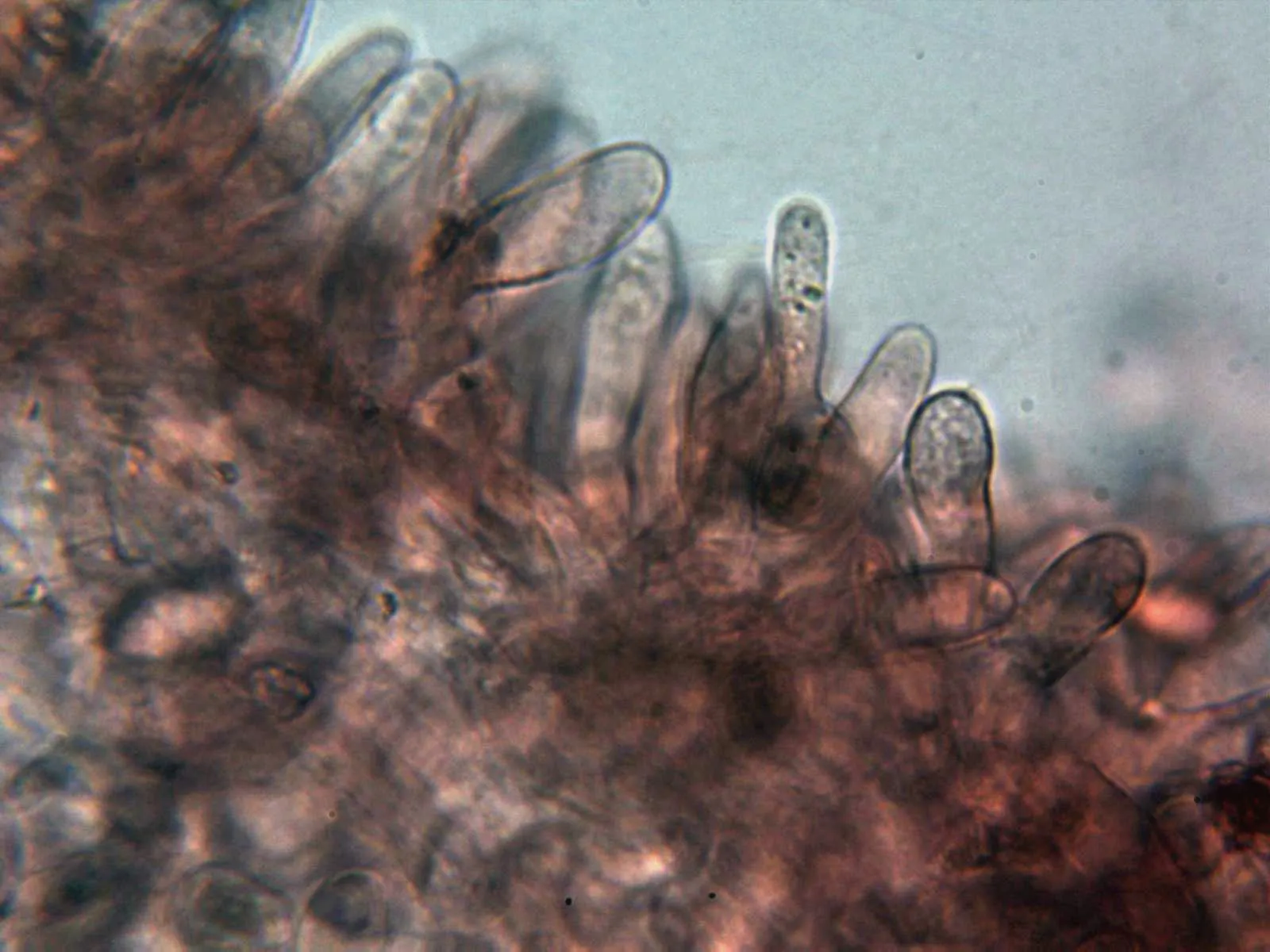
Cheilocystidia: Abundant, clavate, septate, 27-40 x 8-12 µm.
Pleurocystidia: Absent.
Basidia: Clavate, 45-55 x 12-16 µm, base simple (clampless), 4-spored.
Spores: Ellipsoid, smooth, hyaline, thick-walled, 12-17 x 9-11 µm, with an eccentric apiculus and an apical germ pore, containing refractive lipid granules, dextrinoid in Melzer's reagent.
Pileipellis: Cutis with emergent terminal elements up to 150 µm long and 8-11 µm wide, with pale brown intracellular pigment, septate with simple septa (clamp connections absent).
Cheilocystidia: Abundant, clavate, septate, 27-40 x 8-12 µm.
Pleurocystidia: Absent.
Basidia: Clavate, 45-55 x 12-16 µm, base simple (clampless), 4-spored.
Spores: Ellipsoid, smooth, hyaline, thick-walled, 12-17 x 9-11 µm, with an eccentric apiculus and an apical germ pore, containing refractive lipid granules, dextrinoid in Melzer's reagent.
Geographic references
Map generated from global occurrence data from GBIF. GBIF.
Study measurements
Values in Microns (µm)Macroscopic gallery
1 / 6Macrolepiota mastoidea - 1
Microscopic gallery
1 / 23Macrolepiota mastoidea - 11 - Queilocistidios 3