


Lyophyllum decastes
(Fr.) Singer
Study description
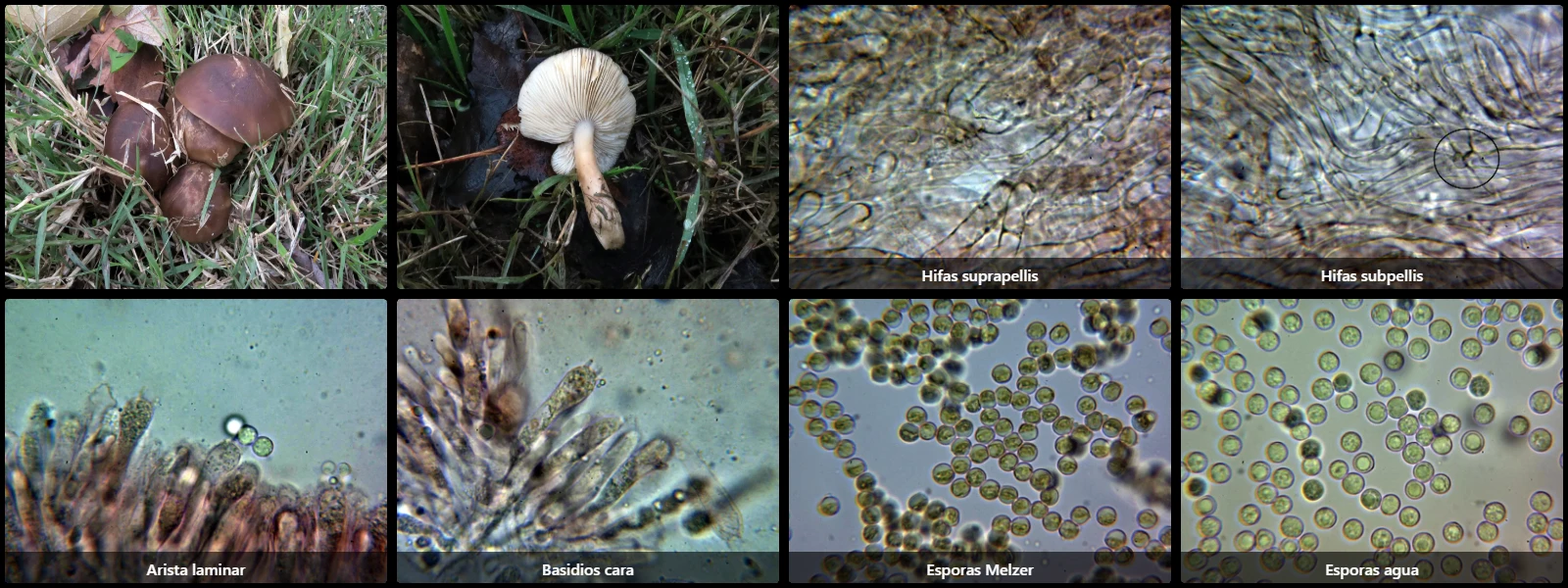
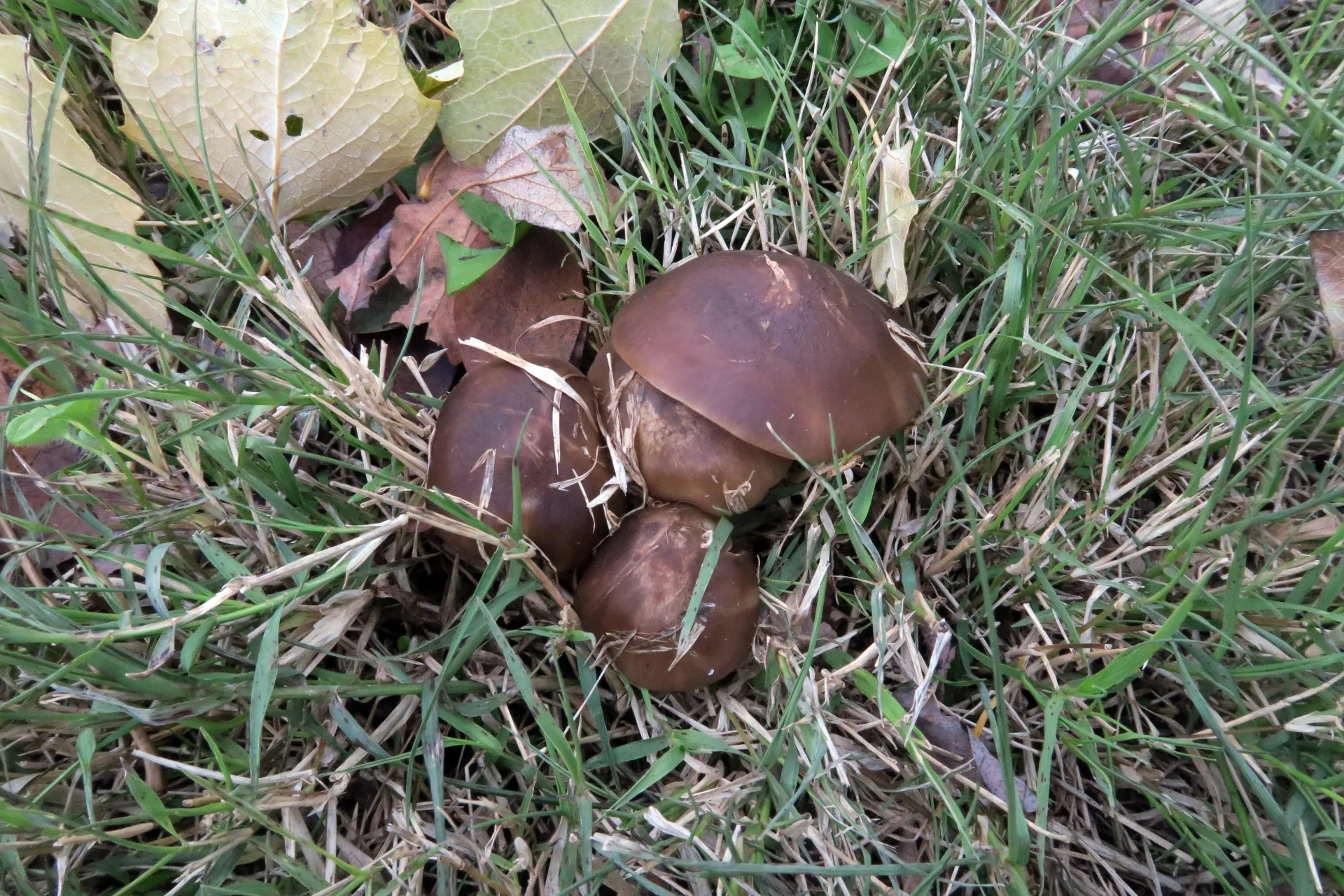
General: Ubiquitous species fruiting across varied habitats (woodland verges, parks, and gardens), pileus flattened, brown with an undulate margin, typically growing in dense caespitose clusters, odor and taste mild (insipid).
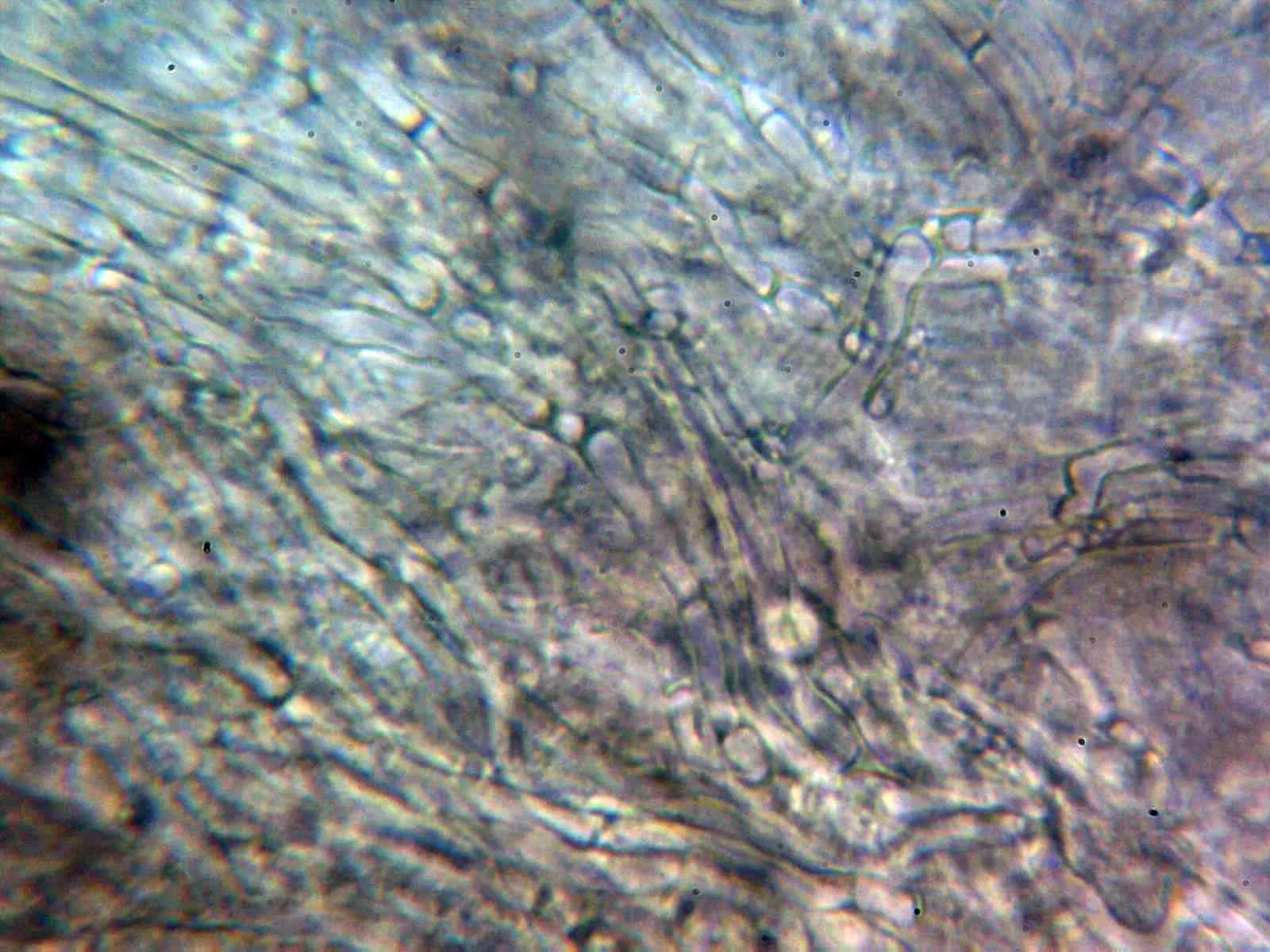
Pileipellis: Cutis formed by cylindrical hyphae 4-10 µm wide, arranged more or less parallel, hyaline to faintly brownish, septate with large clamp connections.
Lamellar edge: Fertile, lacking differentiated cystidia.
Lamellar trama: Regular.
Basidia: Clavate, 32-47 x 8-10 µm, containing siderophilous granules, with basal clamp connections, predominantly 4-spored.
Spores: Spherical, smooth, hyaline, thin-walled, 6-7 µm in diameter, with an inconspicuous apiculus, containing granular oil droplets, inamyloid in Melzer's reagent.
Pileipellis: Cutis formed by cylindrical hyphae 4-10 µm wide, arranged more or less parallel, hyaline to faintly brownish, septate with large clamp connections.
Lamellar edge: Fertile, lacking differentiated cystidia.
Lamellar trama: Regular.
Basidia: Clavate, 32-47 x 8-10 µm, containing siderophilous granules, with basal clamp connections, predominantly 4-spored.
Spores: Spherical, smooth, hyaline, thin-walled, 6-7 µm in diameter, with an inconspicuous apiculus, containing granular oil droplets, inamyloid in Melzer's reagent.
Geographic references
Map generated from global occurrence data from GBIF. GBIF.
Study measurements
Values in Microns (µm)Macroscopic gallery
1 / 11Lyophyllum decastes - 1 - IMG_0873
Microscopic gallery
1 / 19Lyophyllum decastes - 10 - Pileipellis 2