


Lycoperdon perlatum
Pers.
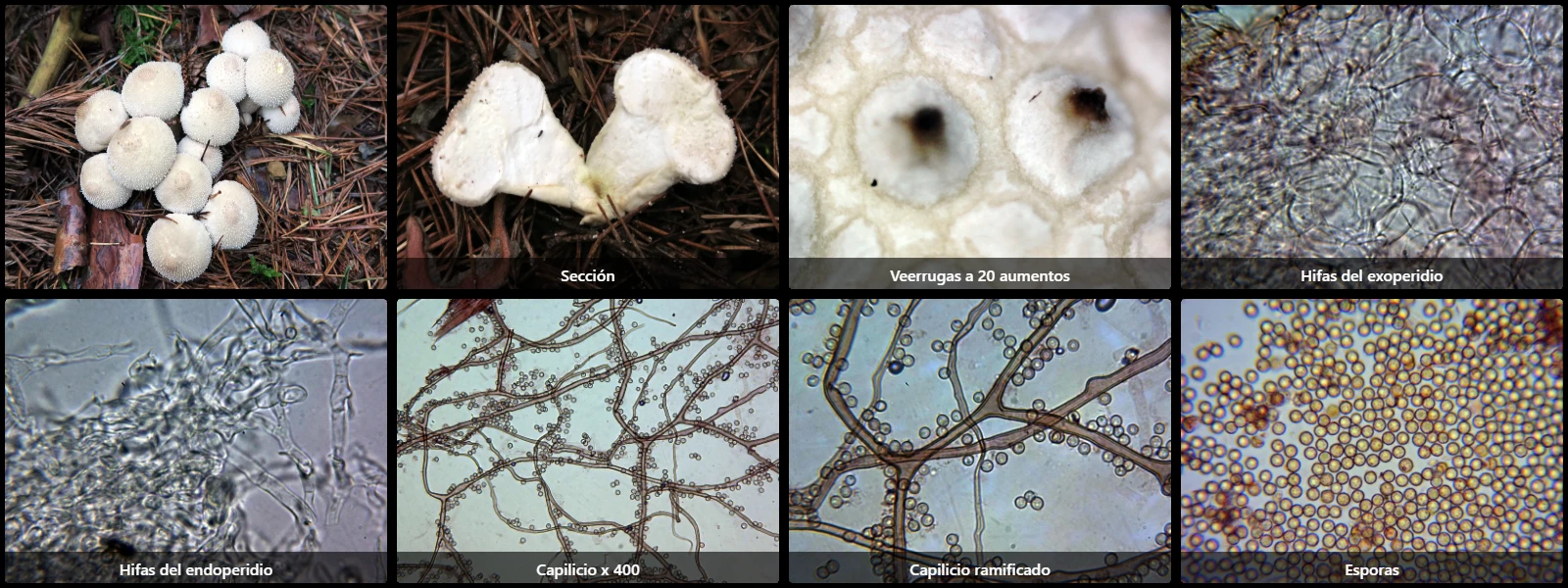
Study description
General: Common puffball occurring in coniferous and broadleaved forests, outer surface covered with conical verrucose spines surrounded by smaller granules; upon shedding, the central spine leaves a distinct circular/reticulate scar. Fruitbody turning from white to yellowish-brown with maturity.
Exoperidium: Sphaerocyst-like structure with subglobose to pyriform cells 16-40 µm in diameter, supported at the base by filamentous hyphae 4-6 µm wide.
Capillitium: Brown, branched, thick-walled, 3-7 µm wide, aseptate, with scattered perforations.
Basidia: Not observed in this study; literature describes them as clavate, 7-10 x 4-5 µm, clampless, 2- or 4-spored.
Spores: Spherical, thick-walled and very delicately verruculose, 3.5-4.5 µm in diameter, pale brown under the microscope, with a hyaline apiculus and oil droplets.
Exoperidium: Sphaerocyst-like structure with subglobose to pyriform cells 16-40 µm in diameter, supported at the base by filamentous hyphae 4-6 µm wide.
Capillitium: Brown, branched, thick-walled, 3-7 µm wide, aseptate, with scattered perforations.
Basidia: Not observed in this study; literature describes them as clavate, 7-10 x 4-5 µm, clampless, 2- or 4-spored.
Spores: Spherical, thick-walled and very delicately verruculose, 3.5-4.5 µm in diameter, pale brown under the microscope, with a hyaline apiculus and oil droplets.
Geographic references
Map generated from global occurrence data from GBIF. GBIF.
Study measurements
Values in Microns (µm)Macroscopic gallery
1 / 21Lycoperdon perlatum - 1
Microscopic gallery
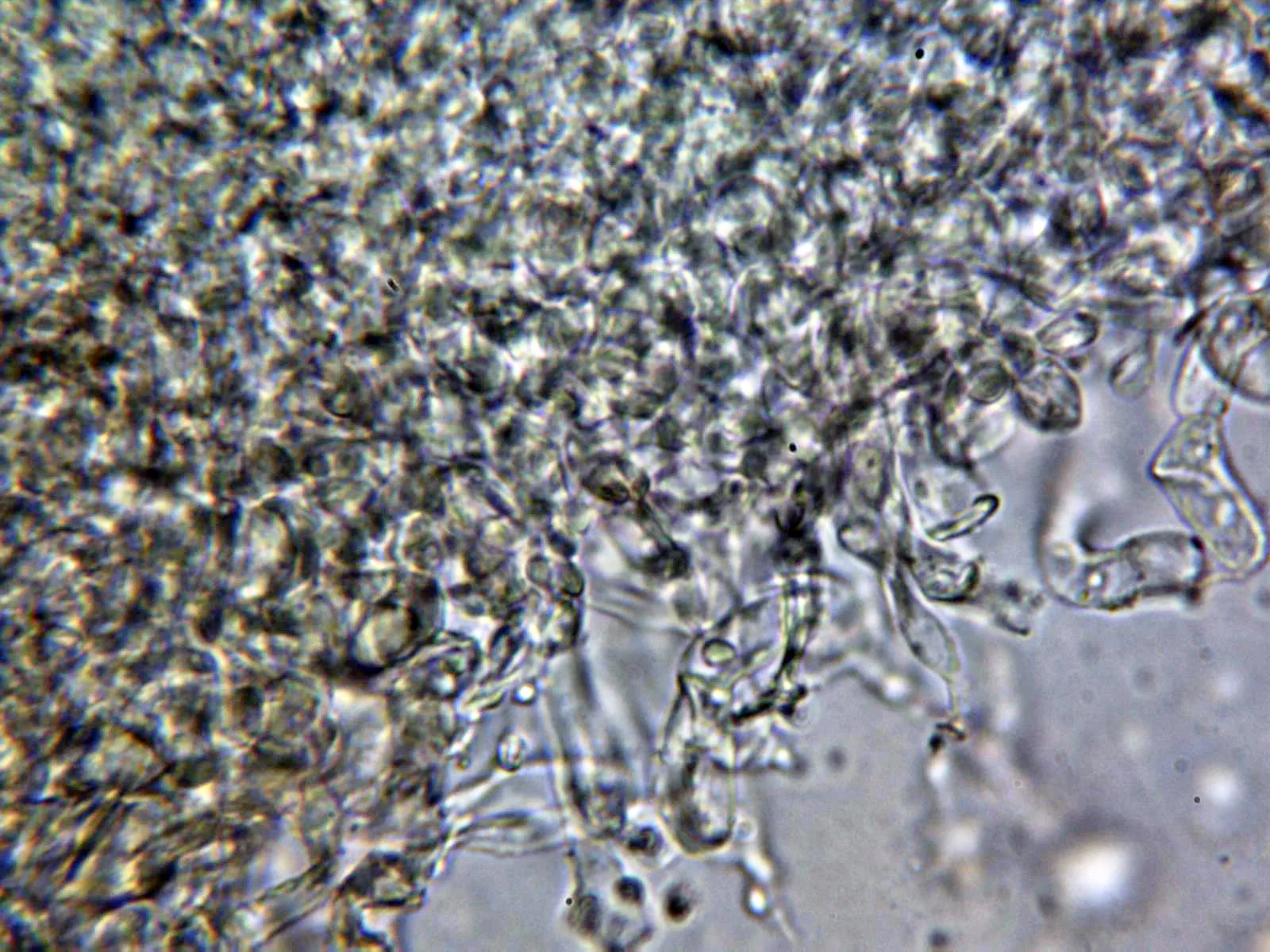
1 / 16Lycoperdon perlatum - 10 - Exoperidio