


Leucopaxillus gentianeus
(Quél.) Kotl.
Study description
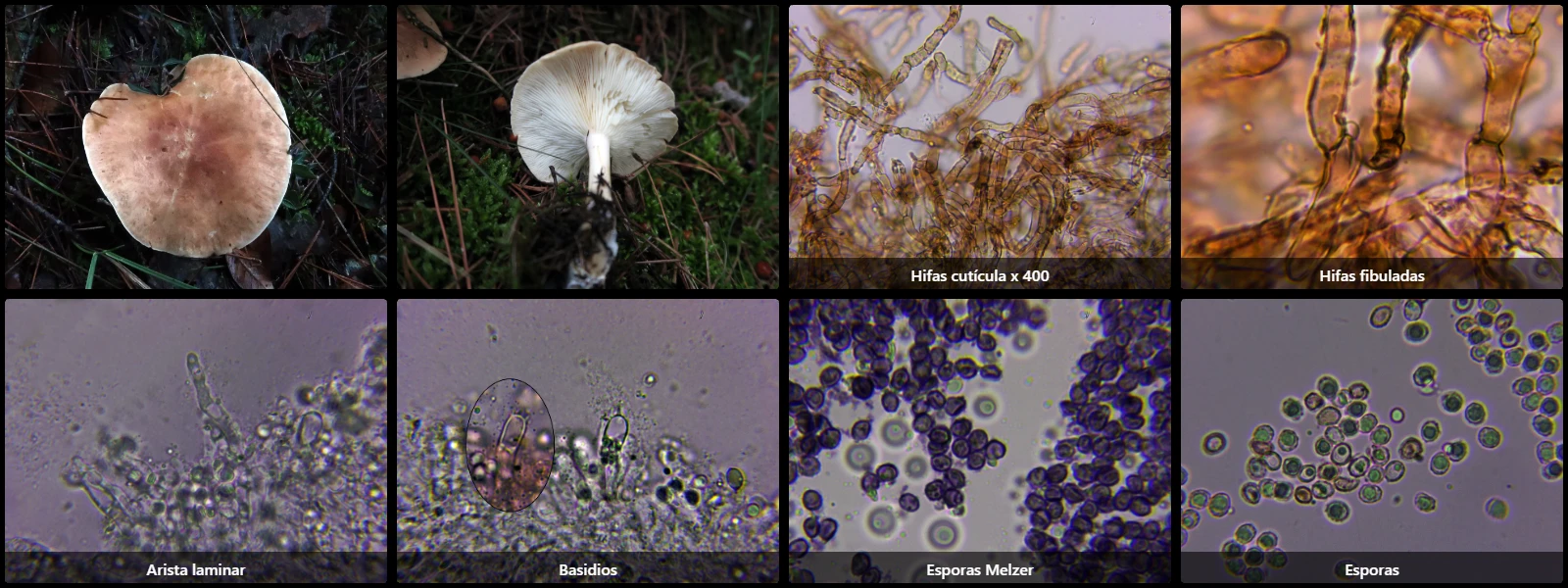
General: Common under pines, formerly known as Leucopaxillus amarus, pileus brown, darker at the disc, lamellae white, stipe cylindrical and slightly enlarged at base, taste intensely bitter.
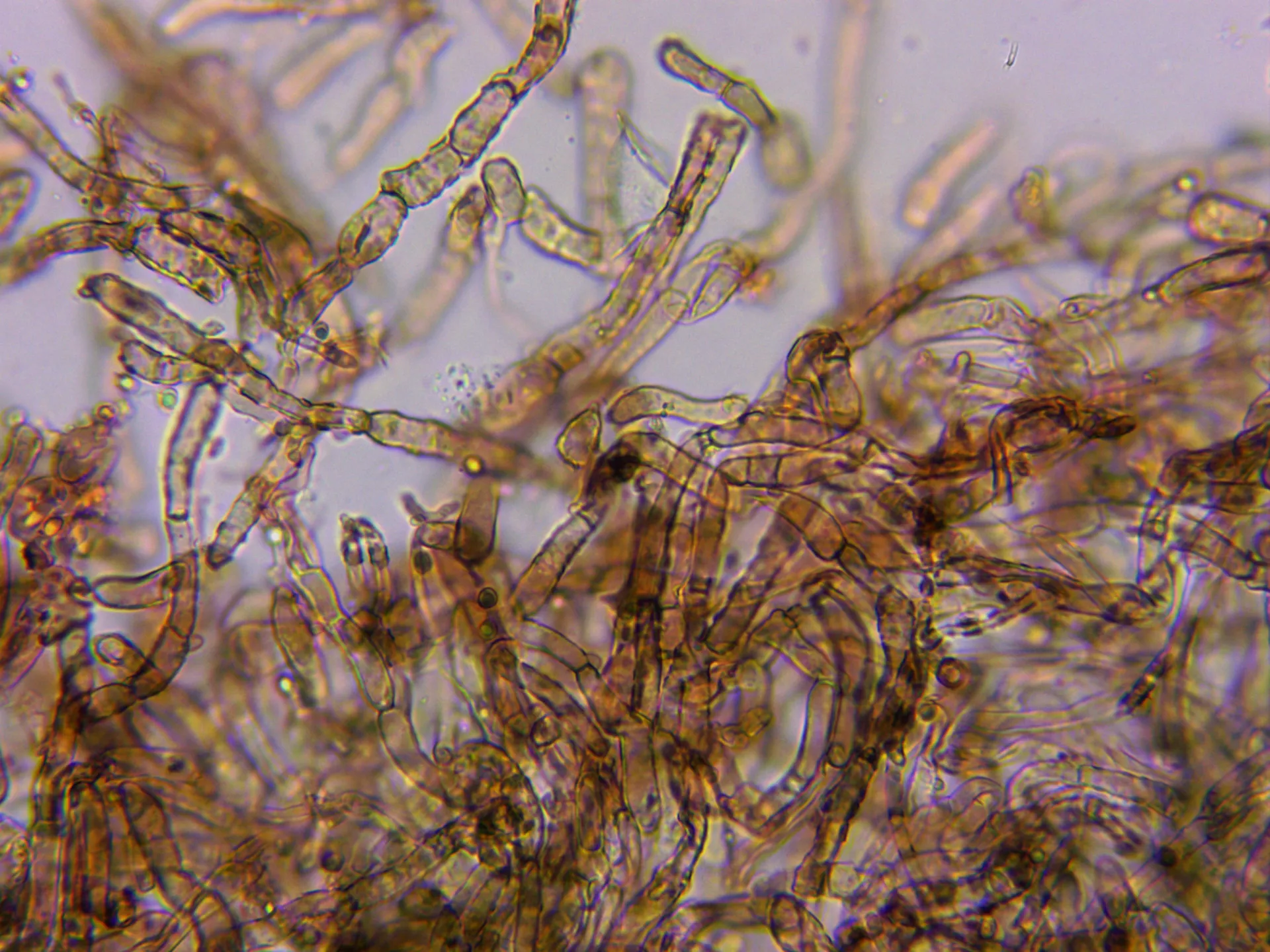
Pileipellis: Filamentous cutis of cylindrical, irregularly interwoven hyphae 5-7.5 µm wide with brown intracellular pigment, emergent terminal elements rounded at apex, septate with clamp connections.
Lamellar edge: Bearing scarce hair-like terminal elements, hyaline, cylindrical, flexuous, 20-40 x 2-4 µm.
Basidia: Cylindrical to clavate, 25-35 x 6-8 µm, with basal clamp connections, 4-spored.
Spores: Subglobose to ellipsoid, hyaline, thick-walled, verrucose, 4.5-6 x 4-4.5 µm, apiculus minute, containing a large oil guttule, strongly amyloid in Melzer's reagent.
Pileipellis: Filamentous cutis of cylindrical, irregularly interwoven hyphae 5-7.5 µm wide with brown intracellular pigment, emergent terminal elements rounded at apex, septate with clamp connections.
Lamellar edge: Bearing scarce hair-like terminal elements, hyaline, cylindrical, flexuous, 20-40 x 2-4 µm.
Basidia: Cylindrical to clavate, 25-35 x 6-8 µm, with basal clamp connections, 4-spored.
Spores: Subglobose to ellipsoid, hyaline, thick-walled, verrucose, 4.5-6 x 4-4.5 µm, apiculus minute, containing a large oil guttule, strongly amyloid in Melzer's reagent.
Geographic references
Map generated from global occurrence data from GBIF. GBIF.
Study measurements
Values in Microns (µm)Macroscopic gallery
1 / 12Leucopaxillus gentianeus - 1
Microscopic gallery
1 / 16Leucopaxillus gentianeus - 15 - Cutícula x 400