


Lepiota castanea
Quél.
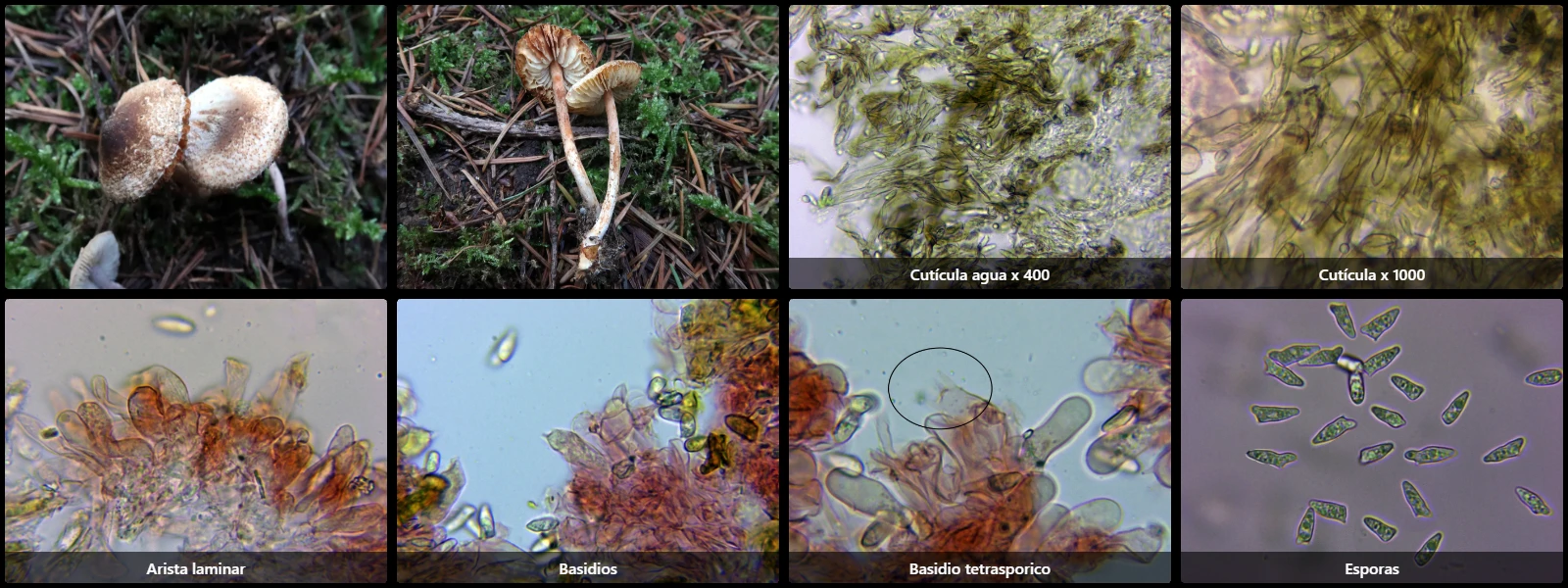
Study description
General: Inhabiting both conifer and broadleaved woodlands with preference for basic soils, pileus umbonate with reddish-brown scales, unpleasant rubbery odor, and mild taste.
Pileipellis: Composed of interwoven hyphae 5-10 µm wide giving rise to erect terminal hair-like elements 110-300 µm long, with inflations up to 25 µm, containing pale brown intracellular pigment, septate and mostly clamped.
Cheilocystidia: Clavate to fusiform, 28-40 x 8-11 µm.
Pleurocystidia: Absent.
Basidia: Clavate, 20-32 x 7-9 µm, with basal clamp connections, 4-spored.
Spores: Spurred (calcarate), moderately thick-walled, pointed at one pole and spurred/truncate at the base, with granular contents, dextrinoid in Melzer's reagent.
Pileipellis: Composed of interwoven hyphae 5-10 µm wide giving rise to erect terminal hair-like elements 110-300 µm long, with inflations up to 25 µm, containing pale brown intracellular pigment, septate and mostly clamped.
Cheilocystidia: Clavate to fusiform, 28-40 x 8-11 µm.
Pleurocystidia: Absent.
Basidia: Clavate, 20-32 x 7-9 µm, with basal clamp connections, 4-spored.
Spores: Spurred (calcarate), moderately thick-walled, pointed at one pole and spurred/truncate at the base, with granular contents, dextrinoid in Melzer's reagent.
Geographic references
Map generated from global occurrence data from GBIF. GBIF.
Study measurements
Values in Microns (µm)Macroscopic gallery
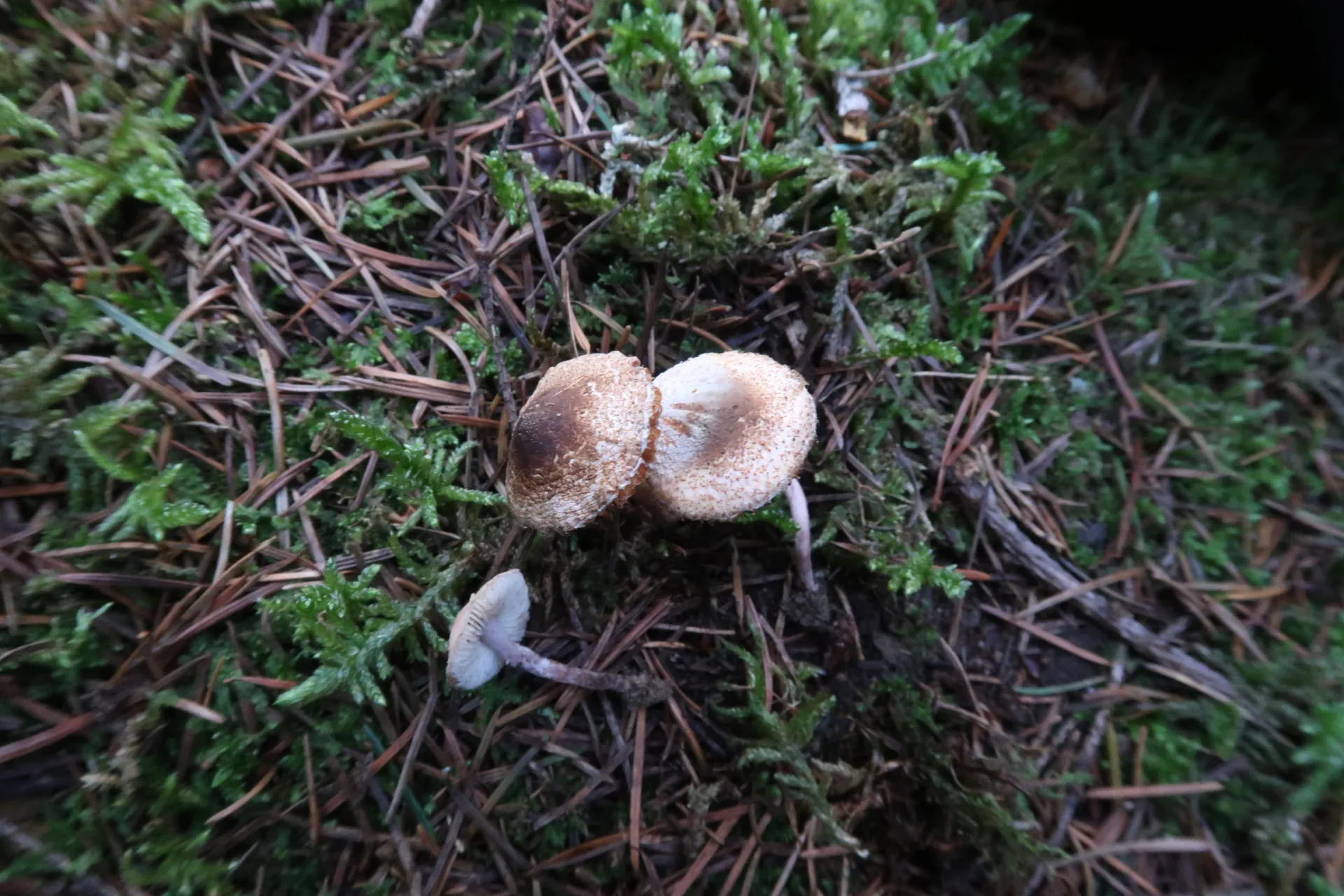
1 / 3Lepiota castanea - 1 - IMG_2545
Microscopic gallery
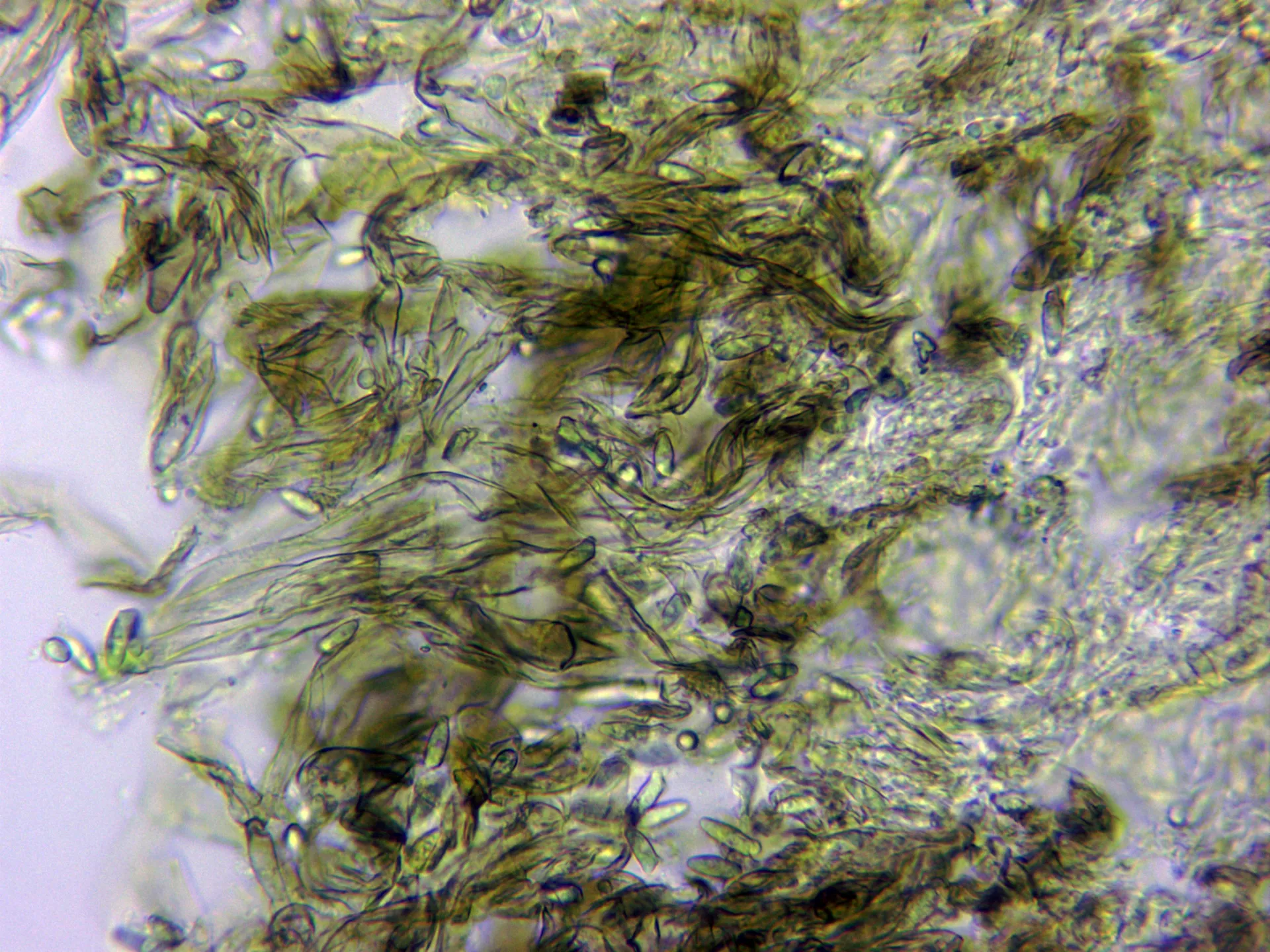
1 / 9Lepiota castanea - 6 - Pileipellis agua x 400