


Lepiota brunneoincarnata
Chodat & C.Martín
Study description
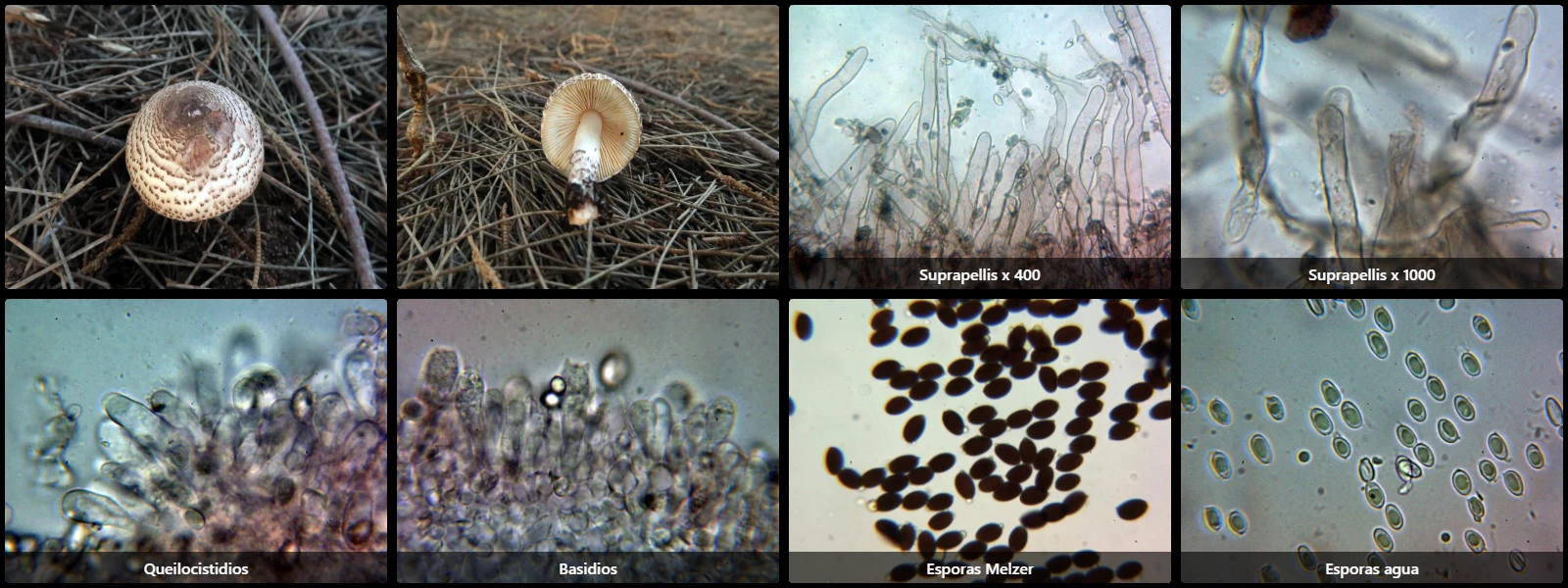
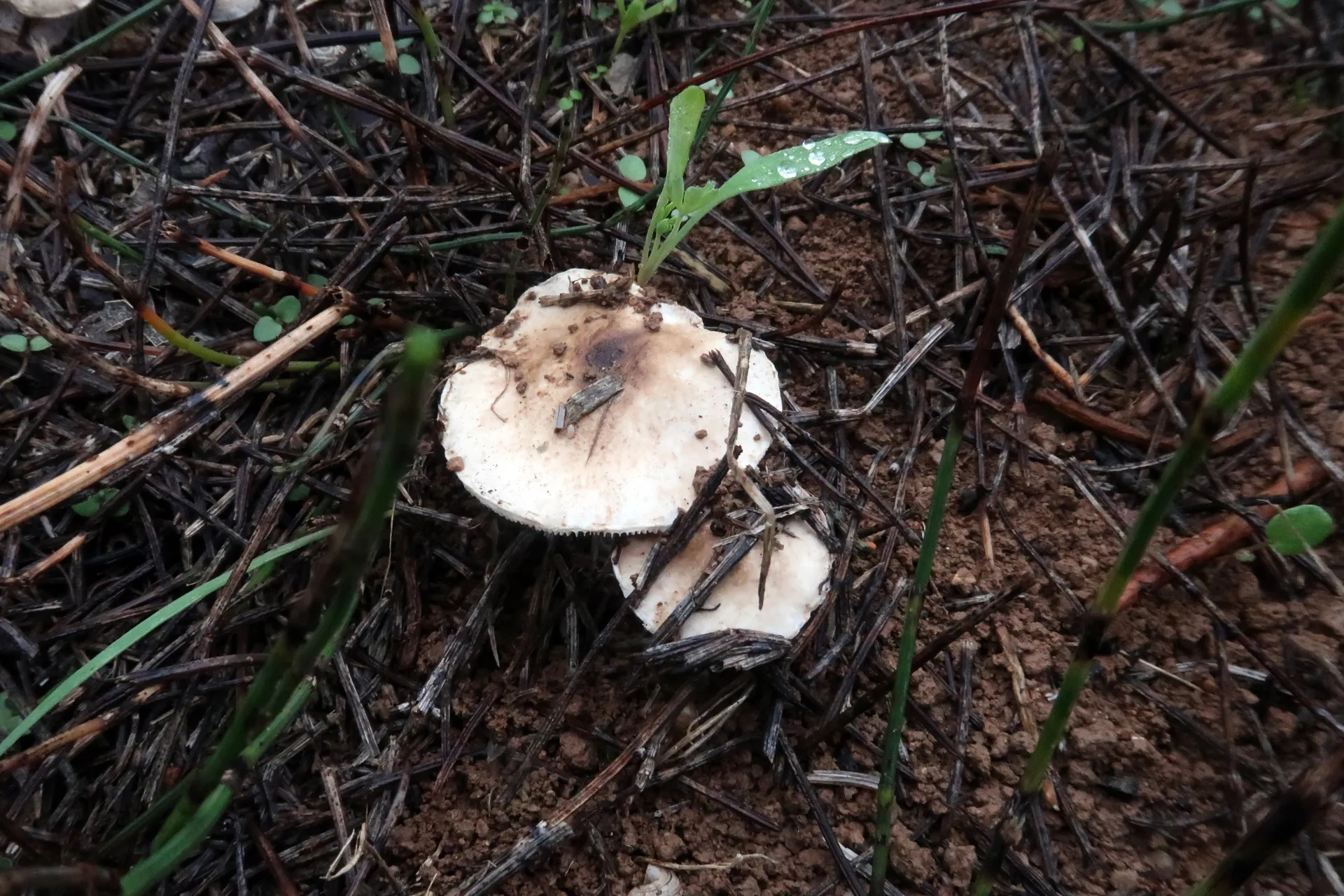
General: Lethally toxic species occurring in a wide variety of habitats, as well as parks and gardens; collection studied gathered in a public park in Barcelona, featuring a cream-colored pileus with reddish-brown concentric scales, faint odor, and mild sweetish taste.
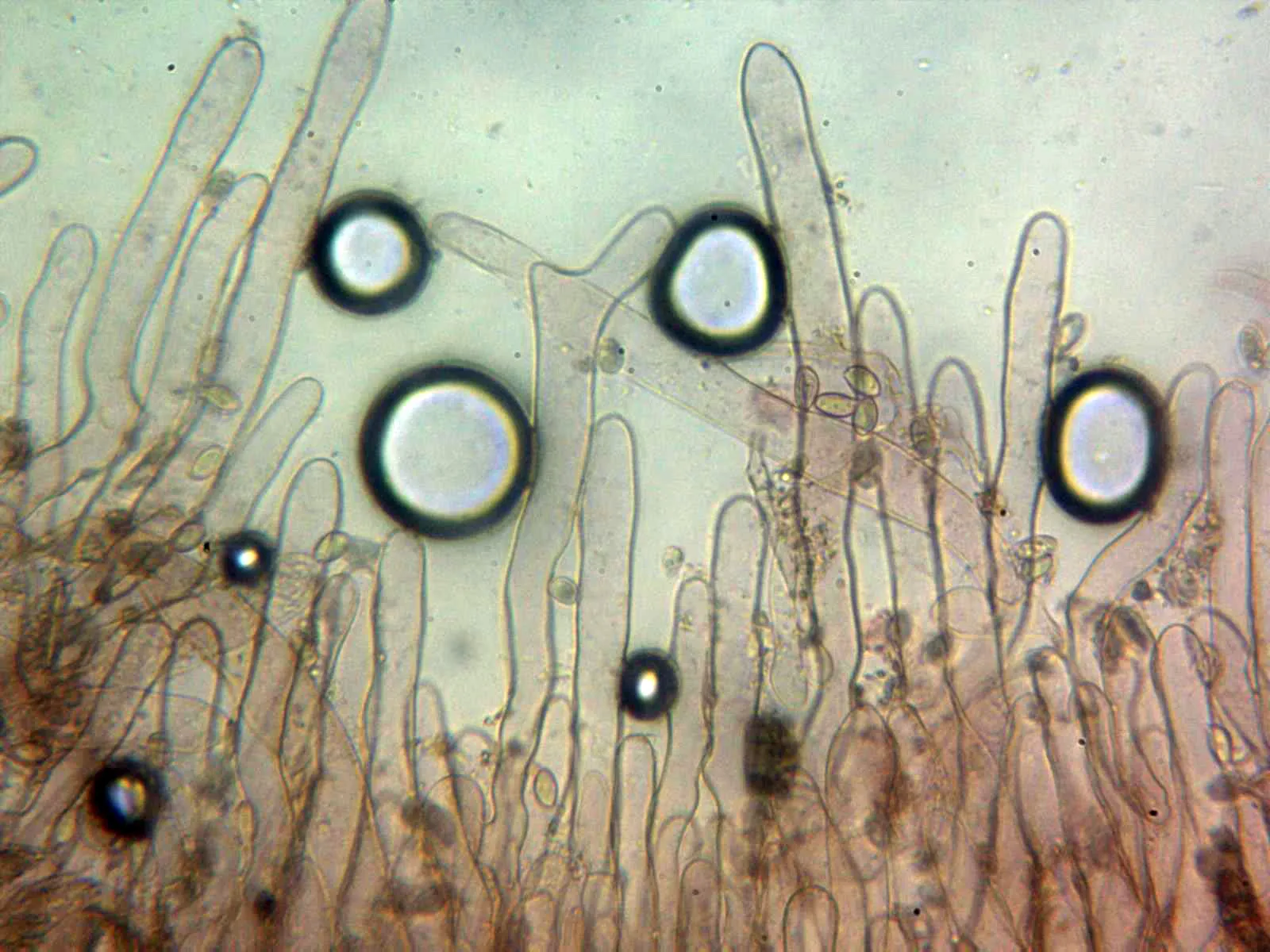
Pileipellis: Composed of basal cylindrical hyphae up to 15 µm wide with short septa, giving rise to long cylindrical terminal elements well exceeding 300 µm in length, 10-14 µm wide.
Cheilocystidia: Variable in shape, clavate, cylindrical to pyriform, 22-26 x 6-8 µm.
Basidia: Clavate, 30-35 x 6-8 µm, with basal clamp connections, 4-spored.
Spores: Ellipsoid, smooth, hyaline, thin- to moderately thick-walled, with an inconspicuous eccentric apiculus, containing one or more lipid droplets, strongly dextrinoid in Melzer's reagent.
Pileipellis: Composed of basal cylindrical hyphae up to 15 µm wide with short septa, giving rise to long cylindrical terminal elements well exceeding 300 µm in length, 10-14 µm wide.
Cheilocystidia: Variable in shape, clavate, cylindrical to pyriform, 22-26 x 6-8 µm.
Basidia: Clavate, 30-35 x 6-8 µm, with basal clamp connections, 4-spored.
Spores: Ellipsoid, smooth, hyaline, thin- to moderately thick-walled, with an inconspicuous eccentric apiculus, containing one or more lipid droplets, strongly dextrinoid in Melzer's reagent.
Geographic references
Map generated from global occurrence data from GBIF. GBIF.
Study measurements
Values in Microns (µm)Macroscopic gallery
1 / 8Lepiota brunneoincarnata - 1 - IMG_4163
Microscopic gallery
1 / 17Lepiota brunneoincarnata - 10 - Suprapellis 3