


Leccinum aurantiacum
(Bull.) Gray
Study description
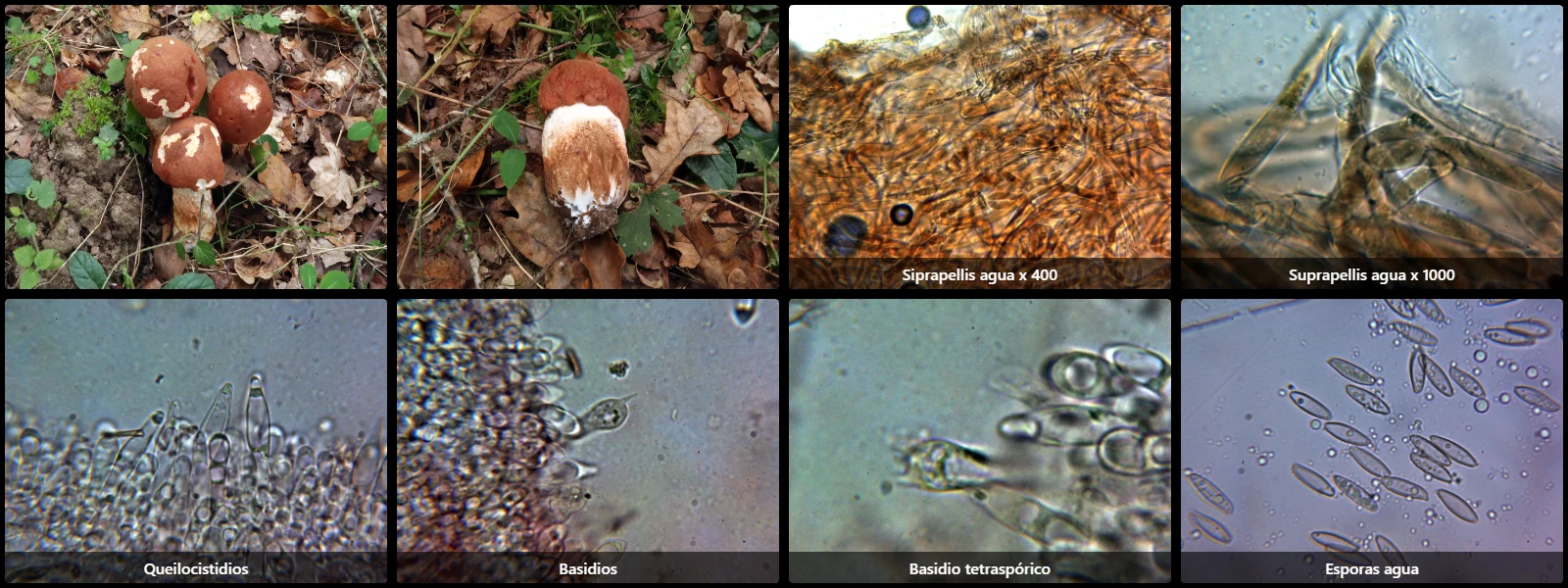
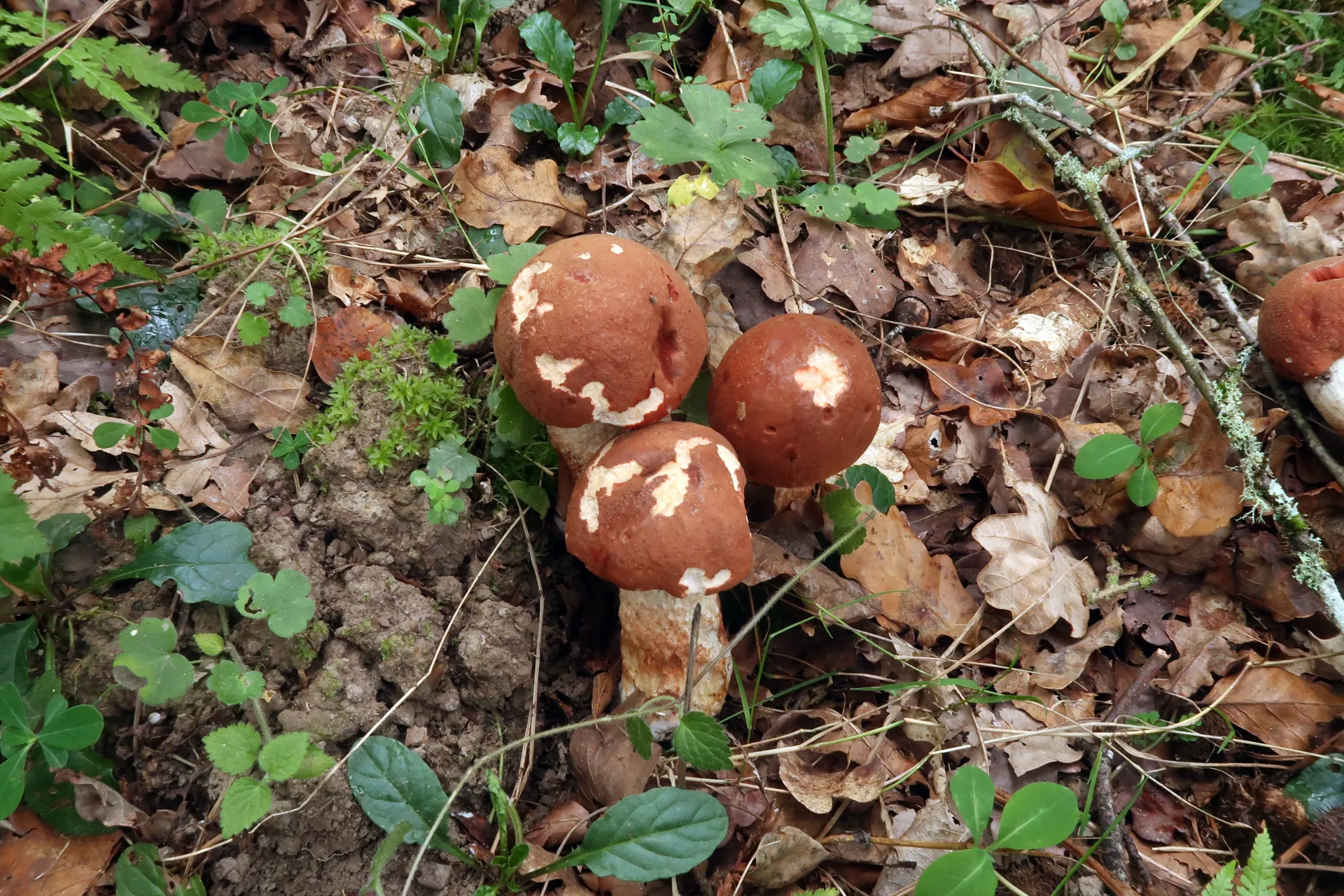
General: Associated with Populus and Quercus, currently synonymized with Leccinum quercinum, with a tomentose/felty reddish-brown pileus, white flesh turning greyish-violaceous to blackish on cutting, and a mild taste.
Pileipellis: Trichoderm of filamentous hyphae 8-12 µm wide, densely interwoven, containing abundant brown intracellular pigment, septate with simple septa.
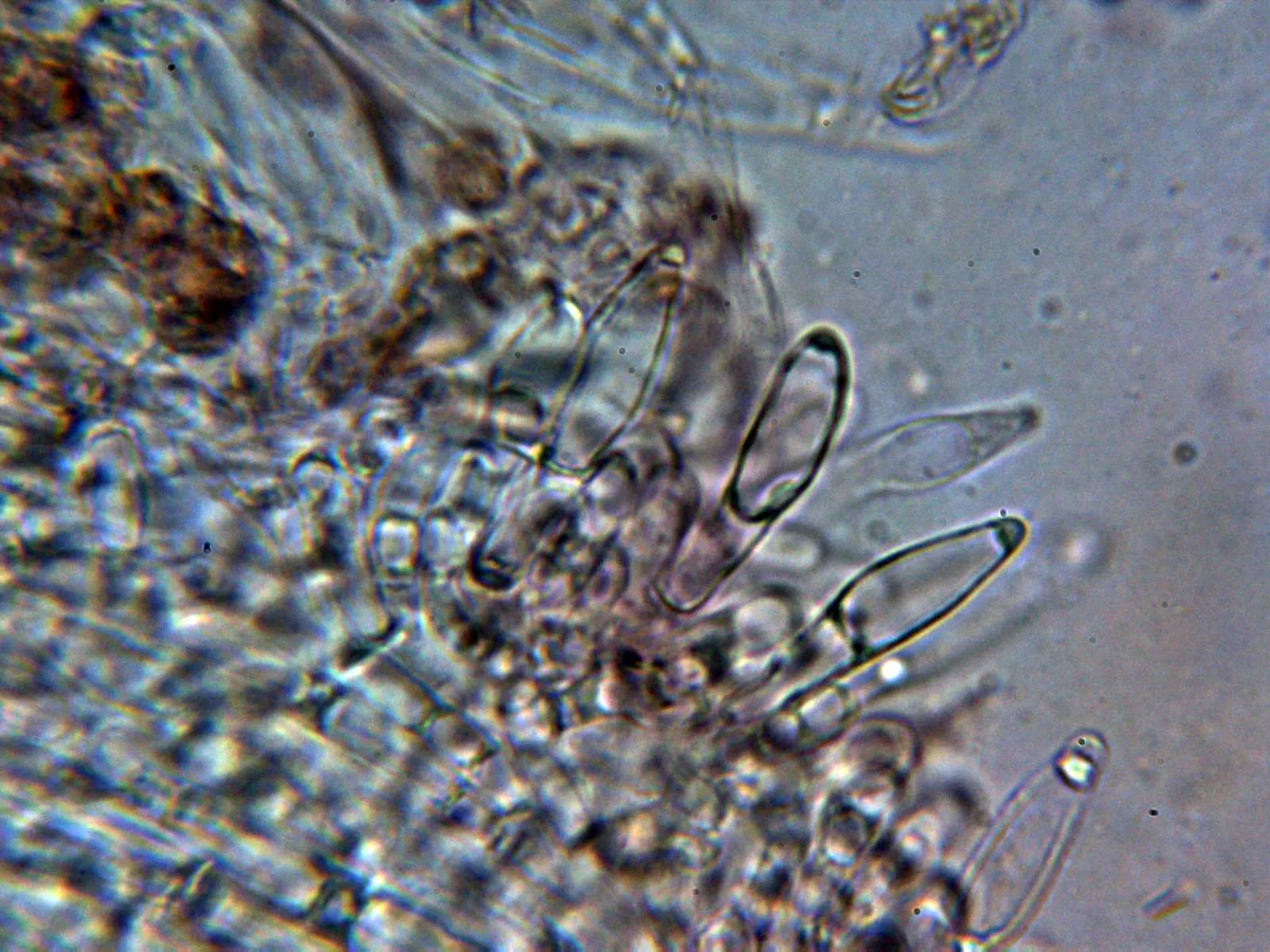
Cheilocystidia: Abundant, fusiform, hyaline, 28-50 x 7-12 µm.
Pleurocystidia: Not observed.
Basidia: Clavate, 20-26 x 10-12 µm, base simple, mostly 4-spored.
Spores: Fusiform, thick-walled, very pale greenish-yellow under the microscope, with an eccentric suprahilar depression, virtually inamyloid in Melzer's reagent.
Pileipellis: Trichoderm of filamentous hyphae 8-12 µm wide, densely interwoven, containing abundant brown intracellular pigment, septate with simple septa.
Cheilocystidia: Abundant, fusiform, hyaline, 28-50 x 7-12 µm.
Pleurocystidia: Not observed.
Basidia: Clavate, 20-26 x 10-12 µm, base simple, mostly 4-spored.
Spores: Fusiform, thick-walled, very pale greenish-yellow under the microscope, with an eccentric suprahilar depression, virtually inamyloid in Melzer's reagent.
Geographic references
Map generated from global occurrence data from GBIF. GBIF.
Study measurements
Values in Microns (µm)Macroscopic gallery
1 / 3Leccinum aurantiacum - 1 - IMG_7955
Microscopic gallery
1 / 10Leccinum aurantiacum - 10 - Queilocistidios 3