


Lactarius controversus
Pers.
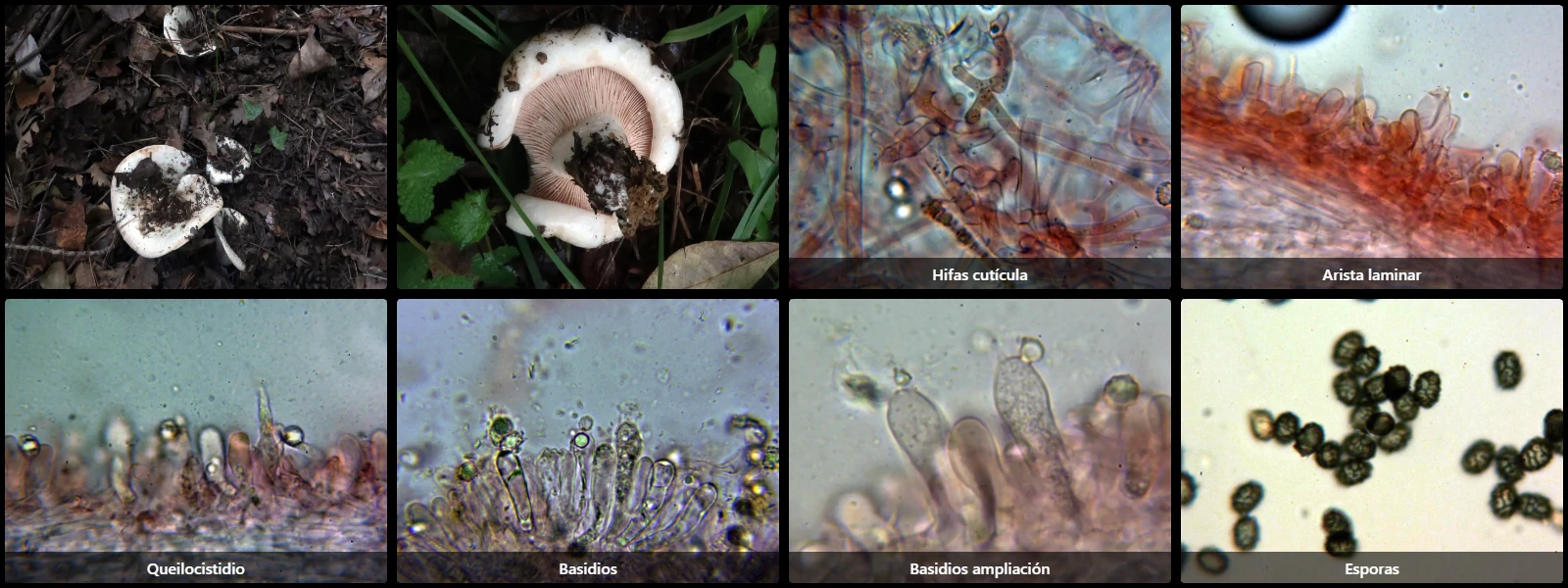
Study description
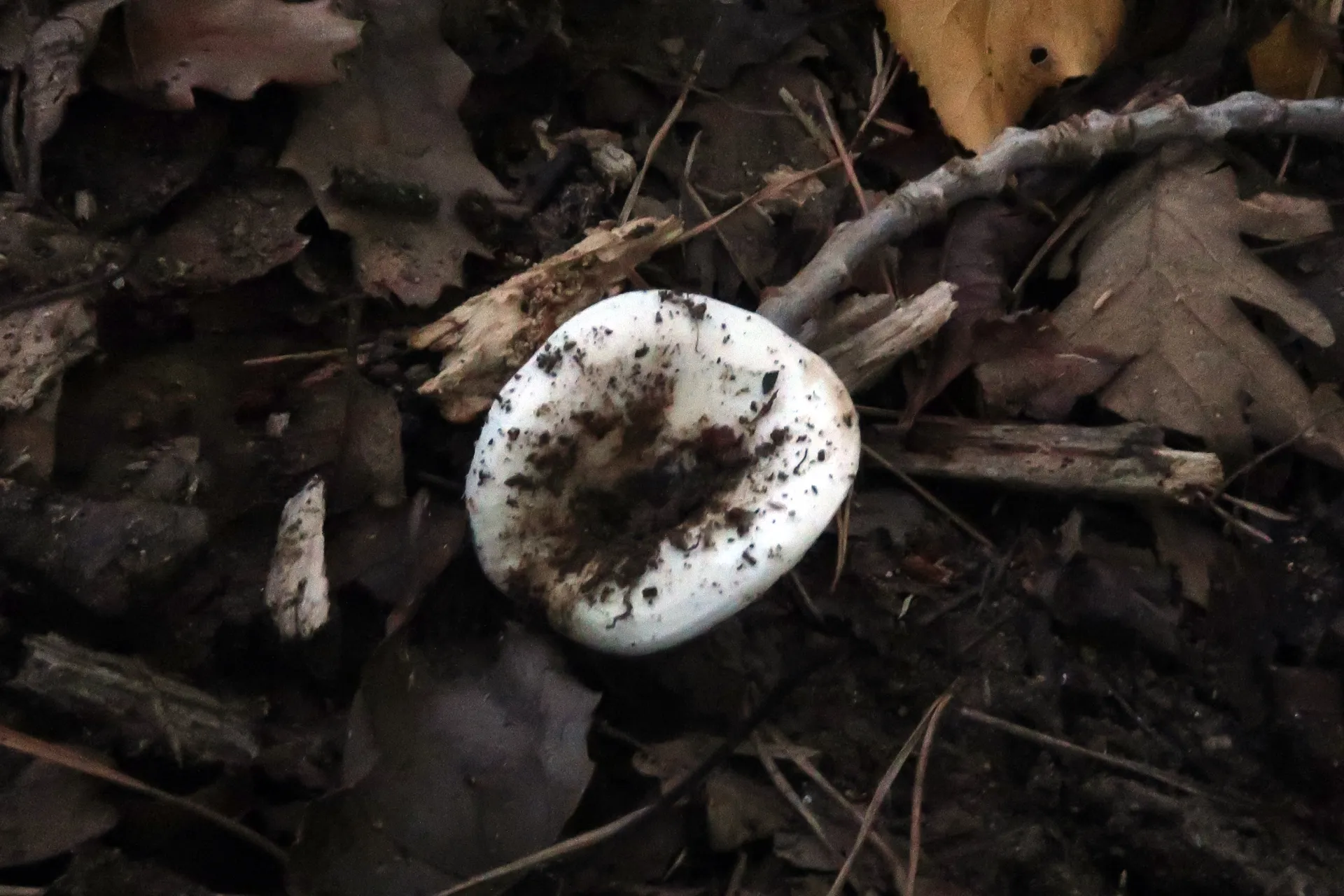
General: Characteristic of riparian woodlands on nutrient-rich acidic soils, associated with Populus or Quercus, with pinkish-tinted lamellae, unchanging white latex, and an intensely acrid taste.
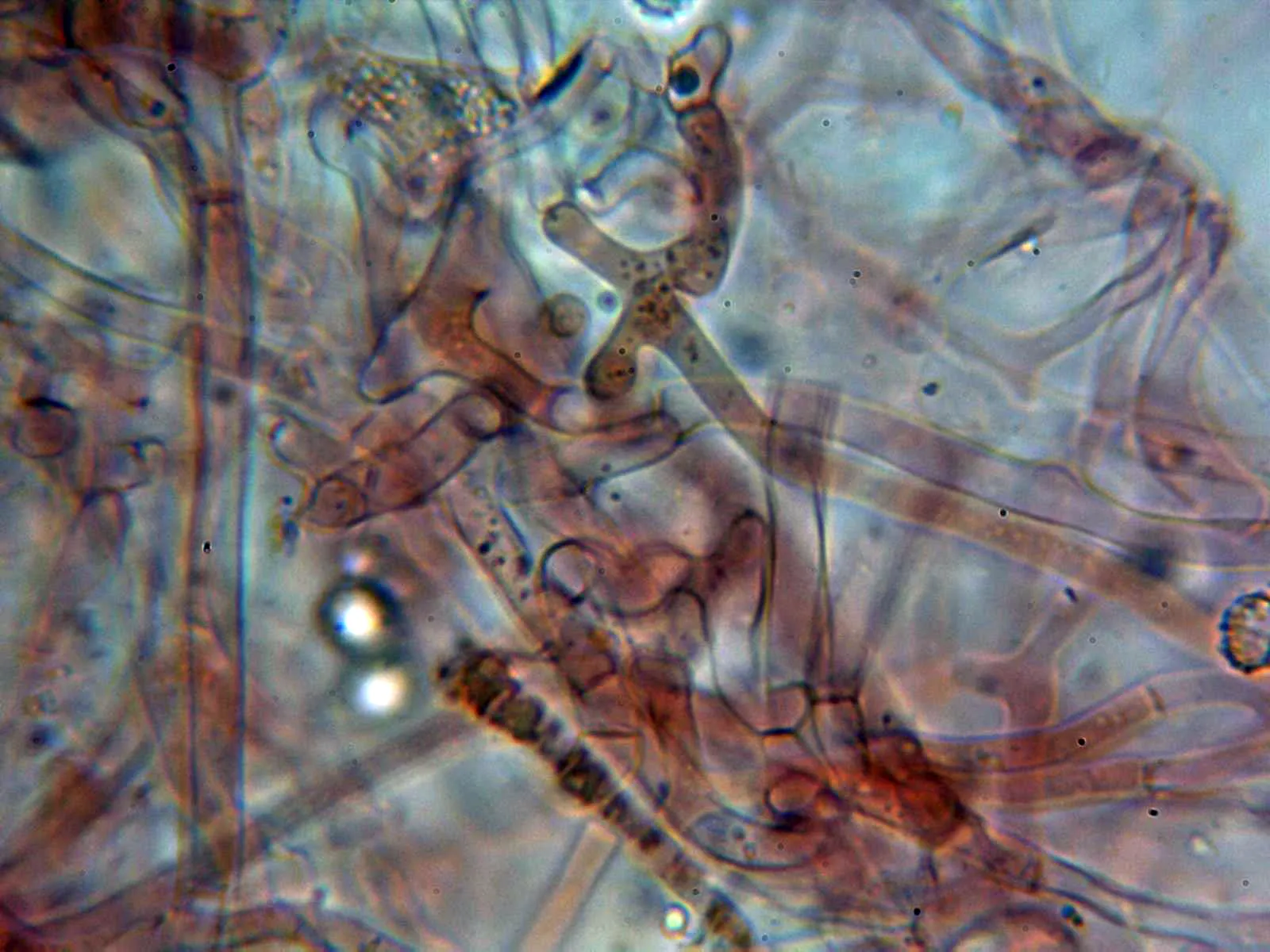
Pileipellis: Composed of cylindrical hyphae 2-4 µm wide, arranged parallel to slightly interwoven, branched, slightly separated by gelatinization, septate with simple septa.
Cheilocystidia: Scarce, subulate to lageniform, 33-50 x 4-6 µm, containing refractive granular contents.
Pleurocystidia: Scattered, similar in shape but slightly smaller, 25-46 x 4-6 µm.
Basidia: Clavate, 40-50 x 8-10 µm, base simple, 4-spored.
Spores: Ellipsoid, with warts connecting into ridges up to 0.6 µm high, partially reticulate, with a hyaline apiculus, amyloid in Melzer's reagent.
Pileipellis: Composed of cylindrical hyphae 2-4 µm wide, arranged parallel to slightly interwoven, branched, slightly separated by gelatinization, septate with simple septa.
Cheilocystidia: Scarce, subulate to lageniform, 33-50 x 4-6 µm, containing refractive granular contents.
Pleurocystidia: Scattered, similar in shape but slightly smaller, 25-46 x 4-6 µm.
Basidia: Clavate, 40-50 x 8-10 µm, base simple, 4-spored.
Spores: Ellipsoid, with warts connecting into ridges up to 0.6 µm high, partially reticulate, with a hyaline apiculus, amyloid in Melzer's reagent.
Geographic references
Map generated from global occurrence data from GBIF. GBIF.
Study measurements
Values in Microns (µm)Macroscopic gallery
1 / 9Lactarius controversus - 1 - IMG_3830
Microscopic gallery
1 / 13Lactarius controversus - 10 - Cutícula 2