


Lactarius chrysorrheus
Fr.
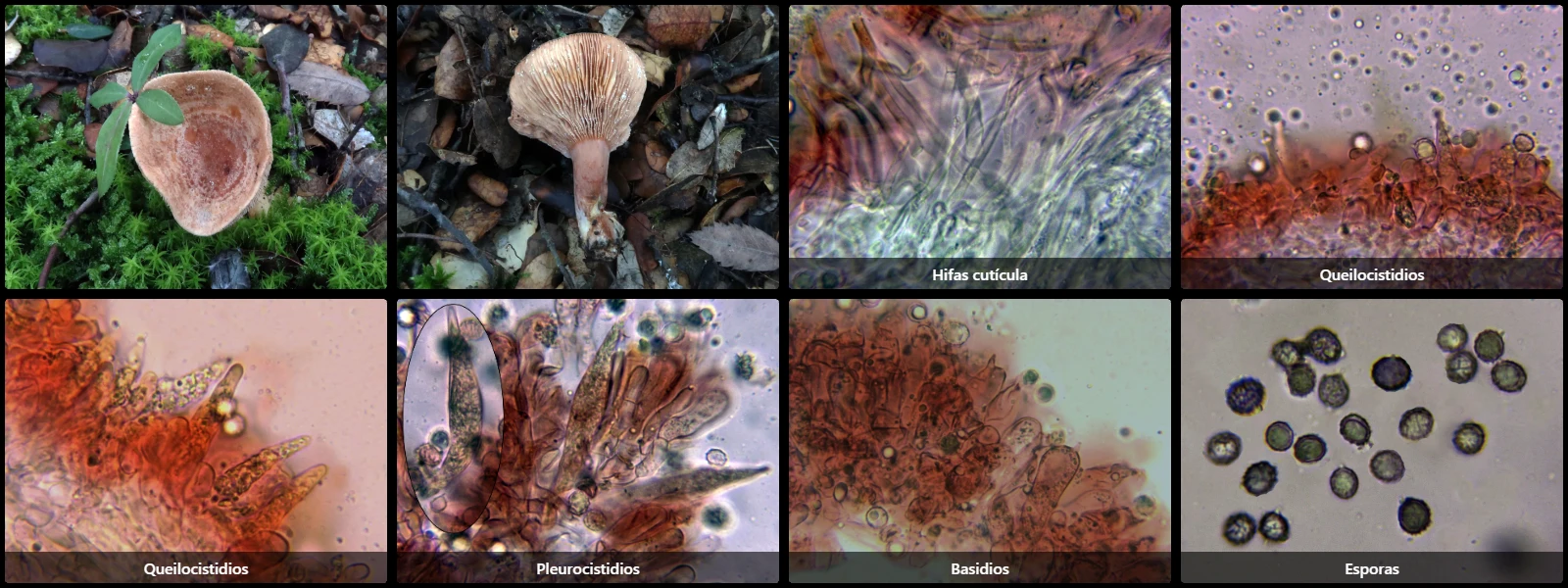
Study description
General: Associated with Quercus, with a concentrically zoned pileus, white latex rapidly oxidizing to bright sulfur-yellow upon air exposure, and very acrid, bitter flesh.
Pileipellis: Composed of filamentous, cylindrical hyphae 3-6 µm wide, densely interwoven, branched, with rounded emergent tips, septate with simple septa.
Cheilocystidia: Abundant, fusiform, 45-65 x 5-9 µm, with dense granular contents.
Pleurocystidia: Scattered, similar in morphology, 55-87 x 7-11 µm.
Basidia: Clavate, 30-45 x 9-11 µm, base simple, 4-spored.
Spores: Subspherical to ellipsoid, with abundant warts and ridges up to 0.8 µm high forming an incomplete reticulum, with a hyaline apiculus, amyloid in Melzer's reagent.
Pileipellis: Composed of filamentous, cylindrical hyphae 3-6 µm wide, densely interwoven, branched, with rounded emergent tips, septate with simple septa.
Cheilocystidia: Abundant, fusiform, 45-65 x 5-9 µm, with dense granular contents.
Pleurocystidia: Scattered, similar in morphology, 55-87 x 7-11 µm.
Basidia: Clavate, 30-45 x 9-11 µm, base simple, 4-spored.
Spores: Subspherical to ellipsoid, with abundant warts and ridges up to 0.8 µm high forming an incomplete reticulum, with a hyaline apiculus, amyloid in Melzer's reagent.
Geographic references
Map generated from global occurrence data from GBIF. GBIF.
Study measurements
Values in Microns (µm)Macroscopic gallery
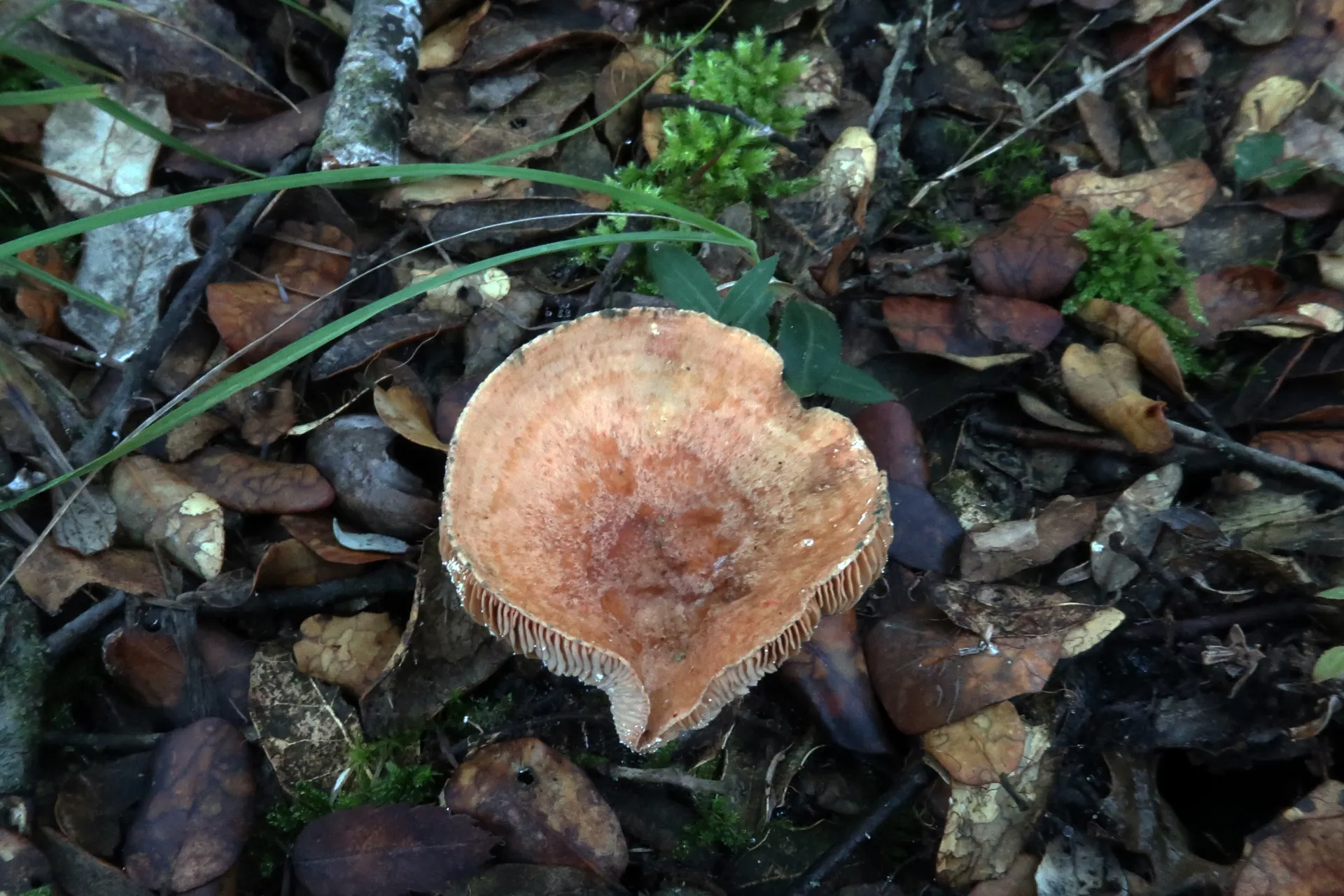
1 / 6Lactarius chrysorrheus - 1 - IMG_2705
Microscopic gallery
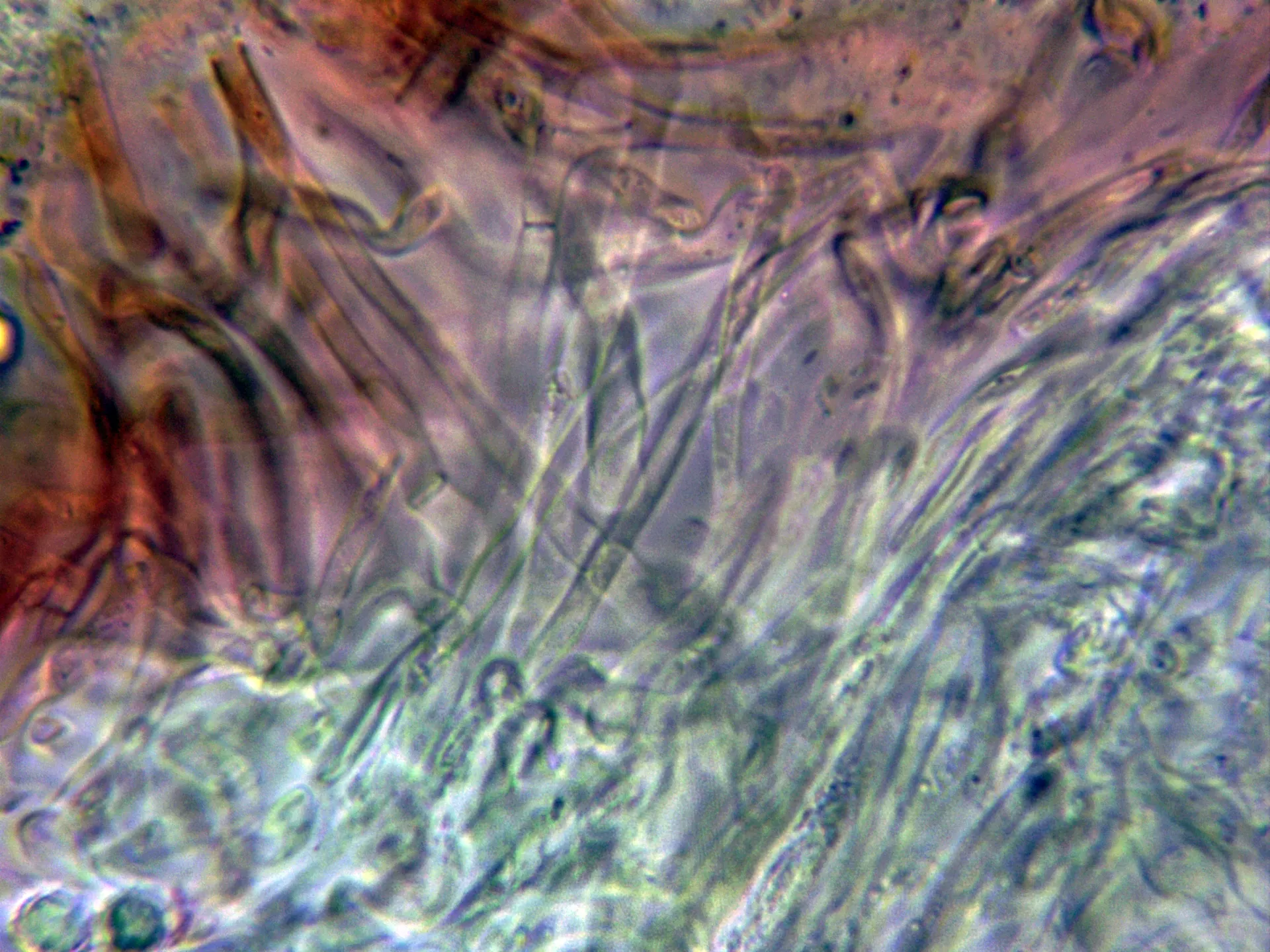
1 / 7Lactarius chrysorrheus - 10 - Hifas cutícula