


Laccaria laccata
(Scop.) Cooke
Study description
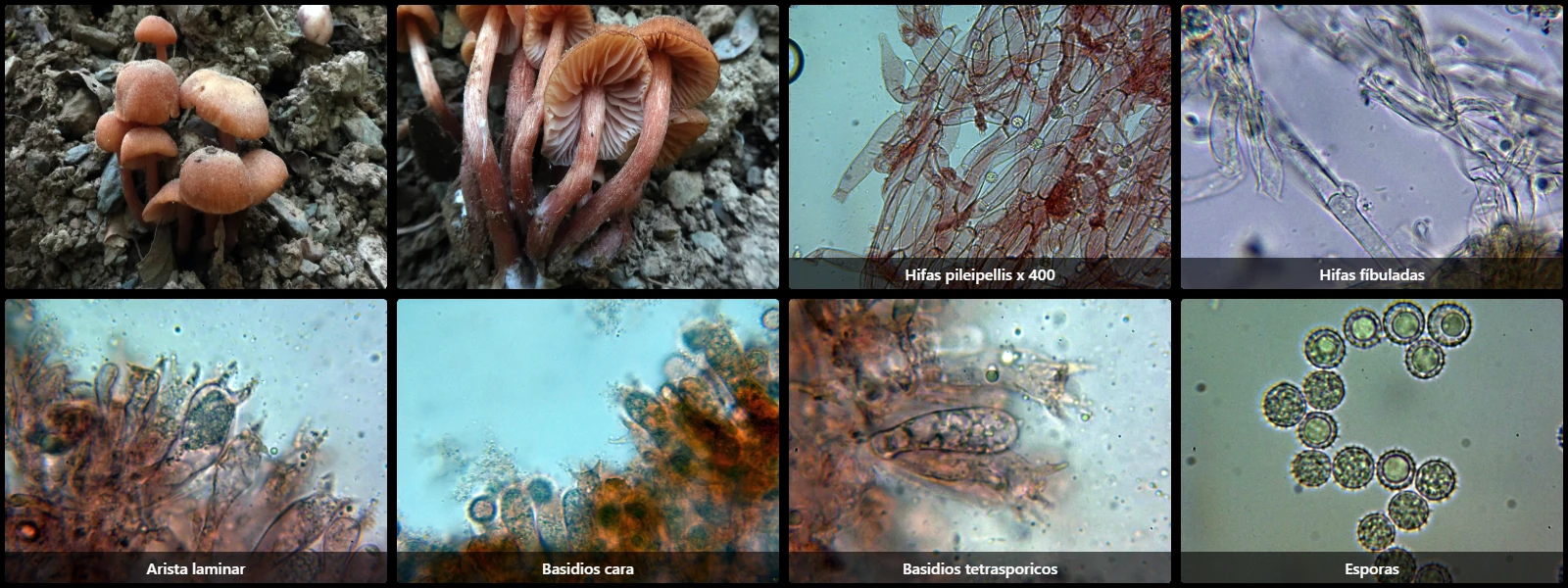
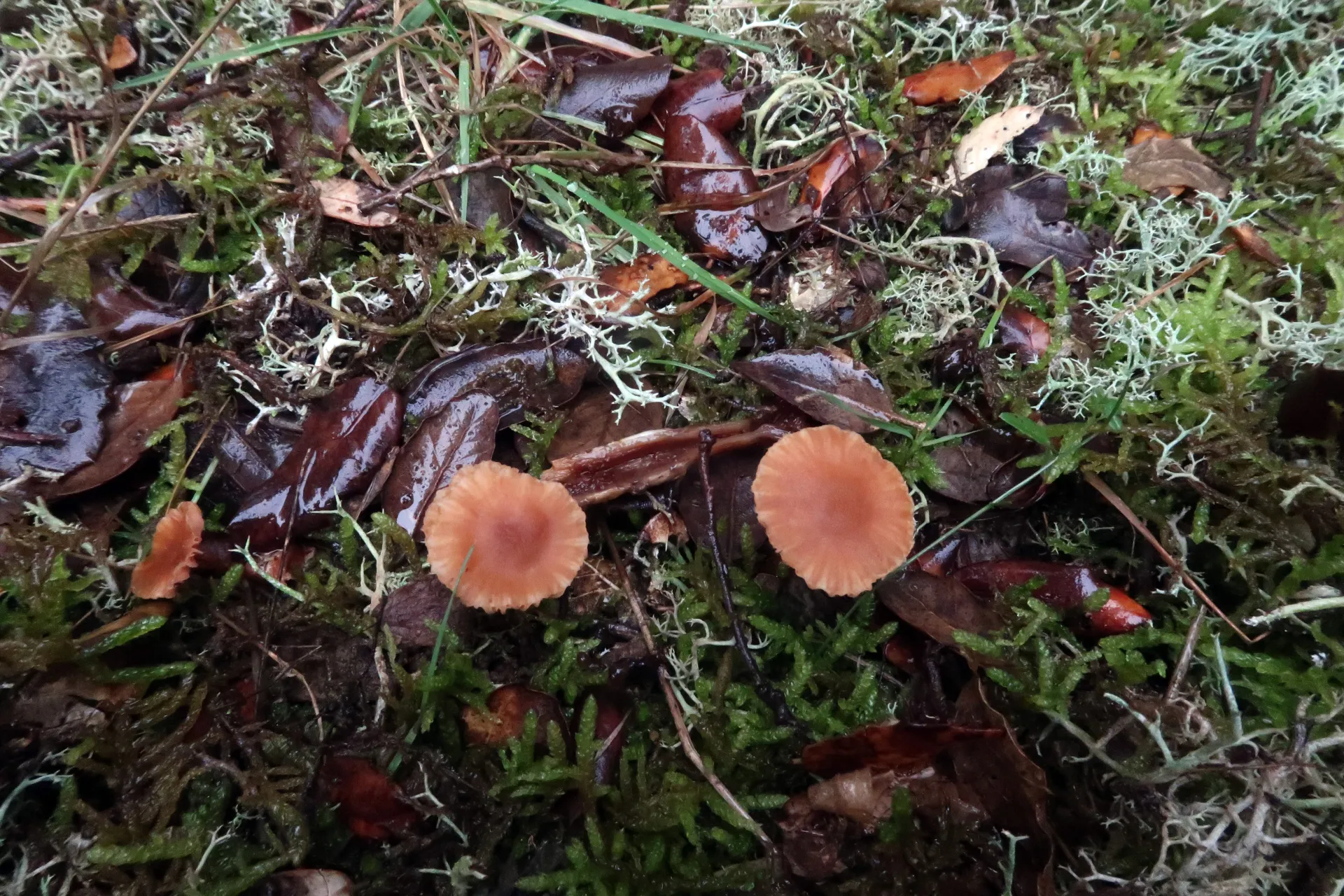
General: Occurring under both conifers and broadleaved trees, characterized by thick, distant adnate lamellae, an orange-brown pileus, and a reddish-brown stipe covered with abundant whitish longitudinal fibrils.
Pileipellis: Formed by cylindrical hyphae arranged more or less parallel to slightly interwoven, 5-11 µm wide, with brown intracellular pigment, some emergent terminal elements with rounded apices, septate and partially clamped.
Lamellar edge: Fertile, without differentiated cystidia, showing occasional scattered cylindrical terminal hyphae narrower than basidia.
Basidia: Clavate, 28-35 x 8-10 µm, 4-spored, with basal clamp connections.
Spores: Globose, moderately thick-walled and echinulate, with a hyaline hilar appendage at one end, containing a large oil guttule, with spines up to 1.5 µm long.
Pileipellis: Formed by cylindrical hyphae arranged more or less parallel to slightly interwoven, 5-11 µm wide, with brown intracellular pigment, some emergent terminal elements with rounded apices, septate and partially clamped.
Lamellar edge: Fertile, without differentiated cystidia, showing occasional scattered cylindrical terminal hyphae narrower than basidia.
Basidia: Clavate, 28-35 x 8-10 µm, 4-spored, with basal clamp connections.
Spores: Globose, moderately thick-walled and echinulate, with a hyaline hilar appendage at one end, containing a large oil guttule, with spines up to 1.5 µm long.
Geographic references
Map generated from global occurrence data from GBIF. GBIF.
Study measurements
Values in Microns (µm)Macroscopic gallery
1 / 8Laccaria laccata - 1 - IMG_4592
Microscopic gallery
1 / 18Laccaria laccata - 10 - Estipitipellis 3