


Laccaria bicolor
(Maire) P.D.Orton
Study description
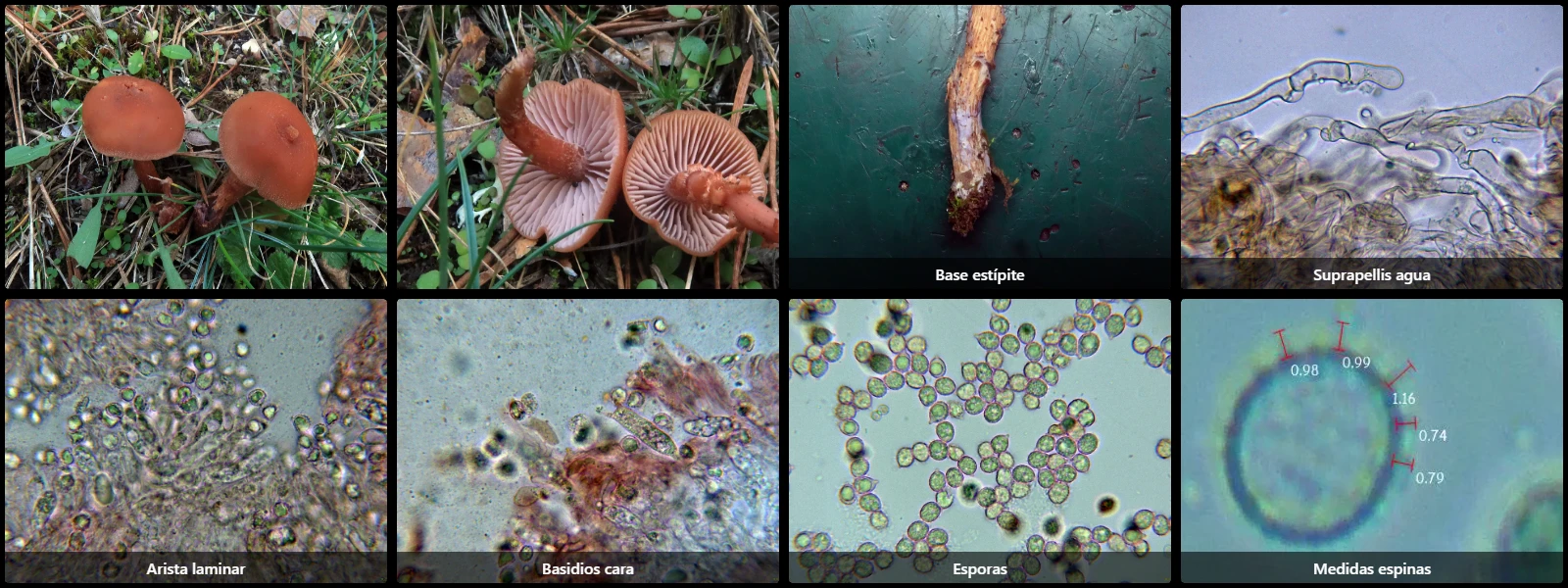
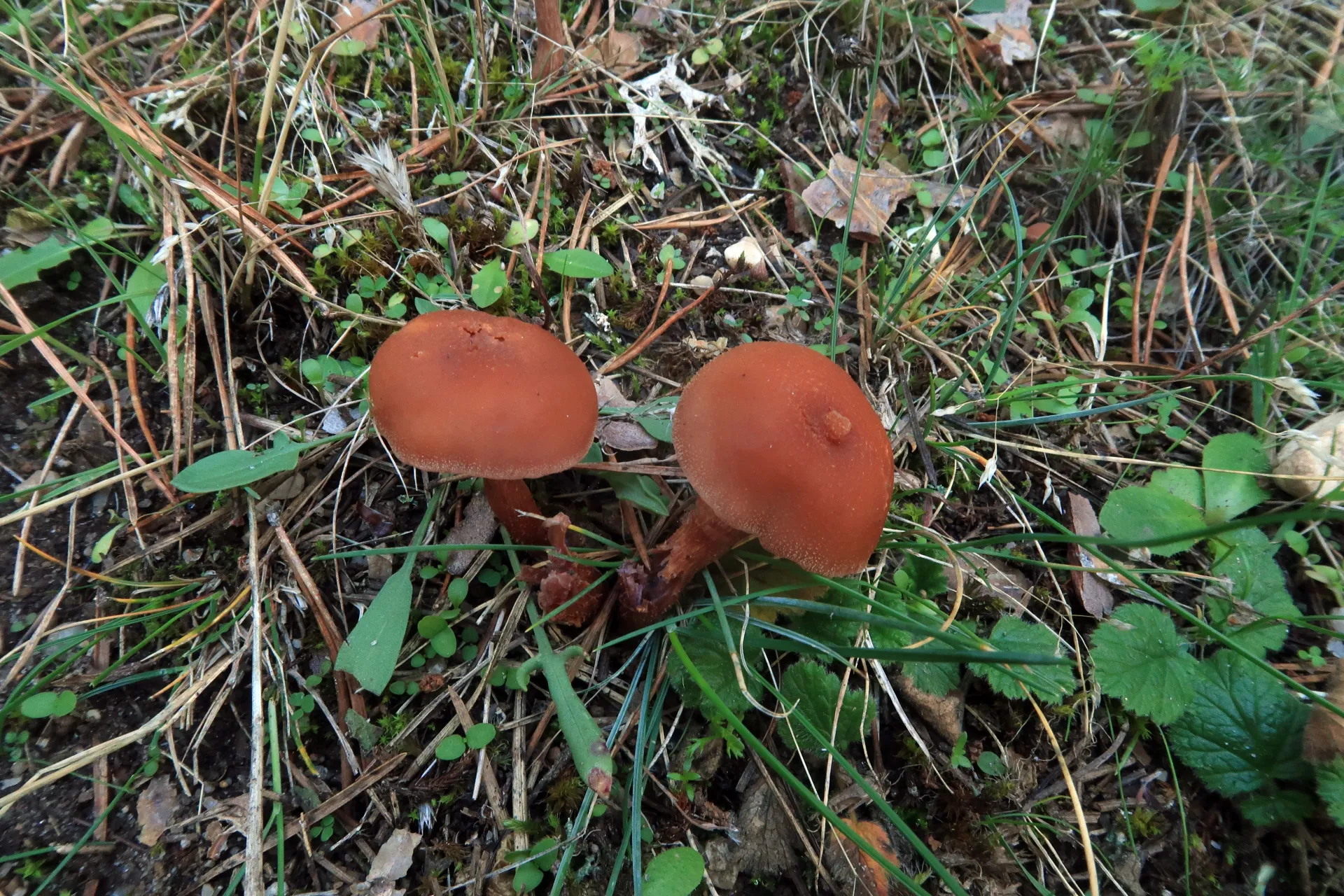
General: Characteristic of acidic soils, featuring an orange-brown pileus, thick and distant lamellae (adnate to slightly decurrent), and basal mycelial fibrils of a distinct lilac to violet coloration.
Pileipellis: Composed of cylindrical, thin-walled hyphae, parallel to slightly interwoven, 5-10 µm wide, with abundant brown intracellular pigment; terminal emergent elements are slightly widened at the apex, septate, and partially clamped.
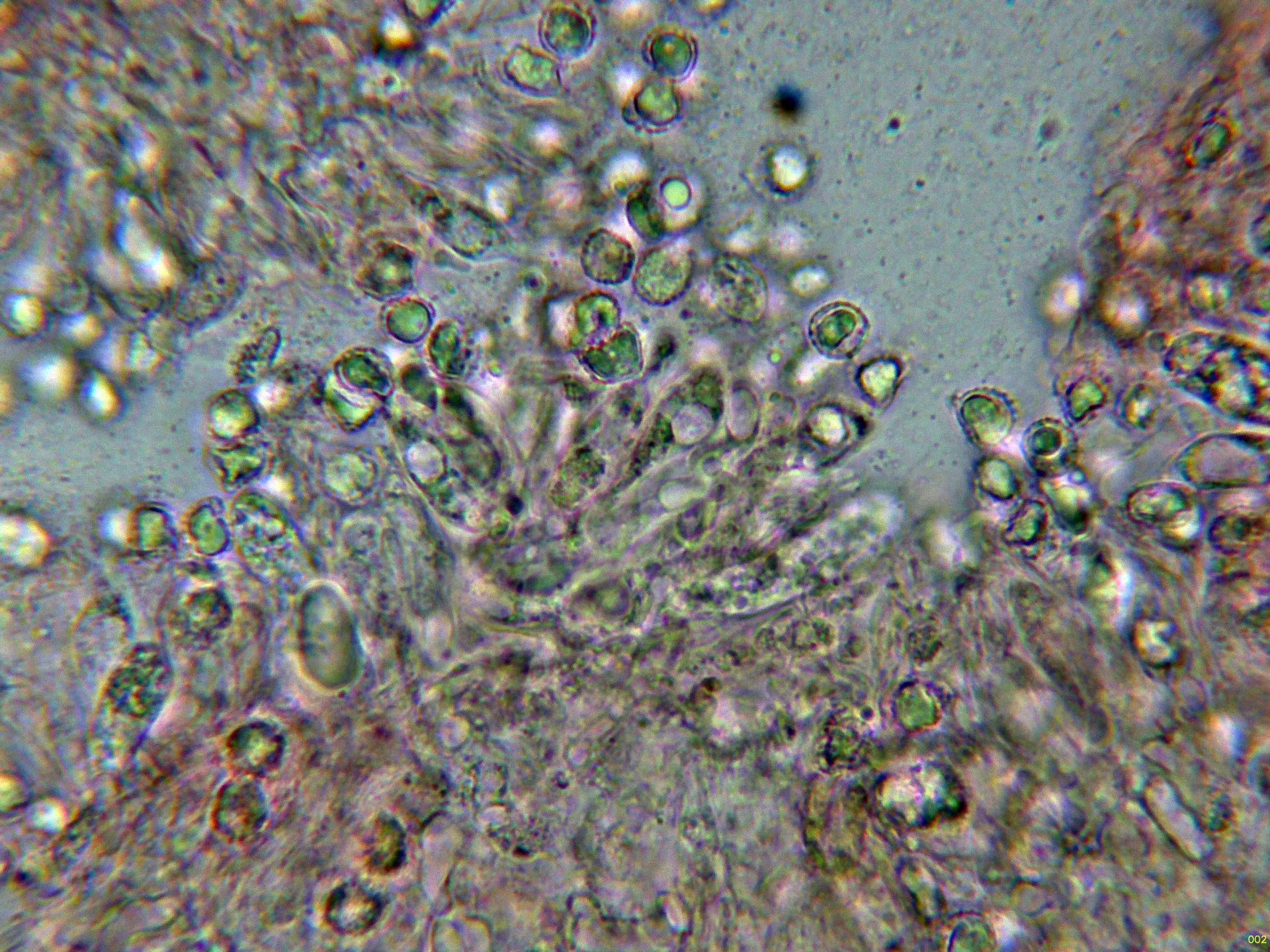
Lamellar edge: Fertile, lacking differentiated cheilocystidia; composed of basidia and basidioles.
Basidia: Clavate, 23-37 x 9-11 µm, 4-spored, with basal clamp connections.
Spores: Spherical to slightly ellipsoid, moderately thick-walled, echinulate, pale yellowish-ochre under the microscope, containing a large lipid droplet, with spines measuring up to 1.2 µm.
Herbarium voucher: 2227/24.
Pileipellis: Composed of cylindrical, thin-walled hyphae, parallel to slightly interwoven, 5-10 µm wide, with abundant brown intracellular pigment; terminal emergent elements are slightly widened at the apex, septate, and partially clamped.
Lamellar edge: Fertile, lacking differentiated cheilocystidia; composed of basidia and basidioles.
Basidia: Clavate, 23-37 x 9-11 µm, 4-spored, with basal clamp connections.
Spores: Spherical to slightly ellipsoid, moderately thick-walled, echinulate, pale yellowish-ochre under the microscope, containing a large lipid droplet, with spines measuring up to 1.2 µm.
Herbarium voucher: 2227/24.
Geographic references
Map generated from global occurrence data from GBIF. GBIF.
Study measurements
Values in Microns (µm)Macroscopic gallery
1 / 4Laccaria bicolor - 1 - IMG_7767
Microscopic gallery
1 / 14Laccaria bicolor - 10 - Arista laminar-002