Fomes fomentarius
(L.) Fr.
Study description
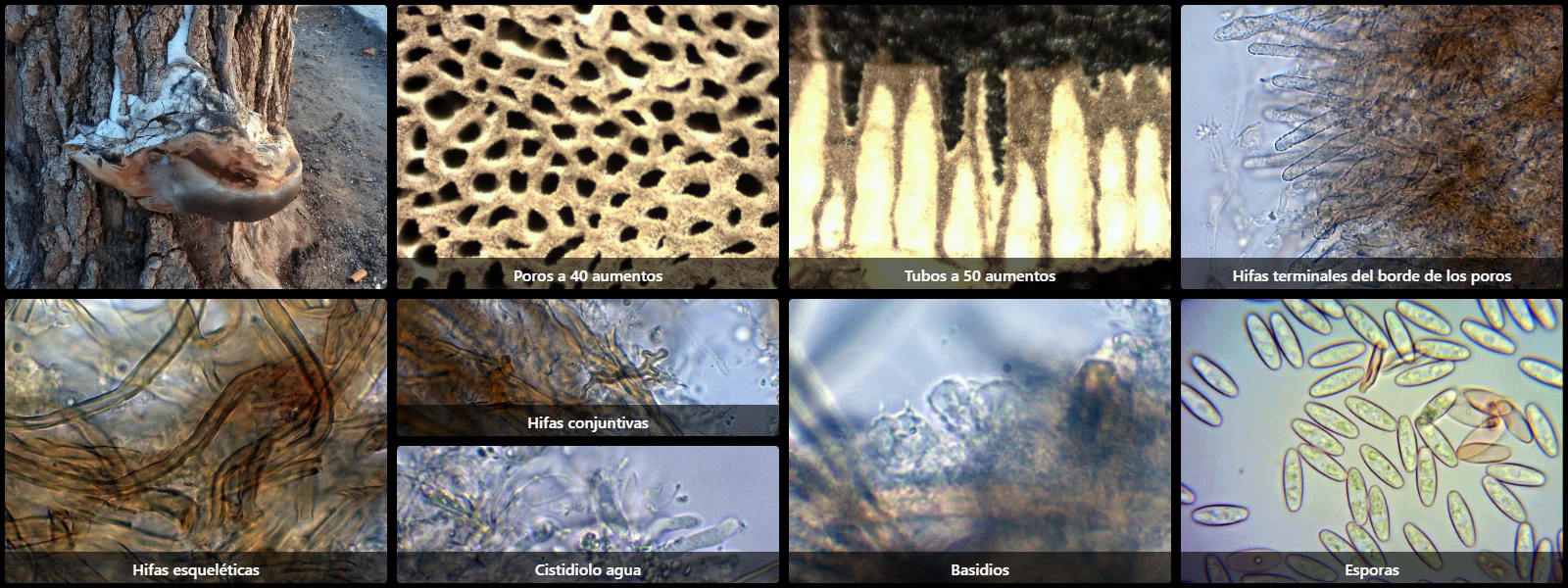
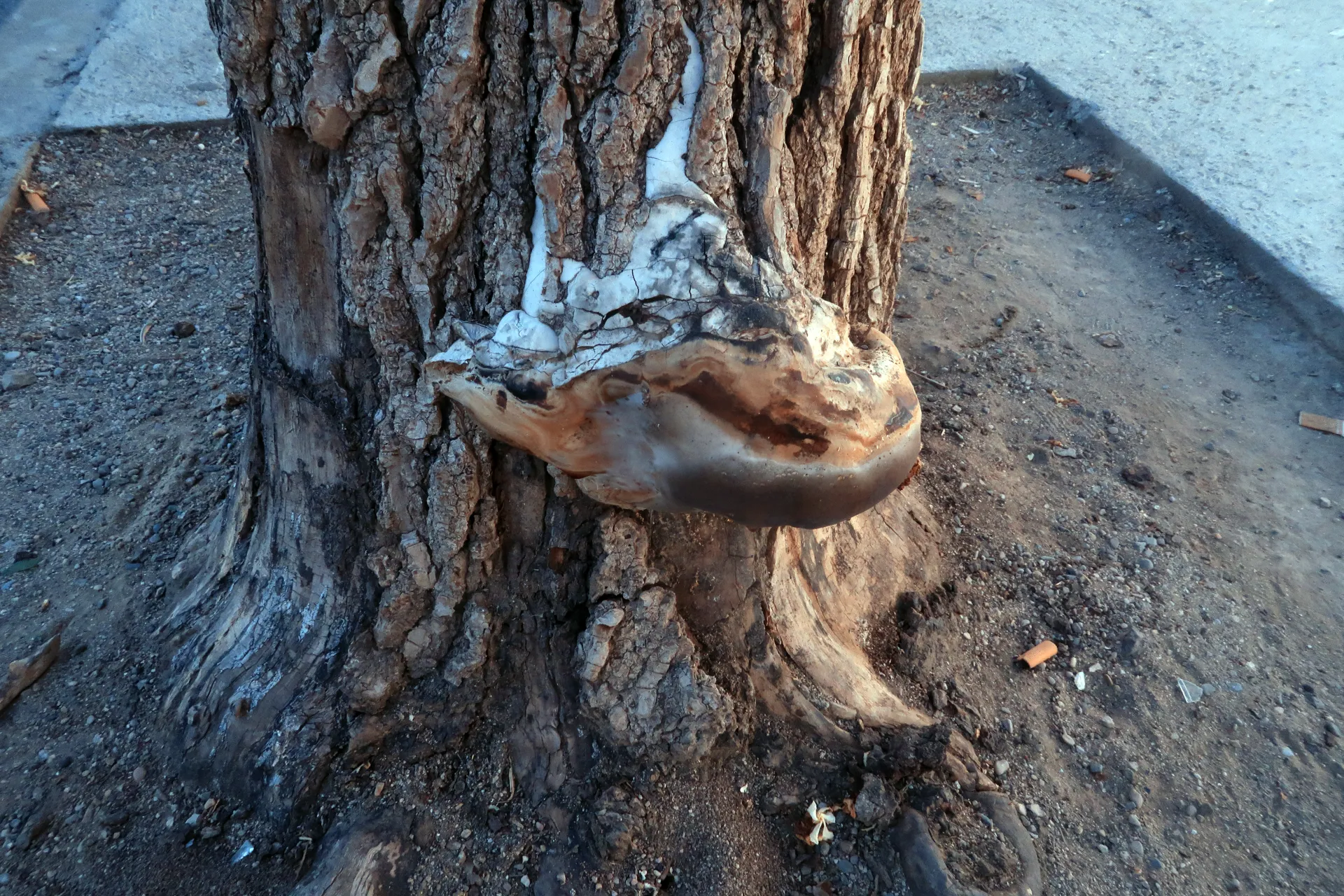
On wood of living or dead trees, with sessile, ungulate (hoof-shaped) basidiocarps; pileus surface hard and glabrous, blackish grey to pale brown; pore surface pale brown, with 4 to 5 round pores per mm, and tubes 1.5 to 2 mm long that become stratified, constituting most of the internal basidiocarp tissue.
Hyphal system trimitic: skeletal hyphae very abundant in context, thick-walled, without septa, 3 to 8 µm wide, with abundant brownish pigment inside; generative hyphae thin-walled, hyaline, 2 to 4 µm wide, more abundant in subhymenium, septate and clamped; binding hyphae profusely branched, 1.5 to 3 µm wide, very thick-walled.
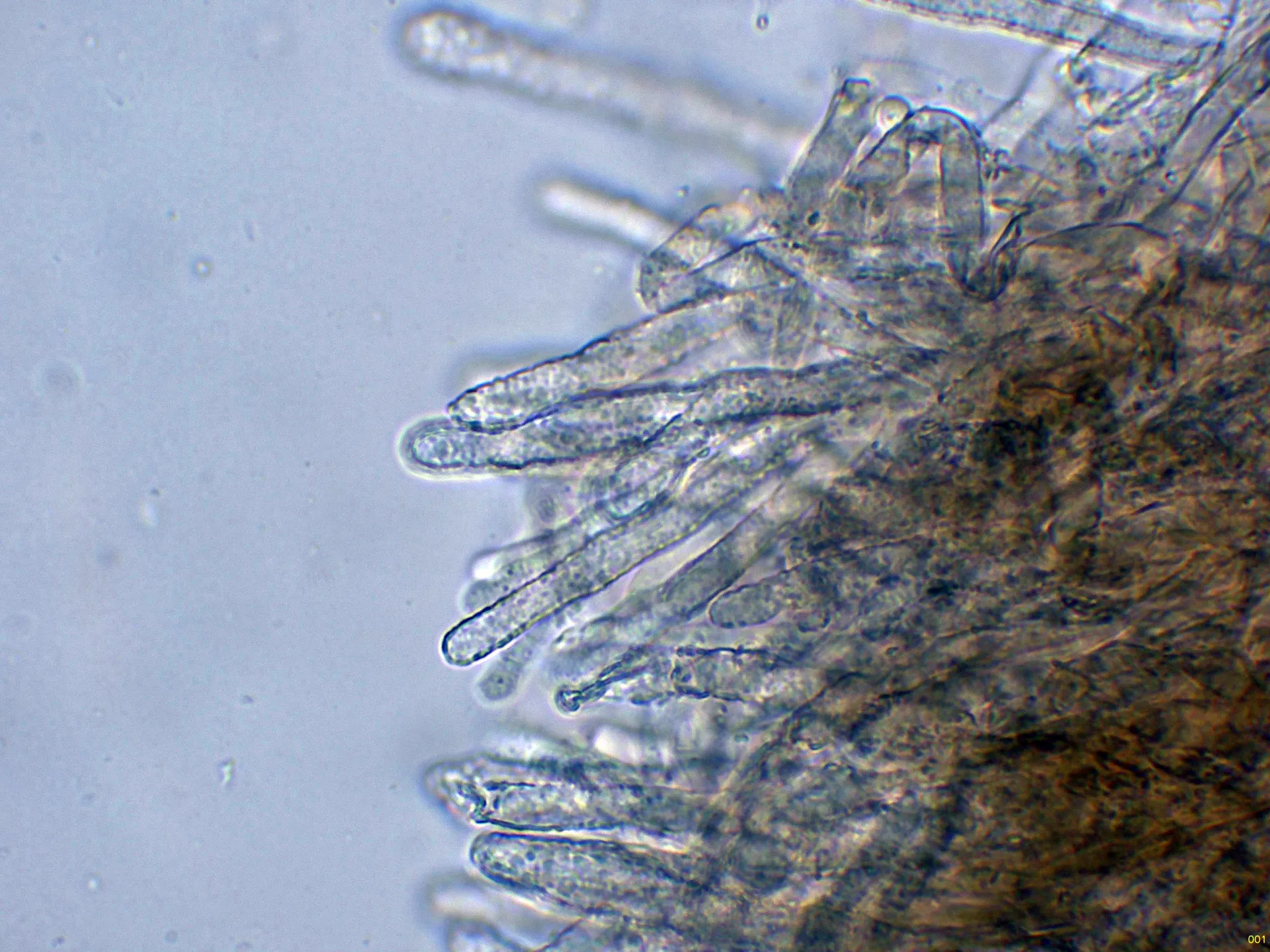
Abundant hyphoid elements on the edges of the pore dissepiments, 3 to 5 µm wide, with numerous surface encrustations, up to 120 µm long, projecting up to 60 µm above the basal hyphal context.
Cystidia absent, but abundant thin-walled, hyaline cystidioles present, 25 to 35 µm long, 4 to 7 µm wide, with basal clamp connections.
Basidia cylindrical-clavate, 20 to 25 µm long, 7 to 9 µm wide, with basal clamp connections and four-spored.
Basidiospores cylindrical to slightly fusiform, smooth, hyaline, thin-walled, 15 to 19 µm long, 5 to 6.5 µm wide, with faint granular content inside, and inamyloid in Melzer's reagent.
Herbarium material available: JTP2798/26.
Geographic references
Map generated from global occurrence data from GBIF. GBIF.
Study measurements
Values in Microns (µm)Macroscopic gallery
Microscopic gallery