


Bovistella utriformis
(Bull.) Demoulin & Rebriev
Study description
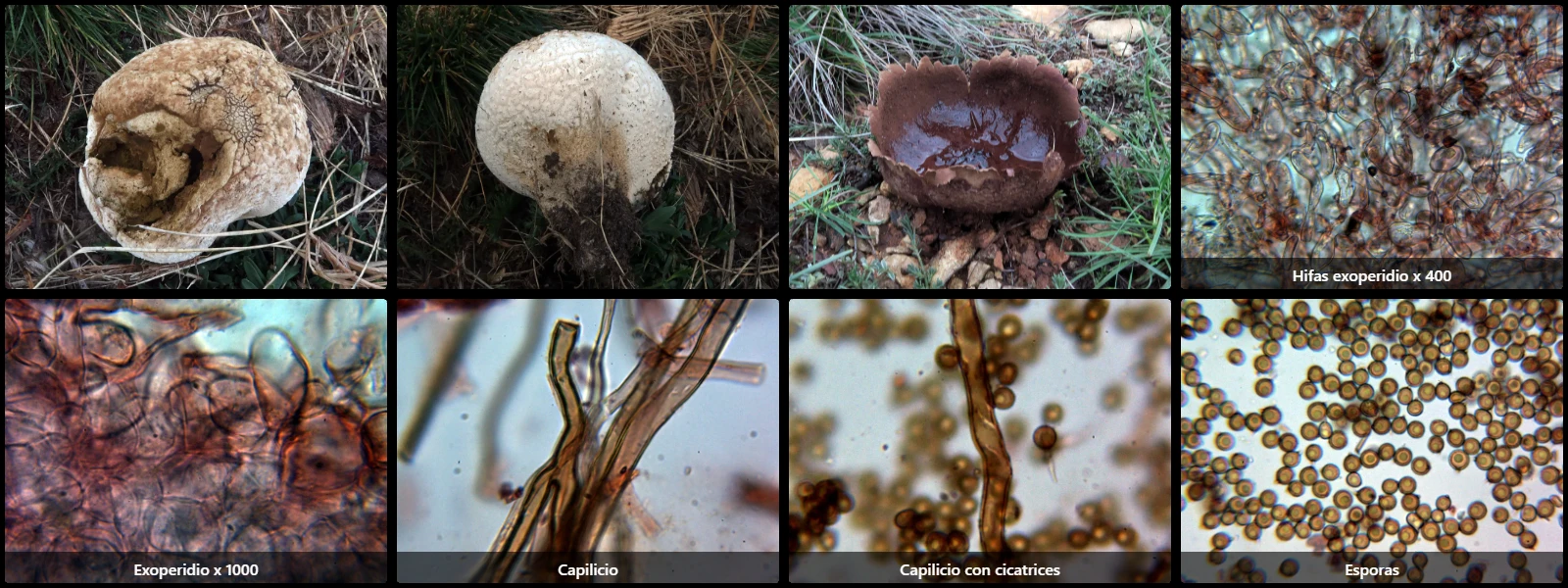
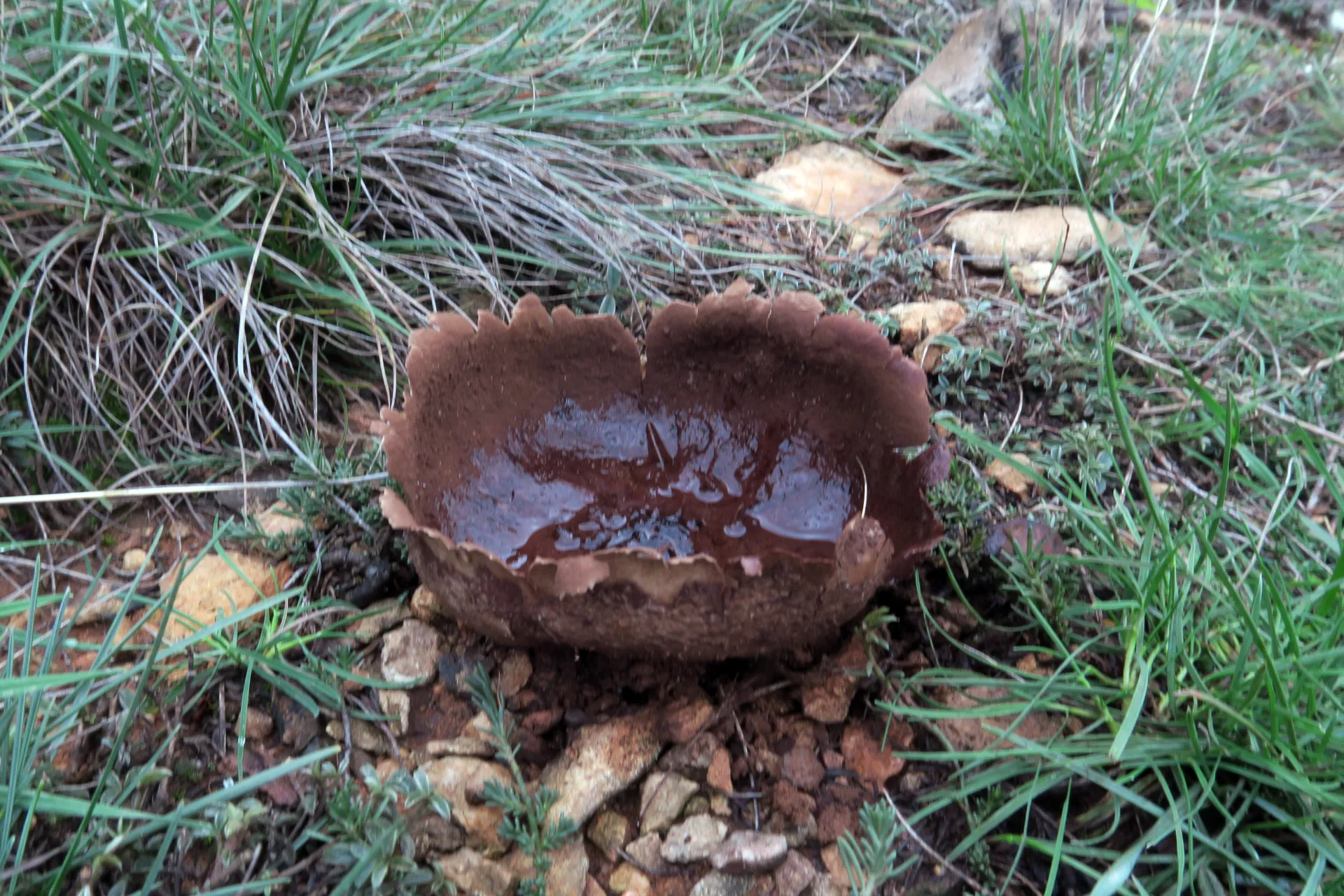
General: Typical of montane pastures, attaining considerable size (up to 15 cm), exoperidium adorned with white pyramidal-polygonal warts that slough off at maturity, revealing a greyish-brown paper-like endoperidium that ruptures into a wide goblet-shaped cup.
Exoperidium: Composed of subglobose, cylindrical to pyriform cells 15-35 µm long, supported by connective filamentous hyphae 4-8 µm wide.
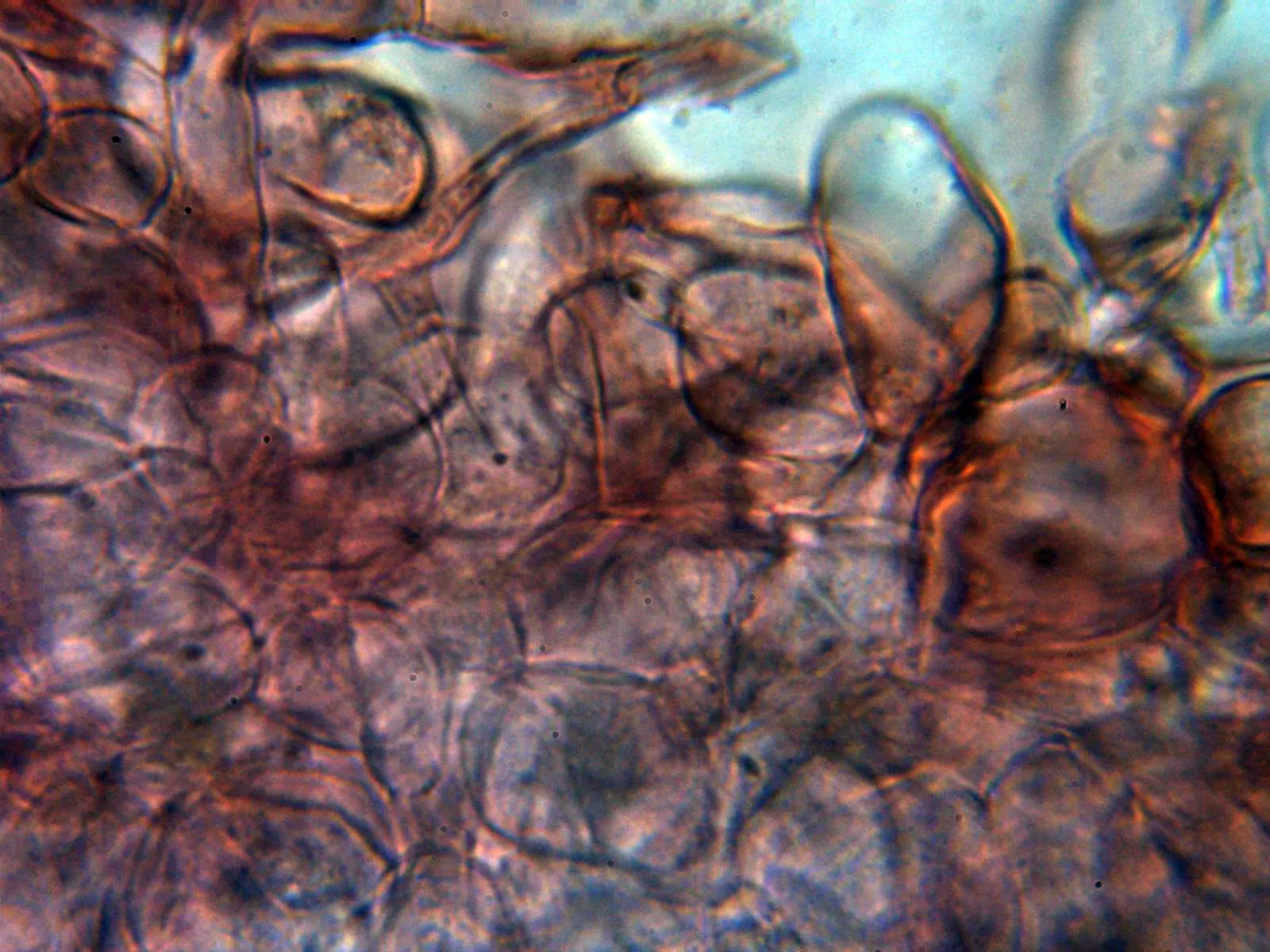
Endoperidium: Formed by cylindrical, moderately thick-walled hyphae 4-8 µm wide, hyaline to faintly yellowish.
Capillitium: Thick-walled, brown, 4-10 µm wide, with bifurcations swollen up to 15 µm, branched, bearing abundant rounded pores and slit-like perforations.
Basidia: Not observed; literature describes them as clavate, 9-20 x 5-7 µm, clampless, 1- to 4-spored.
Spores: Globose, thick-walled, smooth, 4-5 µm in diameter, with a hyaline pedicel remnant and a large oil drop.
Exoperidium: Composed of subglobose, cylindrical to pyriform cells 15-35 µm long, supported by connective filamentous hyphae 4-8 µm wide.
Endoperidium: Formed by cylindrical, moderately thick-walled hyphae 4-8 µm wide, hyaline to faintly yellowish.
Capillitium: Thick-walled, brown, 4-10 µm wide, with bifurcations swollen up to 15 µm, branched, bearing abundant rounded pores and slit-like perforations.
Basidia: Not observed; literature describes them as clavate, 9-20 x 5-7 µm, clampless, 1- to 4-spored.
Spores: Globose, thick-walled, smooth, 4-5 µm in diameter, with a hyaline pedicel remnant and a large oil drop.
Geographic references
Map generated from global occurrence data from GBIF. GBIF.
Study measurements
Values in Microns (µm)Macroscopic gallery
1 / 7Bovistella utriformis - 1 - IMG_2214
Microscopic gallery
1 / 22Bovistella utriformis - 10 - Endoperidio 1