Marasmiellus maas-geesterani
Robich & E.Campo
Study description
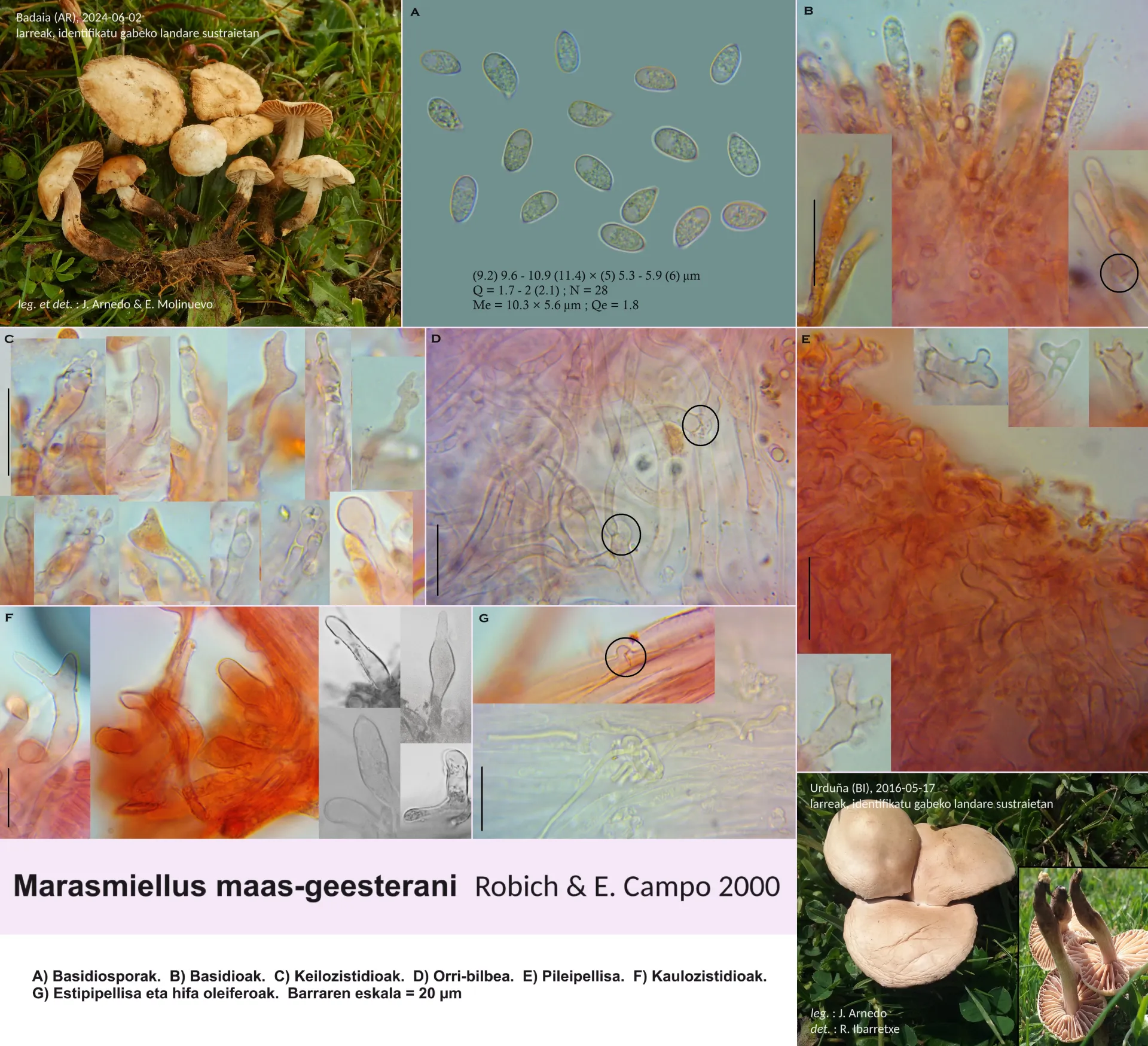
This is a rare and little-known species that was not described until the year 2000 by Robich and Campo.
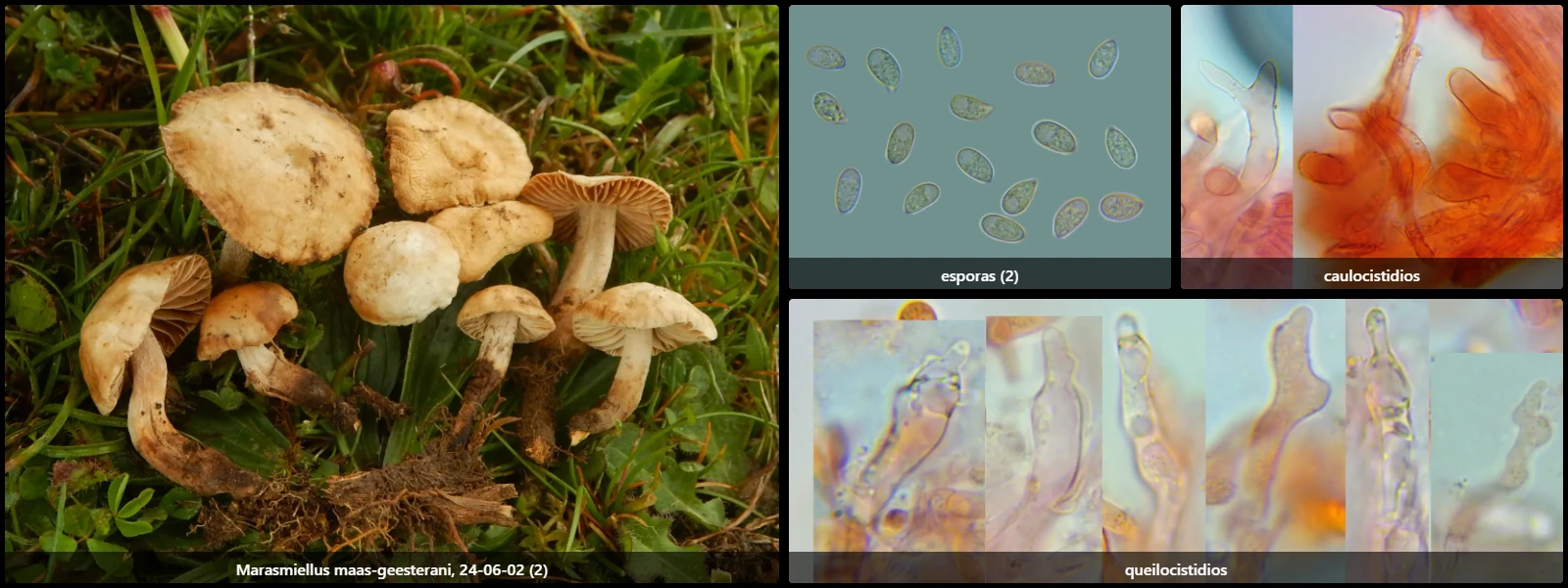
Its pileus, up to 3 cm in diameter, is cream- or flesh-colored, fading in dry weather. The stipe, of similar dimensions to the pileus, is slightly paler in its upper part, while in the lower part it becomes a dark, rooting extension buried in the soil.
Marasmiellus carneopallidus shares habitat and macroscopic appearance, but differs in the morphology of its caulocystidia and cheilocystidia.
The first time I observed this elusive species was in May 2016, in a cattle-grazed meadow in the locality of Orduña (Bizkaia). At the time of collection I was unable to determine its identity, and it was thanks to Ricardo Ibarretxe's microscopic study that we identified it.
Despite returning to the site several times, I was unable to find it again.
It was not until the spring of 2024 that I encountered it again, this time in the Badaia mountain range (Álava), also on calcareous soil in a heavily grazed pasture. On this occasion, by unearthing the specimens, I was able to observe them growing on undetermined herbaceous remains.
These two records represent the only known citations for the Iberian Peninsula.
Geographic references
Map generated from global occurrence data from GBIF. GBIF.
Study measurements
Values in Microns (µm)Macroscopic gallery
.webp)
Microscopic gallery